Tesla EV deliveries fall nearly 18% in second quarter following China factory shutdown

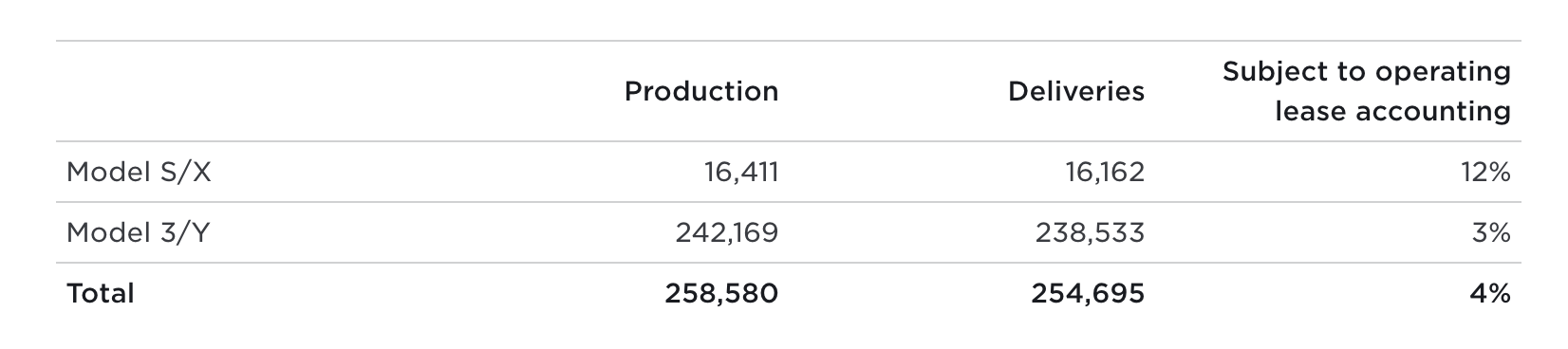
Tesla delivered 254,695 electric vehicles globally in the second quarter, a nearly 18% drop from the previous period as supply chain constraints, China’s extended COVID-19 lockdown and challenges around opening factories in Berlin and Austin took their toll on the company.

This is the first time in two years that Tesla deliveries, which were 310,048 in the first period this year, have fallen quarter over quarter. Tesla deliveries were up 26.5% from the second quarter last year.

The quarter-over-quarter reduction is in line with a broader supply chain problem in the industry. It also illustrates the importance of Tesla’s Shanghai factory to its business. Tesla shuttered its Shanghai factory multiple times in March due to rising COVID-19 cases that prompted a government shutdown.

tesla delivery q2 2022

Image Credits: Tesla/screenshot

The company said Saturday it produced 258,580 EVs, a 15% reduction from the previous quarter when it made 305,407 vehicles.

Like in other quarters over the past two years, most of the produced and delivered vehicles were Model 3 and Model Ys. Only 16,411 of the produced vehicles were the older Model S and Model X vehicles.

Tesla said in its released that June 2022 was the highest vehicle production month in Tesla’s history. Despite that milestone, the EV maker as well as other companies in the industry, have struggled to keep apace with demand as supply chain problems persist.


from https://ift.tt/ZBNFXoY
via Technews
Share:

A USB standard for satellites? Slingshot 1 takes to orbit to test one

Testing new satellites and space-based technologies has never been easy exactly, but it definitely could be easier. Slingshot 1, a 12U Cubesat mission just launched via Virgin Orbit, is an attempt to make building and testing a new satellite as easy as plugging a new keyboard into your computer.

To say it’s “USB for space” is reductive… but not wrong. The team at the Aerospace Corporation that designed the new system makes the comparison itself, noting that the military has made several attempts to create just this with the Space Plug-and-Play Architecture (SPA), which became the Modular Open Network ARCHitecture (MONARCH), and the Common Payload Interface Standard (CoPaIS). But the approaches haven’t taken off the way, say, the Cubesat standard has — which, by the way, Aerospace also pioneered.

The goal of Slingshot 1 is to create a standard satellite bus that’s as adaptable and easy to use as USB or ATX, using open standards but also meeting all the necessary requirements for security, power, and so on:

[Slingshot] offers more agility and flexibility in satellite development through the use of modular, plug-and-play interfaces. These interfaces leverage open-sourced systems to avoid proprietary lock-ins that may stall development, as well as standardized interfaces for payloads that would not require a customized satellite bus. These interfaces set the power, command, control, telemetry, and mission data that may be required for payloads. Without a set of common standards, these payload-to-satellite bus requirements are driven by varying satellite bus manufacturers. Slingshot eliminates this uncertainty by reducing the number of requirements and complexity in the interface and creating an open payload interface standard called Handle.

How will it avoid the common trap encountered by would-be standard-standardizers, immortalized by XKCD: now there are N+1 standards?

Well, leaving aside the pretty deplorable state of standards in the satellite world, if there can be said to be any, the team decided to base the whole thing on Ethernet, which underpins a huge amount of networking in the world already.

“Basing the Handle standard on Ethernet builds on the vast ecosystem of hardware and software tools developed for that very common interface, essentially taking the most common terrestrial system standard and migrating it for satellite use,” said Dan Mabry, senior engineer specialist at Aerospace. “We’ve tailored the network for low power, but still support gigabit per second communications between devices with no custom software development required to tailor the network for each new application.”

And as he put it when Aerospace wrote up Slingshot for its own purposes last year: “When a payload plugs in it’ll instantly be recognized and work, and any broadcast data will get to the spacecraft downlink without any tuning or tweaking of the software onboard. Furthermore, because it’s an onboard network, that payload’s data is seen by all the other payloads as well. Payloads can easily collaborate in real-time, and distributed smart sensors and processors are coupled by the basic architecture.”

Combine this with a power hub that can intelligently supply a variety of needs, and a modular enclosure that makes the whole thing look like the back of a well-organized gaming PC, and you’ve got a recipe for plug and play that really makes things easy on the prospective designer.

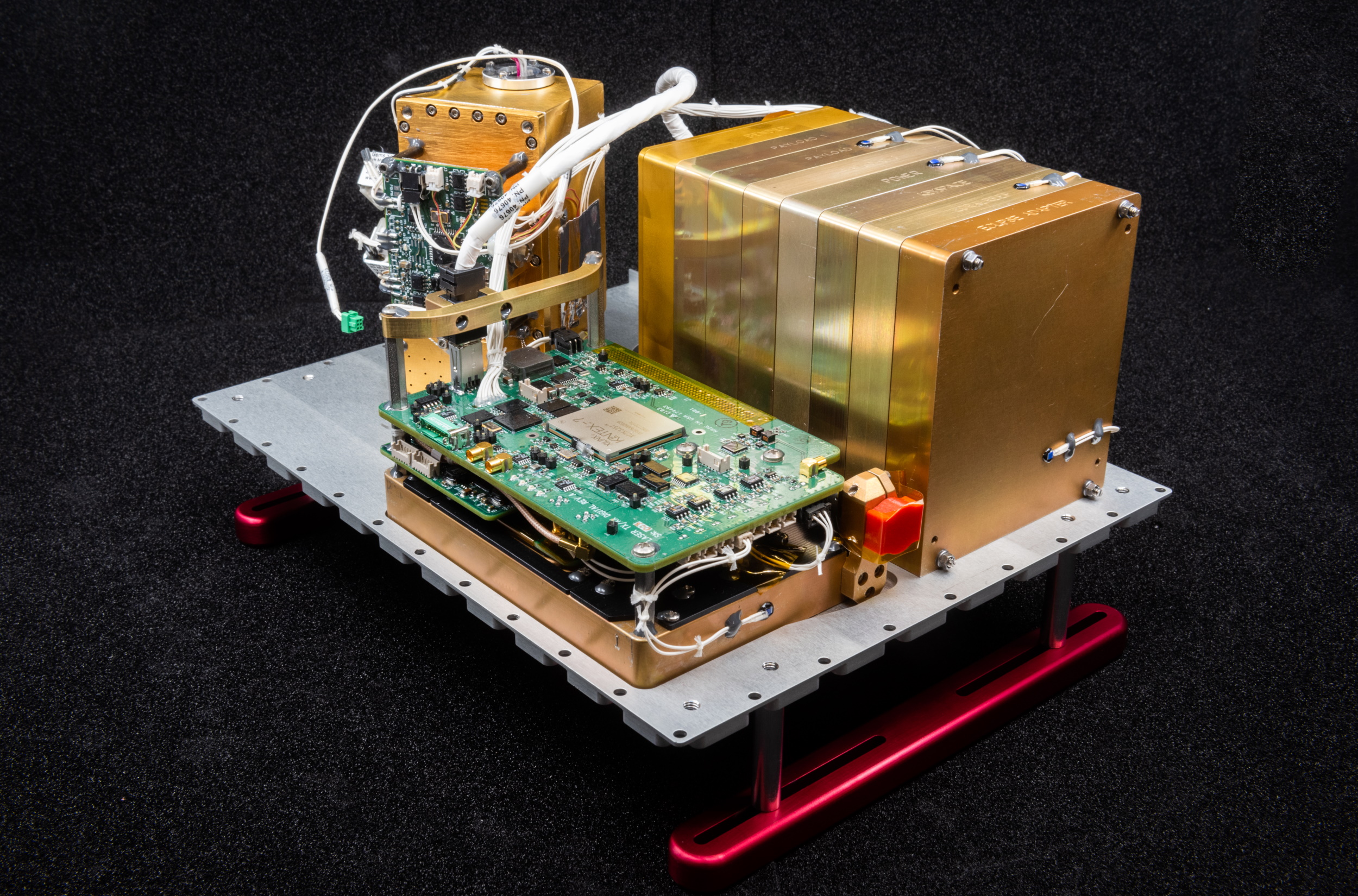
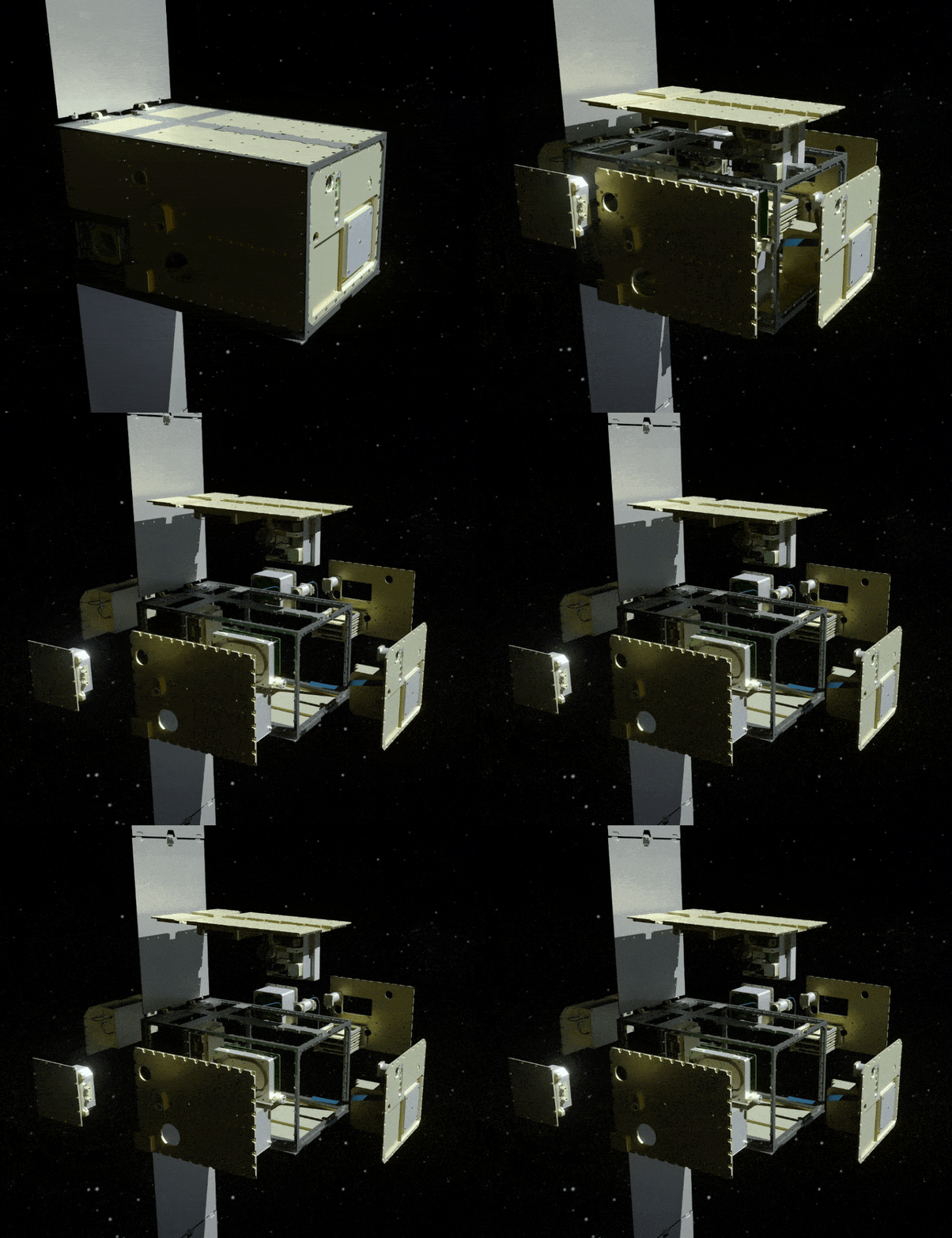
The assembled Slingshot 1 setup without its outer enclosure.

As Slingshot’s program manager, Hannah Weiher put it: “It’s working to reduce interface complexity and support different satellite buses and payloads with minimal to zero adaptation needed to the interface. Handle was key to a streamlined payload integration process on Slingshot 1 where we had a wide range of payloads with different requirements and it enabled us to be able to integrate the volume of payloads we did in a satellite about the size of a shoe box.”

Of course it’s not enough to simply send up a barebones interface — imagine sending up a PC case with nothing in it. To see if it works, you need stuff attached, and fortunately there are a ton of experiments and capabilities Aerospace has been saving up since Slingshot’s genesis in 2019.

  • Handle – Plug-and-play payload electrical interface module
  • Bender – Onboard ethernet and network routing
  • t.Spoon – Modular mechanical interface
  • t.Spoon Camera – Plug-and-play camera module
  • t.Spoon Processor – Zynq Ultrascale+ onboard processing
  • Starshield – Onboard malware detection
  • CoralReef – Coral Tensor Processing Unit
  • STarfish – Secure ARM Cortex-M33 onboard processing
  • SDR – S-band Software-Defined Radio (SDR) downlink
  • Keyspace – Cryptographic services for SmallSats
  • Lasercom – Next-gen space/ground lasercom downlink
  • ROESA – Using Internet of Things protocols to connect payloads
  • Vertigo – Reconfigurable attitude control system
  • Blinker – GPS transponder for space traffic management
  • Hyper – SmallSat hydrogen peroxide thruster
  • ExoRomper – Artificial intelligence and machine learning testbed

Some of these are more or less self-explanatory, like t.Spoon’s various components, making up the core mechanical elements tying the whole thing together. And of course you need a nice software-defined radio downlink. But a tensor processing unit and machine learning testbed on a satellite? Internet of Things protocols? Cryptographic services?

CG view of Slingshot expanding to show its components.

When I talked with the team during a visit to Aerospace’s labs a while back, they talked about how a lot of what’s on Slingshot is unprecedented in some ways, but is more about adapting common terrestrial tasks to the extremely formalized and limited context of a satellite’s hardware and software.

Say you have three or four payloads sharing a processor and storage. How do you make sure their communications remain secure? The same way you would on the ground, but adapted to the lightweight processing, limited-power, unusual interface of a spacegoing craft. Sure, secure processing and communications in space have been done before — but it’s not like there’s a plug and play version where you can just click a check box and suddenly your payload is fully encrypted.

Similar is ExoRomper, which has an externally mounted camera hooked into the TPU. There’s been a bit of AI in space already, but never a setup where you can say: oh sure you can add on cloud recognition to your satellite, it’ll take up 2 watts, 20 cubic centimeters and 275 grams. This one in particular is set up to watch the satellite itself, looking at lighting conditions — something that seriously affect thermal loads and power handling. Why shouldn’t your satellite have its own satellite, watching to make sure there’s no hot spots on the solar cells?

Data will be coming in from Slingshot as it tests out its many components and experiments over the coming months. It could be the start of a new modular era for small satellites.


from https://ift.tt/k6y2cxJ
via Technews
Share:

China’s new Mars images show off the country’s robust (but secretive) space program

With a $24 billion budget and dozens of active, high-profile missions, it’s not surprising that NASA is the most visible of the dozens of government space agencies in the world. But China’s space program is a rapidly developing superpower that, whether it’s due to political tensions or the government’s careful control of information, doesn’t often get its fair share of attention.

Just this week, the China National Space Administration (CNSA) released a series of high-resolution images of Mars taken by its Tianwen-1 spacecraft, which arrived at the red planet in February 2021 and has been orbiting it ever since. Over the course of more than 1,300 orbits, Tianwen-1 has photographed the entire planet in extreme detail, from the icy south pole to the 2,485-mile-long Valles Marineris canyon to the 59,055-foot-tall shield volcano Ascraeus Mons.

While the U.S. has the reliable Mars Reconnaissance Orbiter and other spacecraft have imaged the planet over the years, the full-surface survey by China’s program will be valuable to scientists and colony planners across the world if the country releases the imagery widely. But this is just the latest success of a thriving space program that has ambitious goals over the next five years — and it might not even be its most impressive one.

The fact that Tianwen-1 even made it to Mars is remarkable, as it was China’s first solo interplanetary mission. (China participated in a failed joint mission with Russia, Phobos-Grunt/Yinghuo-1, which launched in 2011 but did not leave Earth orbit.) Overall, Mars missions, from fly-bys to orbiters to landers, have about a 50% success rate, according to NASA.

mars canyon

The Valles Marineris canyon on Mars, as photographed by China’s Tianwen-1. Image Credits: CNSA via Reuters

Tianwen-1 also carried with it the Zhurong rover, which touched down on the Martian surface on May 15, 2021, making China the third country to land on Mars, after the former Soviet Union and the United States. (Worth a mention: While the Soviet rover landed on the surface, it never operated.) Zhurong, on the other hand, has been exploring the Utopia Planitia basin for more than a year, though it entered a winter hibernation last month.

Closer to home, China has also succeeded on the moon, becoming the first nation to attempt to soft-land a probe on the dark side of the moon, which never faces the Earth. And it succeeded. The Chang’e 4 lander arrived on the lunar surface on January 3, 2019, carrying with it the Yutu-2 rover, which is actively exploring the Von Kármán crater.

mars craters

Craters in Mars’ Arabia Terra region, as photographed by China’s Tianwen-1. Image Credits: CNSA via Reuters

And even closer to home than the moon, China is now developing its own space station in low Earth orbit — China is notably banned from the International Space Station due to a 2011 Department of Defense act that prohibits NASA from collaborating with the nation unless specially authorized. The first module of China’s Tiangong space station, Tianhe, was launched in May 2021, and the CNSA suggests the final two modules, Mengtian and Wentian, will be launched by the end of this year. Since then, two crews of taikonauts (China’s version of astronauts) have completed long-duration missions on the station, while a third is currently onboard for a six-month stay.

Likely contributing to the lack of attention on China’s space program is the government’s own lack of transparency. Many missions have not been announced until the last moment, and the particularly risky ones are not usually televised — that way, failures can be kept fairly quiet. Other agencies and private spaceflight companies are far more forthcoming in their current and future projects, sharing both successes and failures alike. (NASA, for instance, almost always provides a livestream of crucial mission moments, such as launches and landings.)

Mars south pole

The south pole of Mars, as photographed by China’s Tianwen-1. Image Credits: CNSA via Reuters

But with so much success under its belt, the CNSA is becoming more forthcoming about its plans. In January 2022, the administration published a white paper titled “China’s Space Program: A 2021 Perspective,” sharing both achievements since 2016 and plans for the next five years. Intriguingly, the CNSA also acknowledged some of its failures in the white paper; it noted that only 183 out of more than 400 launch attempts between 2016 and 2021 were successful.

Looking ahead to the next half the decade, China plans to launch the Xuntian space telescope, which will dock with the Tiangong space station; the ZengHe asteroid sample return mission; and several lunar probes. China has also promoted the planning of a crewed lunar mission, which could make it the second country to land humans on the moon.

Of course, project timelines in the space industry are frequently delayed, but it seems the Chinese space program has a busy few years ahead of it.


from https://ift.tt/RljCozt
via Technews
Share:

FDA won’t require lengthy clinical trials for COVID-19 boosters

Future COVID-19 vaccine boosters won’t have to go through a traditional, lengthy clinical trial process to attain emergency use authorization in the U.S., according to a report in Reuters. An agency official, speaking to the publication today, said that the U.S. Food and Drug Administration (FDA) will instead rely on data from trials on shots developed earlier in the pandemic to combat specific virus variants as well as manufacturing data in considering whether to clear boosters for administration. Preclinical animal study and safety data might also be used, the official said.

As The Verge notes in its coverage of the news, the COVID-19 variant known as omicron has branched into multiple substrains since emerging late last year, including BA.4 and BA.5. The FDA is encouraging vaccine producers to target BA.4 and BA.5 — the most widespread lineages in the U.S. But boosters currently in testing target an earlier omicron version dubbed BA.1.

Boosters targeting BA.1 are still effective against BA.4 and BA.5, early data from Moderna and Pfizer/BioNTech suggests. But the immune response they generate against the newer lineages is weaker than the response against BA.1. Pfizer is also developing BA.4- and BA.5-specific booster, which is in the early testing  stages.

New boosters are expected to be available in the fall fall. It remains unclear, however, how many eligible folks will seek them out. Across the U.S., over 78% of the population has received at least one COVID-19 vaccine dose. But it’s proven to be an immense challenge to get subsequent doses to adults, with one study showing that as many as 50% of people failed to get a follow-up shot — or shots —  within a year after their first.

With omicron, nearly 60% in U.S. have been infected during pandemic, according to stats released in April from the U.S. Centers for Disease Control and Prevention. Currently, national hospitalizations from COVID-19 are averaging around 1,400 to 10,500, with deaths hovering between 1,300 and 4,600.

In an encouraging development this week, COVID-19 vaccines were authorized for children as young as 6 months old.


from https://ift.tt/3dw5OiU
via Technews
Share:

TechCrunch+ roundup: SaaS success stats, leveraging ad tech chaos, 2022 layoff trends

According to a report by Capchase comparing more than 400 SaaS startups to unicorns that reached the public markets in the last two years, the top performers “are handily beating the ‘Rule of 40,'” reports Kyle Wiggers.

For those of us who haven’t memorized economic frameworks: The Rule of 40 is a metric investors developed to gauge the health and growth potential of SaaS startups. If a company’s combined growth and profit rates add up to more than 40%, it’s a good bet.

Capchase’s report looked at startups pulling in between $1 million and $15 million in annual recurring revenue. According to its findings, SaaS founders should target at least 80% and aim to surpass 110%.

“Financial discipline is key here,” said Capchase CEO and co-founder Miguel Fernández.


Buy a TechCrunch+ membership before July 4, 2022, and save 50% on an annual subscription.


“This includes cutting non-performing products, decreasing R&D and general and administrative expenses, and doubling down on creative strategies to recover customer acquisition cost instantly to reduce burn associated with growth.”

Useful news for investors and founders, but a worrisome signal for workers at software companies: Aggregator Layoffs.fyi tracked 75 layoff events in May 2022, and as of this writing, 152 in June.

I remember the dread I felt as a startup worker during downturns when I read about mass layoffs at tech firms that had previously been considered ascendant. My best advice: Strengthen your network. Find five co-workers to recommend on LinkedIn, reach out to someone you haven’t spoken to in a while, and do your best to keep your mind in the present moment.

And if you have ever discussed an idea for starting a company with a friend, think about working on a pitch deck. You never know…

Thanks for reading TechCrunch+ this week and best wishes for a happy Independence Day to our readers in the U.S.

Walter Thompson
Senior Editor, TechCrunch+
@yourprotagonist

Today’s startup layoffs have nothing on the 2020 correction

Although the pace of startup layoffs has increased in recent months, it’s still well below the rate at which companies were reducing headcount at the start of the pandemic, reports Alex Wilhelm in The Exchange.

“The 2022 correction is different. It’s been slower to arrive, giving startups more time to adjust to changing market conditions. And it was presaged by falling public markets that, we presume, allowed some private companies to conserve cash in anticipation of, say, a more conservative funding market.”

When it comes to sanctions, PE firms must proceed with great caution

Man walks carefully on a path of small rocks in the middle of the sea; private equity must deal carefully with sanctions

Image Credits: mikkelwilliam (opens in a new window) / Getty Images

Banks and other financial institutions must follow know your customer (KYC) guidelines, but private equity funds have a loophole: They are not legally bound to tell regulators who their investors are — or if they’re behaving suspiciously.

Russia’s invasion of Ukraine changed that, however.

The increasingly isolated nation is now facing international sanctions, and “PEs are investing in the close management of compliance programs, policies and procedures at each of their portfolio companies,” writes Snežana Gebauer, a partner with StoneTurn.

5 ways to seize the opportunities created by recent chaos in ad tech

Five tally marks on blackboard

Image Credits: Jeffrey Coolidge (opens in a new window) / Getty Images

This year, TikTok’s ad sales are expected to triple to more than $11 billion, trouncing the combined ad revenue of Twitter and Snapchat.

According to Alex Song, CEO and co-founder of data science company Proxima, this upheaval in media technology stocks is creating benefits for early-stage startups, “because forced innovation makes for a more competitive environment.”

In a TC+ guest post, he shares five strategies “for capitalizing on the turbulent advertising environment.”

Dear Sophie: Will a doctor get a green card faster than an engineer?
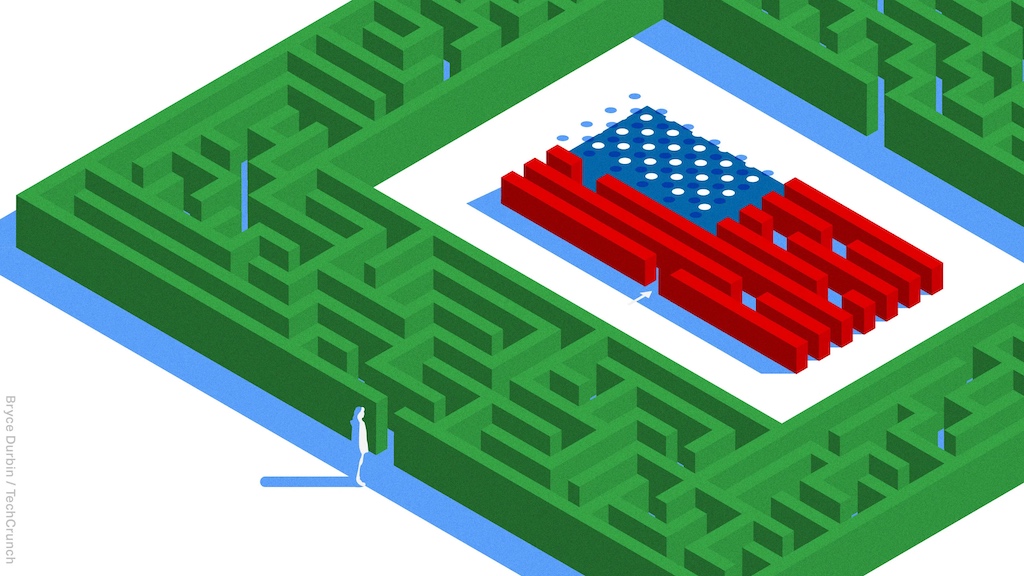
lone figure at entrance to maze hedge that has an American flag at the center

Image Credits: Bryce Durbin/TechCrunch

Dear Sophie,

My wife and I are from India. I’m a software engineer and have an H-1B visa. My wife has a dependent H-4 visa. The company that sponsored me for the H-1B also sponsored me for an EB-3 green card, which was approved about three years ago, but I’m still waiting for a green card number. My wife received her employment authorization and has been working as a doctor since then.

Can she apply for a green card? Will she get a green card sooner given her profession? If she applies for a green card, what happens to my green card?
— Humble Hubby

One to watch: Debut Capital’s Pilar Johnson works to augment funding for overlooked founders

Pilar Johnson smiles to camera wearing glasses and pink turtleneck

Image Credits: Pilar Johnson

For Pilar Johnson, co-founder and managing partner at Debut Capital, the road to investment started after she responded to a Craigslist job posting in a co-working space.

“That job exposed her to the concept of entrepreneurship, and soon, she started studying how founders scaled their businesses,” writes Dominic-Madori Davis in her new investor profile series.

Johnson, who is based in Houston, shared her investment thesis and strategies and spoke about her efforts to expand diversity in venture capital.

“If anybody is interested in being an investor and doesn’t think they have the skills, I would say, don’t believe that,” she said. “You can completely become an investor, and it’s needed.”

What to look for when hiring a growth marketing agency

White at and black hashtag symbols sitting over wooden seesaw scale before defocused background.

Image Credits: MicroStockHub (opens in a new window) / Getty Images

As startups of every size hunt for ways to reduce costs and expand their customer base, the term “burn rate” takes on a new emotional aspect, particularly with regard to hiring consultants.

Growth marketing agencies charge hundreds of dollars each hour, which raises the stakes dramatically for finding one that will address your company’s specific needs.

In a detailed primer, growth marketing expert Jonathan Martinez shares his criteria for the selecting process, presents common fee structures, and includes some of the top questions to ask during the review process.

Pitch Deck Teardown: Wilco’s $7 million seed deck

Founders with a technical background would do well to heed one of the biggest takeaways from Wilco’s $7 million seed pitch deck: Avoid the trap of focusing too much on the features of a product, rather than its benefits, writes Haje Jan Kamps.

“The ‘how’ will be important, but risks the temptation of getting into more detail than what’s important for a pitch deck. The ‘what’ is too tactical; for this part of the story, it doesn’t really matter what users need to do to gain these benefits. Focusing on the ‘why’ is why this slide is so powerful; it opens the door to more in-depth conversations if needed, but the groundwork is there. I wish more startups got this right!”

How to keep your development team aligned with the company’s product vision

Teacher preparing pencils for school day; aligning product team with product vision

Image Credits: Peter Dazeley (opens in a new window) / Getty Images

As a company grows, it’s common for teams to prioritize changing goals as they increase the scope of their activities.

However, there’s one team that can’t afford to lose sight of your vision for the product: development.

“When you have a development team aligned with the product vision, communication becomes easier, and there is lower dependency on key stakeholders, as it empowers team members with decision-making ability,” writes Sanjoy Singh, VP of engineering at Talentica Software.

“Such teams think more about improving feature adoption, customer engagement and delivering product-centric outcomes, which reduces iterations and production cost, refines time-to-market and helps in achieving business milestones.”

Singh explains his four rules to keep product teams aligned with the product vision:

  • Map individual aspirations with product needs
  • Follow product mindset principles
  • Align business outcomes with team KRAs
  • Ensure seamless communication

from https://ift.tt/lYDgVCa
via Technews
Share:

OpenSea’s $13B valuation doesn’t make sense as NFT trading volumes plunge

It may feel like it’s been a few years since OpenSea announced the funding round that pushed its valuation to the $13 billion mark. It was January.

At the time, this column dug into the company’s financial performance and came to a number of conclusions, primarily that the company was generating a lot of revenue. That meant OpenSea appeared somewhat inexpensive at its $13 billion price tag when stacked up against the revenue multiples other unicorns were getting in new, aggressive venture capital rounds.


TechCrunch+ is having an Independence Day sale! Save 50% on an annual subscription here.
(More on TechCrunch+ here if you need it!)


But we were also cautious, noting that Coinbase’s revenue multiple was more conservative than OpenSea’s, which gave us pause due to the well-known crypto exchange’s history of growth and profitability.

We summed it up as follows:

It appears that the new OpenSea valuation is cheap compared to recent fundamentals, but a little expensive when we consider how much its market booms and busts. NFTs had several cycles of interest last year alone. NFTs are a hectic space, and the rules of engagement have very much not been sorted out. Even more, Coinbase is getting into the NFT game and OpenSea is now likely too expensive for the crypto trading shop to buy. So, it’s going to be a gloves-on year for the two.

That wound up being correct much sooner than we expected. So let’s collect recent OpenSea market data, execute our usual round of valuation math, and then compare where the NFT marketplace’s valuation now sits compared to both its own financial performance and publicly traded comparables.

The last time we looked at OpenSea, we came away a bit more impressed than we expected to. Let’s see if that happens again.

The Q2 NFT market

If you read TechCrunch+ regularly, you may have seen two looks at the NFT market on our pages in recent weeks. In early June, we argued that the market was indeed slumping, and, based on the data available at the time, we were comfortably confident about it.


from https://ift.tt/KI8S3BN
via Technews
Share:

Fintech Klarna reportedly raising at a $6.5B valuation, giving new meaning to the phrase ‘down round’

In a sign of the times, Swedish buy now, pay later giant Klarna is reportedly close to inking a new round of funding that would slash its valuation to $6.5 billion – about 7x of what the company was valued in June of 2021.

The Wall Street Journal reported today, citing anonymous sources, that Klarna was “negotiating to raise about $650 million mostly from existing investors led by Sequoia Capital.” Sequoia chairman Michael Mortiz is also chairman of the embattled payments giant.

The deal is still in the works, reported the Journal. But if completed, it will represent a big fall from grace for Klarna, which was riding high last year when it raised $639 million in a round led by SoftBank’s Vision Fund 2 at a $45.6 billion valuation.

Klarna has been making a big push into the United States, competing with the likes of publicly-traded Affirm. In early June, Klarna said that over the past year, its “U.S. customer base has grown by over 65%, reaching over 25 million consumers.” The whole BNPL (buy now, pay later) segment has taken a hit as of late but still, the huge drop in valuation for Klarna gives new meaning to the phrase “down round.”

TechCrunch has reached out to Klarna for comment.

My weekly fintech newsletter, The Interchange, launched on May 1! Sign up here to get it in your inbox.


from https://ift.tt/wqt8KkT
via Technews
Share:

Popular Post

Search This Blog

Powered by Blogger.

Labels

Labels

Most view post

Facebook Page

Recent Posts

Blog Archive