The success of any piece of visual communication depends on colour. Research into the impact of colour in marketing tells us that it takes the average person just 90 seconds
If you've been hard at work in your spare time creating stunning paper art or impressive poster designs, selling your merchandise online can be a quick way to...
Originally designed in 1974 and launched internationally in 1980, Rubik's Cube is a design classic that's sold by the hundreds of millions. Over the years, it...
Your design portfolio is one of your most useful tools. It can win you commissions, help you snag a new design job, attract collaborators, and get your work in...
Editorial design can be a daunting task for someone who isn’t used to formatting large amounts of text. The skills you'll need are different to those of...
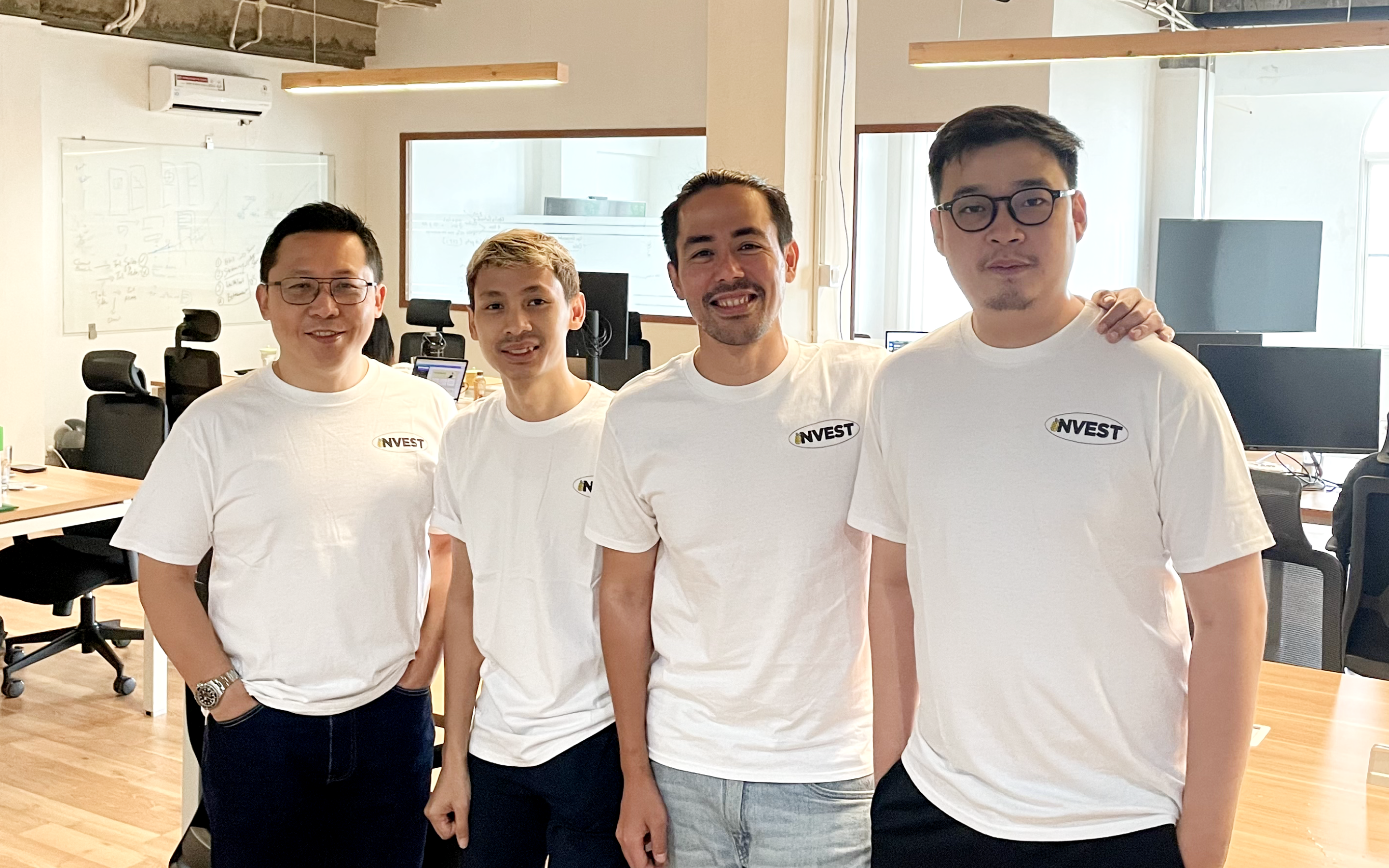
Indonesian wealth management app PINA’s founding team
While many of Indonesia’s investment apps are focused on hooking first-time investors with low fees and starting deposits, PINA is targeting the middle-to-upper classes with wealth management services. The app announced today that it has raised $3 million in seed funding from AC Ventures, Vibe.VC and Y Combinator, with participation from XA Network.
The company was founded in 2021 by Daniel van Leeuwen, the former country marketing head of Grab Indonesia. He is joined by technical co-founder Fajar Kuntoro, who was previously head of tech and engineering at Indonesian digital agency Mirum, Christian Hermawan, founder of Trust Securities and Hendry Chou, previously product design lead at edtech startup Zenius.
Van Leeuwen told TechCrunch that PINA was created because of the founders’ own challenges with personal finance. As a result, they wanted to make sure that all Indonesians have access to financial advice, not just people who are able to afford the fees and minimums charged by personal wealth advisors.
He said that Indonesian’s middle- and upper-class now includes 52 million people, and PINA was created to give them access to investment services without high minimums and fees as they invest for goals including buying a home, retirement and their children’s education.
“Our firsthand experience working with private financial service providers made us realize that change would never come from existing providers,” Van Leeuwen said. “Chou, Fajar and I worked at [Indonesian conglomerate] Mirum where we consulted large financial service brands on how to digitize and transform their businesses. It opened our eyes to the problems and opportunities in making wealth management accessible but also frustrating when we saw our clients’ inability to bring viable products to market due to their dated infrastructure and business models.”
PINA is among several Indonesian investment apps that have recently raised venture capital. A few examples include Pluang, GoTrade, Bibit, Ajaib, Pintu and Pluang.
Van Leeuwen said current solutions are great for first-time and new investors by charging low minimums, but PINA differentiates with its focus on integrating planning, money management and planning in one platform. “By bringing everything together in one platform, we aim to provide an experience they could never replicate with a human advisor or with a finance folder on their phone full of point solution apps,” he said.
Using PINA’s money management tools and advisors is free, and they monetize by charging when customers make an investment through the platform. Features include automatically-managed portfolios, and investing that needs more involvement from users. PINA also has customized financial advice, automated money management and investing tools in its apps.To use PINA, users link all their financial accounts to the app, and set their savings and investment goals.
PINA’s automatic diversified portfolios work by first determining a user’s investment goals, time horizon, risk tolerance and priorities. Then it invests in a portfolio of low-cost mutual funds. Van Leeuwen said its software automatically rebalances investments, selling ones that rise above users’ target allocation and buying more of ones that fall below it. This is done when users fund their portfolios or when portfolio drift reaches 5%.
As for its wealth management features, Van Leeuwen said PINA “aims to bridge the so-called ‘advice gap’” by providing financial advice that is both affordable and personalized. By linking their financial accounts, including their bank accounts, e-wallets, state pension and investment accounts, users are able to see their net worth, monthly cash flow and how their budget has fluctuated over the past few months. The app also allows them to book a slot with a certified financial advisors.
PINA plans to use its funding on user acquisition and by building out its advisory and investment features and complementary services like access to career coaching and exclusive member events.
In a prepped statement, AC Ventures founder and managing partner Adrian Li said, “The rising adoption of non-cash transactions along with the increase in mass affluent individuals in Indonesia has enabled new billion-dollar opportunities to emerge for wealth management platforms that offer a full stack of services including money management and investing. The team at PINA brings in-depth knowledge and connection with the financial services industry—making PINA one of the most promising companies in the field.”
Despite China’s sweeping bans on cryptocurrencies, domestic web3 talent is quietly flourishing, with many venturing beyond the country’s border.
From offering crypto derivative products to to making NFT games, Chinese web3 entrepreneurs’ footprint is far-reaching worldwide. We spoke to a dozen Chinese founders and investors to find out how this group is trying to build global web3 businesses while still keeping their roots in China and taking advantage of the home country’s abundant tech talent.
Many of them asked for anonymity.Some don’t want to draw the attention of the authorities because there are no clear rules around operating in China and serving overseas users, and others want to avoid being labeled “Chinese” at a time when China’s geopolitical tensions with the West run high.
Exploratory state
Many believe the current state of the internet, or web2, has become overly dominated by centralized, rent-seeking corporations like Google and Meta. Part of the appeal of web3 is to reclaim the internet through distributed ledger technologies like blockchain, which promises to bring greater decentralization and user ownership.
Cryptocurrencies and non-fungible tokens are two popular applications of blockchain that have attracted billions of dollars in investment, but they are far from the only use cases of the technology.
What China doesn’t want are cryptocurrencies’ crashing prices that have roiled the market in recent months. It appears to be encouraging a more controlled, centralized version of web3 — blockchain should be managed by trusted organizations rather than anonymous computers on the open web and bring productivity to areas that the government sees fit.
It is no surprise that China moved to outlaw initial coin offerings and crypto-based transactions for their financial risks, but there’s a grey area when it comes to other blockchain applications. While China has warned against the use of NFT as financial securities, it’s rebranding it as “digital collectibles,” which can only be bought using China’s fiat currency RMB, has little liquidity, and is tasked with promoting copyrights protection.
Some of China’s web3 developers are following the direction given at the top, joining in to build the infrastructure for digital collectibles. Other use cases have also gotten the government’s nod. Alibaba’s financial affiliate Ant Group, for example, has devised an array of blockchain services for purposes like using blockchain to verify court evidence and tracking food supply chains for safety.
Some argue that cryptocurrency, which is seen as a store of value, is like the bread and butter assets of web3. Without it, web3 won’t be able to operate at its fullest potential. Those in China who hold this view have largely turned their focus overseas, serving international users and raising funds from offshore institutions.
Abundant talent
Over the past few years, scores of Chinese web3 startups have moved their entities overseas in the wake of the country’s crypto crackdown, but they are not outright giving China up. They follow a playbook proven by previous generations of tech firms: domicile offshore, keep some operations in China, and go after foreign markets.
“Where else are you gonna find thousands of capable engineers?” says one China-based employee of a crypto exchange, asking not to be named.
China played a pivotal role in the blockchain industry’s early development, spawning a generation of crypto-savvy talent. Some of the world’s largest crypto exchanges, including Binance, FTX, KuCoin, Crypto.com, OKX, and Huobi, started out in the Greater China area. The world’s biggest crypto mining company Bitman was founded in Beijing. Chinese conglomerate Wanxiang was Ethereum’s first corporate investor and birthed the crypto investment powerhouse HashKey.
“There are seven million programmers here and they have proven again and again that they can innovate,” says Herbert Yang, general manager in Asia for Dfinity. The a16z-backed, Zurich-headquartered company came looking for projects in China that can be deployed on its blockchain network because the country offers “a great pool of tech talent.”
Other international organizations turn to China for the same reason. Ethereum Foundation, the organization behind the second-largest cryptocurrency, sponsored the “ETH Shanghai” hackathon to draw developers to its blockchain network. The virtual version of the event attracted nearly 1,000 developers this year, with an estimated 60% coming from China, according to the event’s organizer Mask Network, a startup bringing web3 functions to web2 platforms.
Chinese crypto firms moving overseas try to bring along their Chinese staff, but most of them resort to keeping some presence in China. While crypto-friendly countries like Singapore have policies for attracting foreign talent, local governments often set quotas to protect domestic employment. Employees with families in China are reluctant to relocate in the first place.
For web3 startups trying to hire in China over the last two years, the timing was ripe. Crypto value reached historic highs last year when China’s crackdown on its internet industry was well underway. Large-scale layoffs and slashed salaries prompted many workers from the likes of Tencent and Alibaba to seek out opportunities in the web3 frontier.
Others voluntarily quit their jobs at established tech firms to ride the web3 wave, either because they are lured by blockchain’s technological potential or the chance to accumulate wealth rapidly. Alibaba’s fintech affiliate Ant Group, for instance, has lost dozens of its employees to web3 startups in recent months, TechCrunch learned.
Top product managers
It’s not news that tech outfits employ workers in China while serving international users. Zoom had hundreds of R&D staff in China before Western media reports questioned the security of its cross-data practices. Alibaba-owned Lazada and Shopee, Southeast Asia’s e-commerce foes, also keep significant operations in Shenzhen, an export and tech talent hub.
For many tech firms, China remains a desirable place to hire, thanks to a decade of breakneck growth and competition in its internet sector. Companies like Alibaba, Tencent, and TikTok owner ByteDance have earned recognition from Silicon Valley and beyond for innovation in their respective fields.
“Chinese-founded projects are great at managing and designing business-to-consumer products,” suggests a Chinese worker at a U.S.-based blockchain startup. “They are obsessed with data analytics and spend a lot of time finetuning products.”
China’s strength in web3 lies less in building blockchain’s underlying infrastructure but more in developing applications for users, reckoned several crypto investors and entrepreneurs.
“The early opportunities in web3 are in protocols [infrastructure for blockchain applications], but they are mostly solving transactions while user experience is overlooked,” says a Hong Kong-based blockchain startup founder.
“Chinese people are very good at building user experience. After all, China has birthed a robust web2 ecosystem,” he adds.
China’s tech workers are also known to be “hardworking,” reckons Curt Shi, an early investor in the move-to-earn app StepN and a partner at Prodigital Future Fund, which looks for Chinese-founded web3 projects going global. While the overworking culture in China’s tech sector has drawn fire in recent years, others see it as the country’s advantage.
StepN, for example, is run by founders who emigrated from China to Australia. Like many entrepreneurs in the Chinese diaspora, it takes advantage of its original and adopted homes by keeping a small team in China as part of its international staff.
“That’s why it can have customer support 24/7 while many of its rivals can’t,” Shi says.
A cultural issue
Despite the strengths that Chinese-run web3 startups can potentially muster, they face similar challenges as their web2 predecessors.
TikTok, which has pioneered snappy video sharing, is arguably the only Chinese consumer internet platform that has achieved global success in recent years. Without a significant on-the-ground presence in foreign countries, TikTok took off early on thanks to its parent ByteDance’s algorithm-driven content discovery machine developed in Beijing.
But entrepreneurs’ cultural understanding becomes critical in web3. The industry is still in its infancy, meaning a company’s ability to tell convincing stories is key to onboarding early adopters. “Companies in web3 have to resonate with their users culturally,” says a Singapore-based founder of a decentralized autonomous organization (DAO) who is originally from China.
Web3, as its advocates say, is in many cases community-run. The technology undergirding blockchain has the idea of consensus built-in. DAOs, for example, execute decisions based on the collective consensus of their communities.
Chinese-founded web3 teams that lack the language ability to effectively convey their ideas or the understanding of other cultures may have a harder time winning users in new markets.
“I’ve seen Chinese companies with good products, but they don’t know how to talk to the international communities,” the DAO founder says. “Just having a good product isn’t enough anymore in web3.”
You’ve brushed off your Keynote skills, you’re giddy that you’re finally going to be able to start paying yourself a living wage, and you are excited to start pitching your startup’s next round of funding to your investors. It’s heady times, for sure, but hit the other pedal there for a moment, friend — you may be forgetting something.
After working with hundreds of founders on raising money — including the fantastically popular Pitch Deck Teardown series here on TechCrunch+ — there’s one slide that almost every founder gets woefully wrong. The slide is often referred to as The Ask. Or, as one investor friend calls it, the “what is my $10 million going to buy me”? slide.
The Ask is a sensitive topic to a lot of inexperienced entrepreneurs, which makes sense. Trying to right-size a funding round can be a little overwhelming, and there are a thousand different ways of building a startup. If you were successful in raising $8 million, you can do things one way. If you raised $12 million, you could perhaps launch more features of your product a little faster, or experiment more, or go after an additional market earlier. You know that. Your senior staff knows that. Your investors know that. But regardless, you need a Plan A.
What do those key metrics need to look like in order to raise not this round of funding, but your next one?
What do you need to do?
A lot of founders will tell you that they are trying to raise enough money to survive for the next 18 months. That’s probably true, but that will be true regardless of how much money you raise. A better approach is to think about what you need to accomplish to raise your next round of funding, and then work backward from there. This is probably a combination of metrics and milestones.
Metrics are the measurable parts of your business that grow and evolve over time. One of the best metrics you have is revenue, but there could be many others: the number of sales, average order value (AOV), monthly or annual recurring revenue (MRR or ARR, respectively), customer acquisition cost (CAC), customer lifetime value (LTV), daily and monthly active users (DAU and MAU), retention rate (usually expressed by its inverse, churn rate) and much more. What do those key metrics need to look like in order to raise not this round of funding, but your next one?
Milestones are also measurable parts of the business, but instead of tracking them over time, they tend to be binary: You’ve either hit a milestone or you haven’t. For startups, this could be key hires; finding the perfect, experienced CFO that can help take your company public is one major milestone a lot of companies at some point need to hit. Product launches (coming out of beta), launches in particular markets (launching only in California) and localization (launching your app in Spanish and French, for example) are also important milestones. Financial milestones are also common; the first time you make a single dollar from any customer is a huge shift in the business. When a customer, on average, starts to make you more money than it costs you to acquire them is another. For earlier-stage companies, completing a customer validation phase by talking to, say, 100 potential customers is a milestone.
When you’re raising money, you will be mapping out a set of milestones that you need to hit in order to validate your company. In addition, you’ll set a number of trigger points for metrics — hitting $1 million ARR, having 5,000 daily active users or finding a combination of customer acquisition channels that means you can acquire customers at a reasonable blended CAC, for example.
So let’s examine how to put together a great “ask” slide by ascertaining what it takes to determine how much you need to raise, how to create a specific set of goals and how to bring it all together in a coherent whole.
There’s a reason the term “daily driver sports car” exists. It’s because typically, purpose-built performance cars suffer from an inherent lack of usability: they’re loud, uncomfortable and they require pristine driving conditions. What’s more, they’re often bereft of the accessories we’ve grown used to, and when they’re included, they’re usually subpar.
These might sound like small concessions for the chance to drive a top-tier performance vehicle, but try spending upwards of $200,000 on a car that makes you miserable half the time. Thanks to improvements in technology and manufacturing, the line between sport and luxury is blurrier than ever.
Making fun cars more accessible is a good thing, but they should at least feel different from your daily commuter. Few modern sports cars distinguish themselves like this better than ones from McLaren Automotive, so much so that I was slightly worried that its latest vehicle, the McLaren GT, would lose those particular characteristics as a consequence of making the car more accommodating. While some rough edges have been smoothed out, for better or for worse, the luxury overhaul has been a bit overstated, yet the characteristic McLaren charm remains.
Nuts and Bolts
Image Credits: Alex Kalogianni
The McLaren GT is a mid-engine rear-wheel drive two-seater that acts as McLaren Automotive’s entry level model. It’s powered by a 4.0-liter twin-turbo V8, a variant of the motor found in other models across the lineup fitted with smaller turbochargers. This iteration drops the total power output, but delivers power lower in the rev band, making peak power more accessible sooner. It generates 612 horsepower and 465 pound-feet of torque which is routed to the rear wheels by way of a seven-speed dual-clutch transmission.
With the help of launch control, the McLaren GT can sprint from 0 to 60 in 3.1 seconds and can top out at 203 mph.
As with all McLaren cars, the GT is built on a carbon fiber chassis that contributes to its light 3,384-pound curb weight. It’s also fitted with electro-hydraulic steering, which goes a long way in delivering its distinct driving feel. It all rides on an adaptive damping system and 20-inch front wheels and 21-inch rears.
As a GT, this McLaren is meant for extended drives and thus its defining feature is the 14.8 cubic feet of storage space that sits behind the driver and on top of the mid-mounted engine.
It also features an active dynamics panel that allows drivers to customize the car’s behavior, a 1,200-watt Bowers & Wilkins sound system and the latest iteration of McLaren’s bespoke infotainment system. This is the heart of the McLaren GT’s user interface and sits in a 7-inch touchscreen in the center of the dash. Along with entertainment functions, it pairs with mobile devices via Bluetooth, gives access to a handful of car settings like ambient lighting and features HERE-powered satellite navigation.
This screen is supported by a 12.3-inch digital gauge cluster behind the steering wheel. Some of the above info is pushed to that screen such as turn-by-turn directions, though its main function is providing immediate car behavior information. The typical speedometer and tachometer are of course present, but there are also tire pressure displays and other status indicators. This screen reconfigures itself depending on drive mode to better position more vital info while in a track or dynamic setting.
The UX
The big mission statement for the McLaren GT is that it’s a better balance between the driving dynamics that McLarens are known for and creature comforts. Every sports car maker tackles this particular dish with its own recipe and for its part, McLaren Automotive goes heavy on performance and light on user-friendliness. The McLaren GT is meant to be its most approachable car yet, but thankfully, the extra dollop of refinement doesn’t overpower the distinct McLaren umami underneath.
Sliding under the dihedral doors and into the GT reveals a very performance-oriented cockpit. Two ergonomic seats are divided by a very small armrest and the sparse cabin is dominated by a leather-and-steel steering wheel flanked by two wheel-mounted paddle shifters. Behind this is the aforementioned 12.3-inch digital gauge cluster that can be accessed by one of the few stalks protruding from the steering column. The 7-inch touchscreen sits above the active dynamics panel and drive select buttons while the Bowers & Wilkins speakers stare at you from the doors like a hawk’s eye.
Image Credits: Alex Kalogianni
All of this is the first indication that the McLaren GT isn’t going to stray too far from its sports car roots: this cabin is nearly identical to the one in the 570S. Naturally, there are minor differences, including additional sound baffling. But one could go from car to car and be hard-pressed to spot them.
The next is the sensation of how purpose-built the car feels. All of the luxurious touches can’t hide the fact that you’re sitting in the carbon fiber monocell of a race-ready vehicle.
The McLaren GT doesn’t do quiet. Once the twin-turbo V8 fires up, it’s your soundtrack throughout the drive, Bowers & Wilkins be damned. From here on out, the McLaren GT demands the driver to be laser focused on the act of driving, as none of the half-minded lollygagging we’re used to doing in daily traffic will fly. The steering feedback is ample, the brakes require a very heavy foot and the haunches of the athletic-looking sports car obscures much of the rearward visibility.
When allowed to gallop, the GT is enthusiastic with its acceleration and the sensation between all the systems working to keep the McLaren on course is palpable. Its electro-hydraulic steering communicates the road’s surface conditions fluidly, and its heft gives drivers something substantial to embrace. This system combo feels more responsive to the fully-electronic power steering that we’re used to, it’s meatier and heavier, but mechanically so, not with just pre-programmed motorized resistance. Same goes for the suspension and active dampers, as it’s easy to feel every bit of the McLaren GT doing its job.
How it executes its task is also determined by the active dynamics settings. Two knobs for handling and power each have three settings, Normal, Sport and Track. Normal is the most docile settings, keeping the car’s ride as comfortable as it can be with all of the usual drive assists on, and with the engine at its most tame. Sport causes the car’s overall handling to be a touch more aggressive and relaxes some of the stability control, and it also heightens the throttle response, as well as the transmission’s affinity for lower gears. Track is the McLaren’s most aggressive setting: Handling? Rigid. Traction control? Off. Engine and transmission? Unrestrained.
One of the most wonderful attributes of the McLaren GT and indeed one that it shares with its super sibling the 570S, there is very little in the way of electronic hand-holding. This lack of a computerized safety net demands a higher application of driver skill and thus it makes crisp maneuvers very rewarding, just as it makes slip-ups nerve-wracking. Think of the experience as somewhere between a Lotus Evora and the Audi R8 V10.
Living La Vida Macca
As exciting as it is to live life on the razor’s edge with the McLaren GT, the bits in-between succumb to the usual supercar user-unfriendliness. A series of parking sensors and a backup camera make positioning the precious GT around much easier, as is a push-button nose-raising feature, which is a huge relief.
This eases some of the usual daily sports car frustrations, but the true heart of the GT’s problems lay with the in-car interface.
For as good as the car is mechanically, its in-house developed operating system is a particularly glaring weak point. McLaren knows this. Frankly, it used to be worse.
The 10-core-processor-powered “Infotainment system II” is faster and more responsive than the units found in previous McLaren vehicles. Familiar swipes and pinch-and-zoom functions make using the touchpad easy, though finding the desired menu is another matter. More often than not, it will require a passenger-side co-pilot to give it the necessary attention or for the driver to pull off the road to sort things out. This could be something as simple as trying to select a music input source, but its most frustrating when it comes to navigation.
Despite the upgrade, the built-in system still feels far less intuitive and limited by current standards. Punch in the address and if it finds it, there are limited routes to choose from, if any alternatives. Deviate from the route and it will stubbornly insist that you find your way back long before it decides to re-route itself. There were also instances of inaccurate road data pushed our way, directing us to turn on roads that weren’t there, or sometimes not recognizing ones that were.
As the GT is not Apple CarPlay or Android Auto compatible, drivers are out of luck when it comes to alternative navigation systems like Google Maps or Waze. Indeed, the heavily-bezeled touchscreen’s size and orientation mirrors that of a smartphone, and there were many times we wished we could simply suction-cup our own phone over it just to find our way back home.
This doesn’t bode well for a car meant for long car journeys, nor does the 14.8 cubic feet of storage space function as intended. The extra room that sits atop the engine means whatever is laid across it is subject to a great deal of heat. It’s great for a couple pairs of skis but not so great for cargo such as electronics.
The McLaren GT is a true sports car and none of its down-tuning or soft appointments take away from that. In fact, it’s arguable that they don’t go far enough to substantially differentiate this car from others in the lineup or to live up to its Grand Tourer moniker. That’s certainly the case when it comes to its tech.
McLaren could’ve kept everything mechanically identical to its sibling cars and the GT could have set itself apart with a more robust, user-friendly road-trip oriented interface, easier to maps, bigger screens to facilitate easier access and 360-degree parking cameras, and more modern mobile device compatibility, just to name a few features we wished it had. As it stands, the $205,000 McLaren GT is a true entry-level sports car that sticks to the classics.
It delivers on the full experience, but in terms of tech, it’s a lateral step.
Welcome to Startups Weekly, a fresh human-first take on this week’s startup news and trends. To get this in your inbox,subscribe here.
Tech innovation is a cycle, especially in the main character-driven world of early-stage venture capital and copycat nature of startups.
The latest proof? Y Combinator this week announced Launch YC, a platform where people can sort accelerator startups by industry, batch and launch date to discover new products. The famed accelerator, which has seeded the likes of Instacart, Coinbase, OpenSea and Dropbox, invites users to vote for newly launched startups “to help them climb up the leaderboard, try out product demos and learn about the founding team,” it said in a blog post.
If it sounds familiar, it’s because — in my perspective — Y Combinator is taking a not-so-subtle swipe at Product Hunt, a nearly decade-old platform that is synonymous with new startup launches and feature announcements.
Y Combinator doesn’t necessarily agree with this characterization: The accelerator’s head of communications, Lindsay Amos, told me over email that “we encourage YC founders to launch on many platforms — from the YC Directory to Product Hunt to Hacker News to Launch YC — in order to reach customers, investors and candidates.”
The overlap isn’t isolated. As Y Combinator makes a Product Hunt, Product Hunt is making an Andreessen Horowitz. Meanwhile, a16z is making its own Y Combinator. Not to mention Product Hunt has investment capital from a16z and formerly went through the Y Combinator accelerator.
The strategy is more than a tongue twister, it’s a signal on what institutions think is important to offer these days (and why they’re starting to borrow more than sugar, or deal flow, from their neighbors).
In the rest of this newsletter, we’ll talk about Coalition, Backstage Capital and Africa’s temperature-fluctuating summer. As always, you can support me by forwarding this newsletter to a friend or following me on Twitter or subscribing to my blog.
Deal of the week
Coalition! Built by a quartet of women operators in venture, Coalition is a fund meets network that is trying to get more diverse decision-makers onto cap tables. The two-pronged approach of fund and network helps Coalition cover multiple fronts: Founders can turn to the firm for capital or the network for advice at no further dilution. Aspiring investors and advisers can turn to the firm to begin building out their portfolio, and LPs can put money into an operation that is committed to broadening diversity on cap tables, known to have economic benefits.
Here’s why it’s important: Coalition co-founder Ashley Mayer, the former VP of communications for Glossier, explained a little about the building philosophy behind the new company.
Mayer explained that she and her three co-founders saw the value of taking a “portfolio approach” to careers, basically going deep on their respective operator roles while also angel investing and eventually scout investing. Three of them previously worked in venture but left it because they missed the experience of operating. Now, they’re trying to scale a way for people to keep their day jobs and build beyond it. Coalition co-founder and Cityblock Health founder Toyin Ajayi said that “as one of few women of color leading a venture-backed company, I feel a deep obligation to hold the door open for others.”
This week on Equity, we spoke about Backstage Capital laying off a majority of its staff, weeks after pausing any investments in new startups. The workforce reduction, which impacted nine of Backstage Capital’s 12-person staff, was due to a lack of capital from limited partners, per fund founder Arlan Hamilton.
Here’s why it’s important: Backstage Capital has invested in over 200 startups built by historically overlooked entrepreneurs, while Hamllton herself has invested in more than two dozen venture capital funds. Despite having impact, no single firm can be immune from the difficulties of venture (or growing in an environment full of macroeconomic and cultural hurdles). Below is an excerpt of my story.
Without more support, it becomes difficult to close shop on new investments, bring more assets under management and bring more follow-on investments, Hamilton said.
“Somebody asked me, ‘why don’t you have more under management?’” she said during the podcast. “You gotta ask these LPs, you gotta ask these family offices, you gotta ask these people who ask me, ‘how can I be helpful,’ and I say ‘invest in our fund,’ and I never hear from them again.”
TC’s Dominic-Madori Davis and Tage Kene-Okafor wrote a story about how the downturn is playing out in Africa, essentially answering why we should all be tuning into the continent’s activity this summer.
Here’s why it matters:Africa’s venture capital totals weren’t too shabby in the first quarter, but investors think that it may just be a reporting delay. If most of the deals were finalized before high interest rates, the war and inflation, experts say, we may see an economic downturn soon start affecting developing markets. The story doesn’t stop there; I’d read more to see what Tiger Global tells us and how August is shaping up to be a key month of movement.
The summer could decide this year’s fate of the African funding landscape.
Hello and welcome back to Week in Review, where we recap the biggest stories from the week. If you want this in your inbox every Saturday, sign up here.
Greg Kumparak is still on vacation, but not to worry! He’ll be back at the helm next week to bring you our biggest stories. Until then, I’ve got you covered.
First for some quick business. TechCrunch+ is having an Independence Day sale, which gets you 50% off on an annual subscription. Need more? TC+ Editor-in-Chief Alex Wilhelm gives you all the reasons to take the plunge here.
Okay let’s go to the moon! Yes, the moon. Some space junk crashed to the lunar surface this week, causing some enthusiastic observers to scratch their heads. Was it from SpaceX? Was it from a rocket launched in 2014 by the China National Space Administration? We still don’t know, but Devin Coldewey had a chat with Darren McKnight from LeoLabs, which has built a network of debris-tracking radar, to get some more insight.
Image Credits: NASA/Goddard/Arizona State University
other stuff
Speaking of space: Ever want to stare longingly into the depths of the universe and actually have something stare back? This is supposed to happen in two weeks when the James Webb Space Telescope will release its first images. “This is farther than humanity has ever looked before,” NASA administrator Bill Nelson said during a media briefing this week. Maybe the truth is out there.
Tesla Autopilot layoffs: The automaker this week laid off 195 employees across two offices in its Autopilot division. Those who were laid off filled supervisor, labeler and data analyst roles. Questions persist about what impact the layoffs will have on Tesla’s wider advanced driver assistance system. The remaining 81 staffers on the Autopilot team will be relocated to another office, as the San Mateo office will be shuttered.
SPAC subpoenas: A New York-based federal grand jury sent subpoenas to the board of Digital World, which is preparing to acquire Trump Media & Technology Group, Donald Trump’s media group responsible for Truth Social. According to an SEC filing, the subpoenas are an effort to gather more information about “Digital World’s S-1 filings, communications with or about multiple individuals, and information regarding Rocket One Capital.”
Deepfake job apps: The FBI this week issued a warning that deepfakes are being used along with stolen information to apply for jobs. A part of this even involves video interviews. “In these interviews, the actions and lip movement of the person seen interviewed on-camera do not completely coordinate with the audio of the person speaking. At times, actions such as coughing, sneezing, or other auditory actions are not aligned with what is presented visually,” the FBI said in a statement announcing the disturbing news.
Party pooper: Welp, that 2020-era indefinite ban on unauthorized parties at Airbnbs is now permanent. This means no open-invitation parties and no parties whose attendance exceeds 16. The company said in a blog post that since they instituted the ban 2 years ago, there was a 44% year-over-year decrease in the rate of party reports. There will be no partying on, Garth.
Image Credits: DrAfter123 / Getty Images
audio stuff
Over on the TechCrunch Podcast Network, Christine Tao, founder of Sounding Board, joined Darrell and Jordan on Found to talk about difficulties she and her co-founder faced while fundraising and how they established the customer type that made scaling possible.
And on the Wednesday episode of Equity, Natasha Mascarenhas asked a question inspired by a recent post penned by TC’s own Rebecca Szkutak: What’s in the fine print for term sheets these days, and what does that tell us about who is going to be in control during the downturn?
Want even more TechCrunch? Head on over to the aptly named TechCrunch+, where we get to go a bit deeper on the topics our subscribers tell us they care about. Some of the good stuff from this week includes:
Disclose your Scope 3 emissions, you cowards Tim De Chant takes on the companies that claim they’re serious about carbon emissions. In short, if they’re serious, then they’ll estimate their Scope 3 emissions and not undermine attempts to make Scope 3 disclosures standard.
Pitch Deck Teardown: Wilco’s $7 million seed deck Haje’s back with another pitch deck teardown, this week from Wilco, a company whose funding he covered last week. He is pretty excited about Wilco’s deck, as, he says, it’s 19 slides that tick all of the boxes.
Welcome back to This Week in Apps, the weekly TechCrunch series that recaps the latest in mobile OS news, mobile applications and the overall app economy.
The app industry continues to grow, with a record number of downloads and consumer spending across both the iOS and Google Play stores combined in 2021, according to the latest year-end reports. Global spending across iOS, Google Play and third-party Android app stores in China grew 19% in 2021 to reach $170 billion. Downloads of apps also grew by 5%, reaching 230 billion in 2021, and mobile ad spend grew 23% year over year to reach $295 billion.
Today’s consumers now spend more time in apps than ever before — even topping the time they spend watching TV, in some cases. The average American watches 3.1 hours of TV per day, for example, but in 2021, they spent 4.1 hours on their mobile device. And they’re not even the world’s heaviest mobile users. In markets like Brazil, Indonesia and South Korea, users surpassed five hours per day in mobile apps in 2021.
Apps aren’t just a way to pass idle hours, either. They can grow to become huge businesses. In 2021, 233 apps and games generated over $100 million in consumer spend, and 13 topped $1 billion in revenue. This was up 20% from 2020, when 193 apps and games topped $100 million in annual consumer spend, and just eight apps topped $1 billion.
This Week in Apps offers a way to keep up with this fast-moving industry in one place, with the latest from the world of apps, including news, updates, startup fundings, mergers and acquisitions, and suggestions about new apps to try, too.
Consumers react to Roe v Wade by deleting period tracking apps
In the week after the controversial Supreme Court ruling on Roe v Wade, consumers began to lock down access to their non-protected health data in period tracking apps. There was enough app switching taking place to influence the App Store charts, in fact, as users moved both to and from leading app Flo, benefitting rivals like Clue and Eve, which saw installs increase by 2,200% and 83%, respectively.
There are differing opinions on how much concern there needs to be over this period tracking data. Some argue that period tracking app data would not be the primary evidence used if there were to be prosecutions over now criminalized abortions — an argument, however valid, essentially serves to chastise consumers for reacting in fear by switching to more private apps or deleting them altogether. The bigger picture here is that this data was never HIPPA protected in the first place. And if consumers are reacting with seemingly outsized concern, maybe it’s because the government’s ruling terrifies them about what the future for this country holds. Maybe it not so crazy to switch back to pen and paper at a time when a rogue court is throwing out half a century of established legal precedent in order to control bodies and invade citizens’ privacy.
In any event, many period tracking app providers have been making promises to secure data or introduce new anonymity features. But in an unfortunate twist, it was a newcomer to the market that became the No. 1 app after the ruling — largely based on promises of end-to-end encryption and not its existing protections. As it turned out, the app — Stardust, as it was known — was sharing users phone numbers with a third-party. And after it rolled out its expected encryption later in the week, Stardust was found to be sending the local encryption key back to its servers. In layman’s terms, that means whatever was encrypted could now be decrypted. Not a good look.
Snapchat thinks its users will pay for perks with Snapchat+
Image Credits: Snapchat
Like many tech companies, Snapchat has been struggling amid the tougher economic conditions and inflation. The company reported a challenging first quarter where it had additionally cited supply chain disruptions, the war in Ukraine, labor shortages and rising interest rates as contributing factors to its miss on both revenue and earnings in the quarter, and only a small uptick in daily active users. The company is also still dealing with the fallout from Apple’s 2021 privacy changes, or ATT (App Tracking Transparency), that impacted its advertising business and revenue.
In the midst of these macroeconomic factors, Snap is trying to navigate new regulations around minor safety, lock down its developer platform, roll out parental controls and remain competitive in a market where much of young people’s time spent in apps is now shifting to TikTok and other lightweight networking apps — or what TechCrunch recently dubbed “homescreen social” apps — like LiveIn, BeReal and others.
This has resulted in a search for alternative business models beyond advertising, it seems. This week, Snap introduced Snapchat+ — a $3.99/month subscription that provides access to premium features like being able to pin a friend as a “BFF,” see who rewatched a Story and the ability to change the app icon. The move, which was leaked in advance, follows the launches of similar subscription options aimed at power users, like Telegram Premium’s recent launch and Twitter Blue. It’s hard to say if these investments will pay off in the long run. For now, Twitter continues to make the majority of its revenue from ads and a small bit from data licensing. Telegram’s offering is too new to analyze at this time.
Snapchat+, meanwhile, is targeting an audience with perhaps even less to spend on subscription services. Will Snap’s high-schooler customers want to use their babysitting money, allowance or income from another minimum wage job or side hustle to gain a few extra features? Were these features actually in high demand, the way Twitter’s Edit button was? What’s the strategy for enhancing the offering over time? How will Snap evaluate which features to add — is it analyzing user data or behavior? Will it launch a feedback forum? Or will it just come up with ideas on its own? What percentage of revenue will Snapchat+ need to target to be considered a success? What are the ramifications to Snap if the product fails? Would Snap consider a bundle that combines hardware (like its new drone camera) and software?
For what it’s worth, Snap clearly didn’t want to invite much scrutiny of this major change to its business model. The company only offered one outlet, The Verge, an interview and said very little in it — beyond conveying to investors that this won’t be a “material new source of revenue.” Snap also tried to suggest to the outlet that it had been thinking about subscriptions for over five years, as if the new product was not reactive to the state of its business today.
Of course, tech companies weigh a variety of ideas all the time! But the timing of when they allocate real-world resources to build them is what actually matters. And Snap built a new way to make money at a time when the old way is suffering.
Oh, we’re thinking about banning TikTok again?
Image Credits: TechCrunch
The GOP wants to force you to use Reels. OK, that’s not quite the story — but that could be the result.
Carr’s letter was prompted by the new report from BuzzFeed News which found that ByteDance staff in China had access to U.S. users’ TikTok data as recently as January 2022. (Beijing-based ByteDance owns TikTok and its Chinese sister app, Douyin).
Carr demanded the companies respond by July 8 if they didn’t comply and why. Specifically, he asked the app stores to explain why they would not penalize an app engaged in “the surreptitious access of private and sensitive U.S. user data by persons located in Beijing” coupled with “TikTok’s pattern of misleading representations and conduct.”
TikTok has long insisted it stores U.S. users’ data in the U.S. itself, with backups in Singapore, and said the data was outside the jurisdiction of China’s national security law which requires companies to turn over data to the Communist party if requested. But if TikTok data was being accessed in China, these prior statements seem to be misleading, at best.
The Trump administration had previously tried to ban TikTok by way of an executive order, but was held up in the courts. The Biden administration didn’t pursue the matter. But this latest incident now has the GOP interested in a ban once again. Fourteen GOP senators have also issued letters calling for answers from the video app, arguing it’s a national security threat.
Of course, it’s not that easy to ban TikTok. Last time around, TikTok creators successfully sued to stop the ban, which they said would prevent them from being able to earn a living. Another judge had also blocked Trump’s ban, saying the former president had overstepped his authority.
TikTok, meanwhile, has responded to BuzzFeed’s reporting by announcing it’s moving all U.S. user data to Oracle servers in the U.S., after which it will then delete U.S. users’ data from its own data centers, it says. Sure, Jan.
Weekly News
Platforms: Apple
Apple announced on Thursday developers in South Korea can now use third-party payments in their apps published to the South Korea App Store but will still pay a 26% commission. Plus, just as it tried before with Dutch dating apps, which had also won the right to use third-party payments, Apple said developers will need to submit their revised apps in a separate binary. Dutch regulators had pushed back against that provision, calling it an undue burden on developers, and Apple eventually dropped the requirement to come into compliance. It’s unclear how the Korea Communication Commission (KCC) will choose to respond, however.
Apple CarPlay in iOS 16 will support a new feature that allows drivers to pay for gas through a screen in their car using the fuel company’s app, instead of having to pay at the pump itself. BP, Shell and Chevron have expressed interest.
Apple clarified the iPad home hub support in iOS 16, after testers noted the iPad could no longer serve as a home hub — while Apple TV and HomePod devices could. The company explained that the Home app will introduce a new architecture in iPadOS 16 and iPad won’t be supported as a home hub with that upgrade. Impacted users can opt to not update their Home app to continue to use their iPad as a home hub.
Apple released the fourth public beta of iOS 15.6 and iPadOS 15.6.
Platforms: Google
Google’s Switch to Android app for iOS users is now compatible with all Android 12 phones, instead of just Pixel phones as before. The feature allows users to more easily make the move from iOS to Android by copying over contacts, calendars, photos and videos, and instructing on how to deregister iMessage.
Google settled a lawsuit with Android app developers over fees. The company settled a lawsuit with U.S. app developers who made less than $2 million in Play Store revenue from 2016-2021 by setting aside $90 million in a fund to pay back money to developers. The suit had argued Google gained a monopoly in the Android app distribution space through anti-competitive practices. The law firm said 48,000 U.S. developers are eligible to receive payments from Google.
E-commerce & Food Delivery
Food delivery biz Deliveroo will expand advertising on its app in July, including by adding ads to its order-tracking page as it chases profitability.
Fast food and membership club apps are seeing increased demand amid inflation, Apptopia reports.
TikTok is testing a dedicated “Shop” feed in Indonesia that lets users browse and purchase products from different categories, such as clothing and electronics. Of note, the feed sits on the app’s main page alongside its For You and Following feeds, which would be a major change to the product. The TikTok Shop service itself is currently available in select markets, including Indonesia, Vietnam, Singapore and the U.K.
Augmented Reality
Pokémon GO developer Niantic laid off 8% of its workforce, or around 85-90 people, amid the economic downturn. The company also canceled four upcoming projects, including Heavy Metal, a Transformers game that had already entered beta testing; Hamlet, a collaboration with the theater company behind “Sleep No More;” and two other projects known as Blue Sky and Snowball. Niantic has not been able to reproduce the success of its flagship game, having shut down a Harry Potter AR title and so far seen little adoption for its new AR game, Pikmin Bloom. The company is now working on a new AR game, NBA All-World.
Niantic’s Lightship is also powering a new “Game of Thrones” app designed to promote HBO’s upcoming prequel series “House of the Dragon.” The AR app will allow users to hatch a personalized dragon egg and raise their dragon at home. The app, produced by The Mill, will arrive on July 20.
Niantic launched Campfire, a new social app for its community that shows a map of your area with game experiences and activities from friends and other nearby players. The app helps users find local communities, add and manage friends, chat in one-on-one and group messages, join events and more.
Social
Image Credits: Facebook
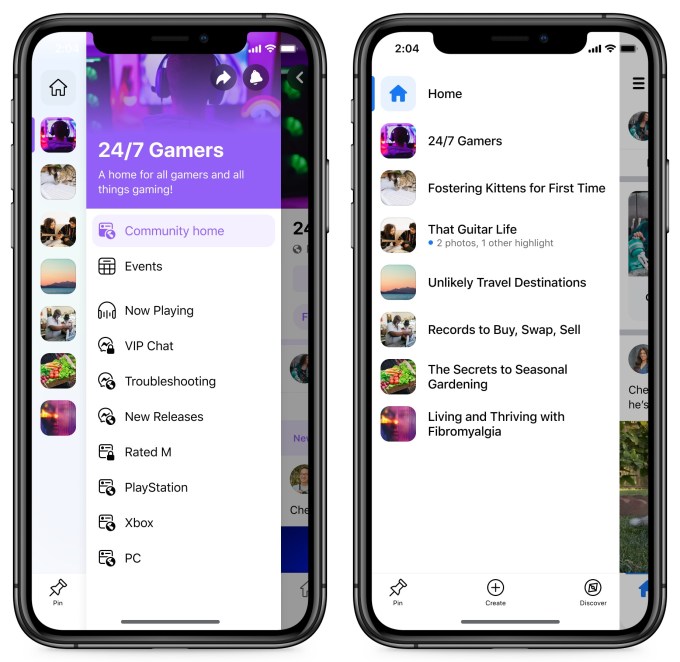
Facebook takes on Discord. The company this week rolled out new features for Facebook Groups including “Channels,” that allow users to connect with one another in smaller groups via chat or audio, similar to Discord, or in interest-based communities. The app will also test a new sidebar that will make it easier for users to find their groups more quickly, with the option to pin favorites to the top.
Facebook also rolled out NFTs. U.S. NFT creators will now be able to display NFTs under a new tab on their profiles. Meta recently launched NFTs on Instagram in May 2022.
Pinterest has a new CEO. The image pinboard and link-saving site’s co-founder and CEO Ben Silbermann stepped down after a 12-year run, turning over the reins to Google commerce boss Bill Ready. Previously, Ready ran Google’s shopping and payments arm after joining Google from PayPal, which acquired its startup Braintree for $800 million in 2013. Last fall, PayPal had been reported to be considering a Pinterst acquisition.
Instagram rolled out Reels APIs for developers. The new endpoints added to Instagram’s developer platform will allow developers to schedule Reels, publish to Instagram Business accounts, access social interaction metrics, reply to or delete comments, hide or unhide comments, disable or enable comments, find public Reels tagged with specific hashtags and identify Reels where an Instagram Business or Creator’s alias has been tagged or @mentioned.
Instagram users can now delete their accounts from within the iOS app. The app has complied with Apple’s new policy that states any app offering account creation must also now offer deletion. Instagram, however, puts accounts on hold for a month instead of immediately deleting them. If you log back in at any time, the deletion process is canceled.
Instagram is testing a change that turns all videos into Reels. The company said it’s trying to “simplify and improve” the video experience in the app. In reality, the move is yet another effort aimed at helping Instagram catch up with TikTok.
Short-form video app Triller filed for an IPO. The company confidentially filed for a U.S. IPO after ending its $5 billion merger with video ad software provider SeaChange International on June 14.
Messaging
WhatsApp is developing avatars. The Meta-owned company is working on an avatars feature similar to Apple’s Memoji or Snap’s Bitmoji, that could stand in for the user during video calls.
Streaming & Entertainment
Spotify launched a new personalized playlist option called “Supergrouper” that lets you create your own supergroup consisting of up to five artists. After you create and name your group, Spotify will curate a playlist of songs from the artists you selected, which you can also share on social media.
U.S. artists on Spotify can now use the app’s Marquee self-serve ad-buying option to promote releases across 14 markets via the Spotify for Artists dashboard. Marquee first launched in October 2019 but wasn’t able to target users outside the U.S. initially.
Twitch added a new Guest Star feature that lets streaming hosts bring up to five guests into a stream and swap them in and out.
Gaming
Meta VR developers call out the company for hypocrisy given its complaints over Apple’s App Store fees. The developers are frustrated with Meta’s 30% cut of their purchases and 15-30% cut of subscriptions, similar to Apple’s. They said Meta CEO Mark Zuckerberg had called Apple’s fees “monopoly rents,” but his company is doing the same thing.
The WSJ examined the growing complexity of hypercasual games which have begun adding leaderboards, multiplayer formats and in-app purchases to these previously simple games as they look to retain player retention amid market saturation. The games often also use rewarded ads or those that showcase someone playing poorly to encourage users’ sense of competition. Other ads will feature gameplay that doesn’t exist at all.
Travel & Transportation
Car rental apps in the U.S. hit all-time highs for new installs and MAUs in May,Apptopia found, indicating pent-up travel demand and possibly a desire to avoid the chaotic airline issues. New installs are projected to increase 27% YoY in Q2 2022, and MAUs are expected to increase 19.4%. Enterprise (39.6%), Hertz (36.8%) and Turo (34.3%) are growing MAUs the fastest, the firm said.
Reading & News
Storytelling community Wattpad launched a creator program that offers writers up to $25,000 in compensation. There’s also a new metric called “Engaged Readers” that helps track readers’ interest in stories and a creator portal where writers can get other tips about improving their content.
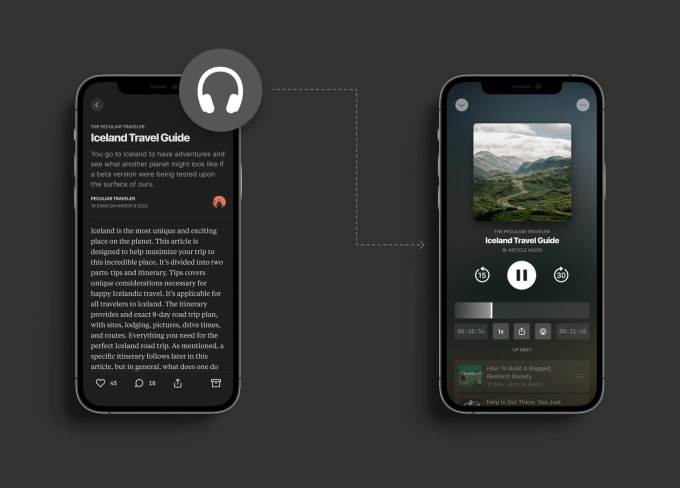
Substack has begun to convert some writers’ text into audio automatically using text-to-speech technology. Readers using the Substack iOS app will have the ability to hear posts read aloud as a result.
Image Credits: Substack
Government & Policy
Russia is issuing fines to companies that aren’t storing Russian citizens’ personal data in the country. Google, Twitch, Pinterest, Airbnb and UPS have already been fined, and the government has opened cases against LikeMe and Apple as well.
Security & Privacy
Google notified Android users who were compromised by Hermit government-grade spyware which targeted victims in Kazakhstan and Italy. Google also examined the Hermit iOS app which is sideloaded onto devices and included six exploits, including two zero-days. Apple said it revoked all known accounts and certificates associated with the spyware campaign.
T-Mobile launched a service called App Insights that allows marketers to target wireless customers based on the apps they have installed. Customer data is anonymized and pooled together with others with similar interests and behaviors. And users are opted in by default.
Instagram is accused of continuing to allow a man accused of selling photos of children to pedophiles to maintain his account and share images for two months following his arrest, Forbes reports.
Google updated its password manager for Chrome and Android, offering a way for users to manually enter new passwords across platforms, as well as a new unified user experience that automatically groups multiple passwords for the same sites or apps together, and a new shortcut on the Android home screen to get access to these passwords. The iOS Chrome app will also be able to generate strong passwords for you.
Funding and M&A
Data analysis startup Zing Data raised $2.4 million in seed funding led by Kindred Ventures for a mobile app that lets business users work with data wherever they are in an accessible way. The product can connect with a variety of popular data sources, including Snowflake, Trino, Google BigQuery and Google Sheets, as well as databases like Postgres and MySQL. Users then choose a dataset and some fields to display, then can manipulate the data to see different views and can share charts with others.
London-based Birdie, a provider of digital tools for in-home care, raised $30 million in Series B funding led by Sofina, which will be used to scale the business in Europe. The SaaS company works with 700 care businesses that deliver millions of visits per month to around 35,000 recipients and 8,000 family members. Its services are available through both an iOS and Android app.
London-based fintech Cleo, an AI-powered app for financial assistance, raised $80 million in Series C funding led by Sofina. The app targets the U.S. market’s Gen Z users with budgets and savings guidance and education.
New Delhi-based digital bank Progcap raised $40 million in a Series C extension, valuing the business at $600 million, up 3x since September 2021. Creation Investments and Tiger Global led the round. The app serves 700,000 small retailers across hundreds of Indian cities and towns.












 Data analysis startup Zing Data


