


Spotify wants users to pay for separate ‘Play’ and ‘Shuffle’ buttons

Spotify is updating its app to address a long-standing user complaint with music playback — but it’s asking customers to pay for the fix. The company announced today it will introduce, at last, a separate Play Button and a Shuffle Button at the top of albums playlists to make it easier to play the music the way you like. This will replace the combined button available before, which had been inconsistent across platforms and frustrating to use. However, streamers may be disappointed to find out that what should be an app update in favor of better usability is oddly being sold to them as a reason to upgrade to Spotify’s paid tier — the company says the new button is only being offered to Spotify Premium subscribers.

This seems a bizarre choice given that customer complaints had correctly identified an issue with the overall design of the Spotify app’s interface and its user experience. As one review posted last year to Spotify’s Community forums had noted, the button offered was even different across Spotify’s apps. On mobile, playlists had the combined Shuffle/Play button, but on the desktop, the button was just a regular Play Button. This was confusing for users who switched between platforms, the post pointed out. The user suggested Spotify simply offer two separate buttons so people could choose how they wanted to stream music, instead of having to tap into Now Playing screen to enable or disable Shuffle mode.

The post received 647 upvotes and pages of comments from others who agreed. It was not the only complaint of this nature on the forum site. Others posted similar requests for separate Play and Shuffle buttons or even different solutions to the same problem. For example, one person asked Spotify to allow users to configure which button appeared in the app to make it a user’s choice.

Spotify has been working on this problem for awhile. It first introduced the Shuffle/Play icon in 2020 to reduce streaming to just a click, it said, and last year made Play Button the default button on all albums for Spotify Premium users (at Adele’s request, as you may recall). With this upgrade, the Play Button will remain the default, and Shuffle will be a separate option across the mobile Spotify experience.

While arguably a minor change to the app — it’s literally just a button — it’s clearly a feature that was in need of a fix in users’ minds, not a premium offering. Other major music streaming apps, like Apple Music and Amazon Music, already include separate Play and Shuffle buttons, for instance.

It’s uncommon for app makers to charge for something like a different button, especially when the reason for the change is because users were unhappy with the app’s functionality and design. One somewhat related example could be Twitter’s subscription service, Twitter Blue, which allows users to customize the bottom bar of the app with buttons of their choosing. But in that case, the option is more about personal preference and quick access to favorite features — not usability. Even without paying, Twitter’s features are still easy to get to in the main navigation on the left side of the app.

Spotify tells us the idea to charge for the button has to do with how it perceives the benefits associated with a Premium Subscription. At its core, Premium users are paying for the option to listen to any song they want, on-demand. The button is somewhat of an extension of that, as it’s allowing users to choose to listen on-demand in any way they want.


from https://ift.tt/QoUXz5O
via Technews
Share:

Meet the second wave of Disrupt Audience Choice roundtable winners

We asked TechCrunch readers to vote for the roundtable sessions they would most like to see at TC Disrupt on October 18–20 in San Francisco, and startup fans from around the world have spoken.

Roundtables — some of the most popular sessions at TechCrunch Disrupt — are 30-minute expert-led discussions designed for up to 20 attendees who share an interest in a particular subject. The format allows for deeper conversation, questions and answers and time for attendees to connect with and explore collaborative opportunities.

Before we reveal the next five roundtables that received abundant love during our Audience Choice vote-a-thon, here’s a brief reminder from the home office:

Click and save: Buy your pass to Disrupt before prices go up on August 5th 2022, and you can over $1,000.

Ready for an interesting mix of roundtable topics? From solving real-world problems with NFTs, improving AI with better data and disrupting without destroying, to knowing when to launch out of stealth and how to make a graceful, profitable exit — you’ll be hard pressed to pick and choose. What a delightful dilemma.

NFTs for real-world problems

Speaker: Manuela Seve, the CEO of Alphaa.io

NFTs are still associated with digital files, but in reality they can be used to solve problems around authenticity, resale and community engagement across art, fashion and even real estate.

In this roundtable, we’ll chat about real use cases — developed through Alphaa.io — for certifying art and luxury goods. This includes point-of-sale integrations for legacy brands, shifting paper certificates of authenticity to NFTs, building utility and generating resale royalties.

We’ll also look at how, by using NFTs, you can offer exclusive digital environments and products to loyal followers, fund production of physical objects and experiences and create a tool that empowers creators to retain control of their work and fund any project.

Expanding applications of AI across real estate and beyond

Speaker: Sam Stone, the director of product management, pricing and data, at Opendoor

While buying a home is often one of the largest financial decisions one can make, the process went unchanged for decades until Opendoor rebuilt every part of the transactional experience to be digital, on-demand and more accessible.

Pricing systems are core to Opendoor’s DNA. By developing different machine learning model types and leveraging data science, the company provides a high level of accuracy, coverage and functionality.

This roundtable will draw on our AI, machine learning and data science expertise and focus on finding ways to develop a data-first approach to finance, integrate algorithms and humans, and improve AI with better data.

Lessons from disrupting the disruptors

Speaker: Shaival Shah, the co-founder and CEO at Ribbon

Is it possible to disrupt, be profitable and be beneficial for social good? Disruption is a natural outcome of innovation, but it could risk destroying necessary industry ecosystems. With a nuanced approach, founders can create solutions to relieve industry bottlenecks, develop products that solve tomorrow’s challenges and benefit ecosystem growth rather than flipping it on its head.

In essential industries such as real estate, Wall Street investors and iBuyers increasingly disrupt inventory at the expense of declining homeownership rates. However, disrupting an industry doesn’t have to disrupt the communities it ultimately serves.

Ribbon entered the market to empower everyday buyers with competitive cash offers through an open solution that incentivizes local agents and lenders — instead of stealing their business. In this roundtable, Shaival Shah will share lessons he has learned through that process and the good that can come from disrupting the disruptors.

How will I know? How to pick the right time (and way) to launch from stealth mode

Speaker: Andrej Safundzic, the co-founder and CEO at Lumos

You have a product or idea, you’ve got angel investors and some early customers, and now you’re thinking about launching. When? And how? It’s tempting to launch ASAP, and lots of companies take that plunge.

We took a different launch approach. We went against the grain by challenging ourselves to be storytellers, building a culture we could be proud of and selling while in stealth mode. The world shifted in 2020 and so did our strategy. Like lots of early-stage companies, we had to think fast and place early bets on our go-to-market strategy.

In this roundtable, we’ll talk about the lessons we learned, how we set goals, built infrastructure and thought about growing from a four-person company to a 40-person company — and what we would do differently. Join us and fellow founders who went against the grain and took a different approach to launch their companies from stealth mode.

Startup exits: The good, the bad and the ugly

Speaker: Sam Wong, the CEO coach at Fundable Startups

Startup founders and investors work for years to reach a successful exit. After going through five exit opportunities culminating in four acquisitions, Sam Wong has seen the good, the bad and the ugly.

One exit died at the 11th hour. One deal closed but ended up being a financial bust. Another resulted in five offers. Do you choose the buyer offering tons of stock or the one offering all cash? Yet another deal resulted in a nine-figure acquisition, but probably left money on the table. Sam recently acquired a company, so he’s seen both the buy side and the sell side.

In this roundtable, Sam will discuss salability and due diligence and — to help entrepreneurs position themselves for the best possible exit — he’ll share the inside story of what worked, what didn’t and why.

Check out the first group of roundtables we recently announced and stay tuned for more Audience Choice roundtable winners coming soon!

TechCrunch Disrupt takes place in person on October 18–20 in San Francisco with an online day October 21. Buy your pass before prices go up on August 5th, and you’ll save over $1,000.

Is your company interested in sponsoring or exhibiting at TechCrunch Disrupt 2022? Contact our sponsorship sales team by filling out this form.


from https://ift.tt/3NnfeOl
via Technews
Share:

5 tips for scaling your green startup during a funding drought

When it rains, it pours. The dampened outlook for startup funding at the start of 2022 thanks to the pandemic’s lingering uncertainties has only worsened following a global market downturn and the war in Ukraine.

CB Insights forecasts a roughly 20% drop in total VC investments from Q1 to Q2, leaving ambitious young companies scrambling to fight for scraps.

This slump is a particularly unpleasant setback for entrepreneurs hoping to advance climate-focused principles and social change. It’s becoming increasingly difficult for green companies to raise money for large-scale innovative projects, mainly because most investors still associate “having an impact” with high risk.

More than ever, green startups now need to refine their strategies for raising VC money during the scaling stage, especially when they begin assessing their defining values vis-a-vis their finances. Whether it’s dedicated impact funds or value-based venture capital firms, funders tend to back companies that have demonstrated their ability to scale.

Due diligence is not about checking off boxes or completing paperwork; it’s about creating long-lasting value for you, the portfolio company.

Here are five things green founders should remember when seeking VC funding at this moment.

When it becomes repeatable, you can scale it

Remember the point at which you raised your initial funding? You probably presented a minimum viable product and initial consumer research, and were backed for that.

But the investor climate has changed, and now your business must, too. The next phase isn’t about proving your concept or telling your inspiring founder story — it’s about growing your existing business, attracting new customers and customer segments, and entering new geographies.

All the while, you must show potential investors why they should commit their fiercely coveted money to your scaling efforts.


from https://ift.tt/KjZptso
via Technews
Share:

Use Twitter’s iOS app without signing up for an account in Twitter’s latest test

In its latest effort to boost users and specifically app usage, Twitter is testing out a new way to get people engaged: those who are new to the social network will be able to give the app a test drive without signing up for an account. The limited functionality will let those who download the Twitter iOS app (ie, not Android for now) read tweets, reply to tweets, and follow up to 50 users. You will also be able to search for tweets, explore news and trending topics, and get notifications.

Twitter said this test is available to a small number of users on iOS but didn’t specify if it was limited to a select number of countries.

This is a significant departure from how Twitter’s app is currently set up. Currently, you have to sign up for an account even to view tweets on the app. (And to be clear, you can still view Tweets without signing up or registering on the web.)

But while you can read tweets and reply to them, you can’t retweet or like tweets without an account, or tweet afresh in this experiment.

Nor can you do too much in the way of personalization. Twitter allows Try Twitter users to configure limited personalization based on people you follow and places you’ve been to. You can change location settings under Settings and privacy > Privacy and security > Content you see > Explore settings.

Twitter has long been working on reducing the friction of becoming a Twitter user.

Last year, it introduced third-party sign-in buttons, so that people signing up or logging in could associate their sign-ins with Google or Apple accounts. (That remains an option for those signing up for accounts on Twitter, although it’s moot for Try Twitter.)

Related to that, and more generally, Twitter has faced a lot of criticism for being too complicated for new people to get started and become regular users of the app — something it has been tweaking over the years by making it easier to find accounts to follow, pre-loading suggestions to match people’s interests, and improving the mechanics around tweeting, reading and filtering out content you might not want to see.

In Twitter’s Q2 2022 earnings results announced last month, the company noted that its monetizable daily active users (mDAUs) — a metric that Twitter has crafted for its own usage — have increased 16.6% year-on-year to 237.8 million. It happens to be in a legal dispute with would-be acquirer Elon Musk, which has partly stemmed from a disagreement over user numbers, yet its overall effort to grow its base remains a top priority regardless of how that plays out.

App researcher Jane Manchun Wong first spotted the so-called Try Twitter feature, and later Laura Burkhauser, product manager, confirmed the experiment.

Burkhauser also mentioned that the idea of this test is to allow users to “get” the Twitter experience — like reading tweets and creating a timeline based on their follows — without creating an account. There is a degree of upselling here: the hope, it seems, is that once users get used to Twitter’s interface, they’ll sign up for an account to engage with tweets and post their own.

Test-drive experiences are used by other apps as well. TikTok, for example, already allows you to watch videos as soon as you download the app, so it makes sense for Twitter to remove onboarding roadblocks for users to try its network. And a number of apps let you browse their networks over the web (as Twitter does already).


from https://ift.tt/cxWQ8Vt
via Technews
Share:

Indian telecom firms bid $19 billion in 5G auction

Telecom operators in India bid slightly over $19 billion in the government auction for the 5G airwaves, the highest from them in any spectrum sale, as the world’s second-largest wireless market readies the rollout of improved and faster voice and data speeds.

Reliance Jio Infocomm, Bharti Airtel and Vodafone Idea aggressively competed with one another for seven days and made majority of the bids, which the government said exceeded its expectations. Tycoon Mukesh Ambani’s Jio, which counts Google and Meta among its backers, was the most aggressive bidder, a person familiar with the matter said. The final tally is ongoing and results are expected to be shared later today.

Even as India is the second largest wireless market, it has been slow in comparison to several markets in setting up the networks for the rollout of 5G technology, which carriers across the globe say offer significantly faster data speeds and could play an instrumental role in applications around innovations in autonomous mobility and telemedicines and robotics among other industries.

The lure of faster speeds is likely to help telecom operators struggling with declining revenues in recent years persuade consumers to pay more for data, analysts say.

India said it expects the rollout of 5G networks to begin from October and hopes that residents in several key cities will be able to experience the faster internet experience by end of the year. Telecom Minister Ashwini Vaishnaw said last week that the government expects to complete the allocation in August.

Anticipating the rollout, phonemakers have been selling handsets capable of supporting 5G network in India for nearly two years. In fact, they have shipped over 50 million 5G-compatible smartphones in the South Asian market, a fifth of which arrived in the quarter that ended in June this year, according to research firm Counterpoint. India is also the world’s second largest smartphone market and one of the fastest growing.

This is a developing story. Check back for more details.


from https://ift.tt/iMnJp4U
via Technews
Share:

Hyundai Motor eyes acquisition of Korean lidar-free self-driving startup 42dot

Hyundai Motor is considering increasing its stake in, or fully acquiring, the South Korea-based lidar-free autonomous mobility platform 42dot, the latest signal of its growing interest in the fast-growing space.

A spokesperson of 42dot told TechCrunch that the startup is in talks with Hyundai Motor, but cautioned that terms including stake size and deal valuation hadn’t materialized yet. Hyundai Motor did not immediately respond to requests for comments.

Hyundai currently owns a 20.4% stake in the three-year-old startup, whereas 42dot’s co-founder and chief executive Chang-Hyeon Song, who interestingly also leads the transportation-as-a-service (TaaS) team at Hyundai Motor, held a 36.19% stake as of December 2021, according to 42dot’s regulatory filing. The rest is owned by venture capital firms and strategic investors, including LG Electronics, SK Telecom, Lotte Rental, CJ Logistics and LIG Nex1.

The ongoing deliberation signals Hyundai Motor’s accelerating efforts to strengthen its autonomous driving technology that is in line with the Korean automaker’s grand plan to invest $79 billion (95.5 trillion WON) through 2030 into autonomous driving software technology and electric vehicle-related businesses. Hyundai Motor, which has said it aims to secure 7% of the global electric vehicle market by 2030, earmarked $9.2 billion (12 trillion WON) for connectivity and autonomous driving software investment.

The news comes nearly nine months after 42dot raised $88.5 million in its Series A financing round at a valuation of about $425 million to accelerate its TaaS service and urban mobility operation system (UMOS).

South Korean local media Korean Economic Daily first reported the news, citing anonymous sources, that Hyundai is in talks to invest at least 400 billion WON (~$306.4 million) in 42dot. According to the newspaper, Hyundai approached 42dot for the acquisition in June. The proposed deal could be completed this month, the paper said.

Founded in 2019 by former Apple, Microsoft and Naver alum Song, 42dot has developed Akit, a self-driving software and hardware solution, and TAP, an autonomous mobility and logistics platform that offers a number of services across ride-hailing, fleet management, demand-responsive transport, smart logistics and more.


from https://ift.tt/Yye7vcQ
via Technews
Share:

Oui Capital, a pan-African early-stage VC firm, hits first close of its $30M second fund

Oui Capital, an Africa-focused VC firm based in Lagos and Massachusetts, announced today that it has completed the first closing of its $30 million second fund, Oui Capital Mentors Fund II, as it seeks to strengthen its presence on the continent. 

The firm, founded in 2019 by Olu Oyinsan and Francesco Andreoli, launched its debut fund at $10 million. Since then, Oui Capital has made 18 investments in technology sectors spanning different industries such as fintech, logistics & mobility, e-commerce, healthcare, and enterprise software. Some names include TeamApt, MVX, Akiba Digital, Duplo, Ndovu, Maad, Intelligra, Aifluence and Pharmacy Marts. 

Oui Capital made eight investments last year and this second fund signals the VC’s intention to keep up with that pace. The $30 million fund, just like the first, will back sub-Saharan startups in the pre-seed and seed stages. So far, the firm has reached its first close at a little over $11 million and expects to complete the final close by Q4 2022. 

Managing partner Oyinsan, in an interview with TechCrunch, said Oui Capital’s first fund delivered early solid returns, with a MOIC (multiple on invested capital) in excess of 7 times. He said that one of the reasons why the firm managed to accomplish this lies in the “sparks” that determine which startup to invest in or not: team, market, knowledge of the customer and tech, and customer enthusiasm. 

But even though firms follow a manual (like Oui Capital and its aforementioned investment strategies), not all deals turn out great eventually. Oui Capital provides more extensive support for some of these startups by driving partnerships and sales, facilitating hires and providing bridge investments. With respect to follow-on capital, the managing partner said Oui Capital makes such investments proactively as part of the firm’s ongoing portfolio monitoring. As it stands, Oui Capital has made follow-on investments in about 20% of its portfolio companies. 

“We go the extra mile with founders whom we partner with and this is why we maintain a relatively smaller portfolio compared to many seed funds. However, there is a critical distinction between the responsibilities of a VC as an investor and as a fund manager,” said the managing partner.

“Being an investor begets the type of die-hard optimism and support as earlier described. Being an effective fund manager also puts the fiduciary responsibility on you to know when to stop devoting scarce resources to problems that might prove too difficult to fix and dedicate these resources to higher-performing companies in your portfolio to minimize losses and maximize investor value.”

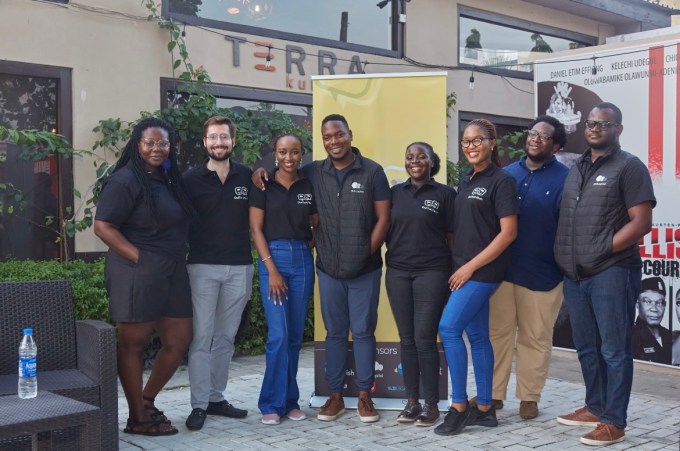
The Oui Capital team

The Oui Capital team

Though economic cycles like the one the startup world is experiencing are usually short to medium-term, Oyinsan echoes what local investors have communicated these past few months: the return of sticking to first principles and backing companies with strong fundamentals, unit economics, and disciplined valuations. This event has created an opportunity for investors, including Oui Capital, to invest up the chain, especially now that it has newly infused capital. 

According to Oyinsan, the firm will be looking to cover the full spectrum of investments before Series A, including bridge rounds, an activity it will amplify, particularly during this venture capital crunch. In relating news, Zedcrest Capital, another VC firm, launched a $10 million ’emergency fund’ to bail out startups in pre-Series A stages last week. 

From this new fund, Oui Capital intends to write initial checks of up to $750,000 (a 10x increase from the ticket size of its first fund) with reserves in place for such follow-on investments. “Expect us to be leading many more deals across the ecosystem and vocalizing firm initiatives — all things that we’ve been doing quietly in the past four years, but now looking to double down on these with the new fund,” Oyinsan added. 

Oui Capital’s second fund welcomed a mix of individual and VC investors as limited partners. Individual investors such as Brad Feld, Seth Levine and Ryan McIntyre (Foundry Group’s partners), Gbenga Oyebode, Alitheia Capital’s Tokunboh Ismael, Idris Alubankudi, and TeamApt CEO Tosin Eniolorunda participated. 

As one of the largest fintechs in Africa (in revenue and market cap), TeamApt is, for now, the breakout success of Oui Capital’s portfolio. The fintech, which according to sources, is in the market to raise a Series C round next year, stands as one of the continent’s lauded soonicorns. Thus, Eniolorunda becoming a limited partner at the firm is worthy of admiration as it is such a rare feat in these parts for founders to become LPs in the funds that backed their startups. Another example is Paystack CEO Shola Akinlade and pan-African early-stage fund, Ventures Platform.

“It’s a great feedback loop for us as a VC firm and speaks to the strength of our working relationship with TeamApt in the years even before our investment in the company,” Peter Oriaifo, principal at Oui Capital, told TechCrunch on Eniolorunda’s LP participation. “The founder-investor relationship is a testament of our work to back a founder at the seed stage and to see the company succeed to a point where they want to pay it forward.”

Oui Capital invested in TeamApt when the fintech company was under the radar and before attracting the attention of other investors. Its success is one of the inspirations behind Oui Capital’s pan-African approach. The firm is keen to make novel investments into startups it believes can become winners in their respective countries and sectors. Oui Capital highlights Maad (the first B2B marketplace for fast-moving consumer goods in Senegal ) and Pharmacy Marts (a B2B marketplace for pharmacies in Egypt) as examples.

As a result, the African countries where Oui Capital has made at least one investment include Nigeria, Kenya, Senegal, Egypt, and South Africa. The firm plans to make more investments in North Africa and Francophone Africa, regions that witnessed increasing startup and venture capital activity last year when African tech funding hit record highs in correlation with global numbers.

“Our pan-African strategy has made us a fund of choice for global LPs looking for exposure to the broader Africa opportunity without having to get into the weeds of understanding different regions separately,” stated Oyinsan. The global VCs involved in this second fund include Angur Nagpal’s Vibe Capital, D Global ventures, Boston-based One Way Ventures and Ground Squirrel Ventures.


from https://ift.tt/AGLqcKo
via Technews
Share:

Popular Post

Search This Blog

Powered by Blogger.

Labels

Labels

Most view post

Facebook Page

Recent Posts

Blog Archive