


TechCrunch+ roundup: SBA startup loans, quarterly board decks, bootstrappers’ delight

Happy August! Or, as many of my neighbors are fond of saying: Happy Fogust.

San Francisco sits on a peninsula surrounded by chilly water, so when warm summer air rushes in, thick fog obscures the landscape. Some days, the blanket is so thick, visibility is just a few hundred feet.

It’s an apt metaphor for the uncertainty plaguing tech companies as we hear about layoffs, reduced valuations and more discussion of dry powder than I’ve heard in many years.

One bright light amidst the gloom: startups that generate enough revenue to drive steady growth will find many investors willing to take their calls.

One bright light amidst the gloom: startups that generate enough revenue to drive steady growth will find many investors willing to take their calls.

If you’re a bootstrapped company who is not yet on the treadmill, you have that kind of optionality or that ability to choose when to get on,” says Cavan Klinsky, co-founder of payments processor Healthie.


Full TechCrunch+ articles are only available to members.
Use discount code TCPLUSROUNDUP to save 20% off a one- or two-year subscription.


“Once you’ve already raised a bunch of ventures, you’re kind of building a business for venture scale, whereas if you are bootstrapped … you can be really really opportunistic about what that right time is,” he told Natasha Mascarenhas.

Even so, she interviewed founders at a handful of bootstrapped startups and found that “even if they don’t want to,” some “may choose to turn to venture capital to get to the next level of sales” or keep hiring on track.

Inflation and competition with crypto salaries are just two factors driving up costs, which is leading many self-sufficient founders to reconsider going it alone.

“For a lot of bootstrapped companies, they’re not out there fundraising,” said Sketchy CEO and co-founder Saud Siddiqui.

“A lot of times it is investors approaching them, so it kind of depends on the climate, and if folks aren’t investing, maybe they’re just gonna keep chugging along.”

Thanks very much for reading TC+ this week.

Walter Thompson
Editorial Manager, TechCrunch+
@yourprotagonist

5 tips for scaling your green startup during a funding drought

Horizontal side view of a lonely yellow flower growing on dried cracked soil; fundraising for green startups downturn

Image Credits: flyparade (opens in a new window) / Getty Images

I’m not much of a gardener, so I chose houseplants that tolerate my forgetfulness with regard to water and fertilizer.

Startups that are trying to create scalable solutions to the slow-rolling climate disaster we’ve created for ourselves are not so resilient, however.

These companies often have lengthy, sizable fundraising rounds and years-long product development timelines, which means they’re particularly vulnerable to external market forces.

Priyanka Srinivas, co-founder and CEO of food tech startup Live Green Co., shared her advice for entrepreneurs who are focused on climate and sustainability:

“If your business activities have produced desired results and repeatable cycles — like developing a new product and distributing it through local markets — then you are ready to multiply.”

US startups seeking funds shouldn’t overlook financing from the government

SBA, startups, loan

Image Credits: CreativaImages (opens in a new window) / Getty Images

I know people who’ve worked with the U.S. Small Business Administration (SBA) to find funding for a food truck, a bakery, and a clothing store, but I don’t know of any startup founders who’ve used this federal program to grow their companies.

Eligible startups can acquire government-guaranteed loans up to $5 million that are paid back over a decade, reports Rebecca Szkutak. That’s real money.

“The problem is that business owners oftentimes overlook pretty readily available debt capital,” said Fountainhead CEO and founder, Chris Hurn.

“They don’t have to give up any equity. [SBA loans] can oftentimes be the exact stepping stone they need to get to the next stage.”

Beyond volatility: How semiconductor companies can thrive with a focused sector strategy

microchip fabrication plant

Image Credits: Bill Varie (opens in a new window) / Getty Images

Despite chip shortages that are slowing down production for everything from televisions to farm tractors, semiconductor sales shot up to $600 billion in 2021.

To keep their heads above the water in the coming years, semiconductor makers should back technologies that power other industries, such as AI/ML, digital services and micromobility, according to McKinsey partners Ondrej Burkacky and Nikolaus Lehmann.

“From a demand perspective, we expect 70% of growth up to 2030 will be driven by just three industries: automotive, computation and data storage, and wireless […] Through deep analysis of their resources and capabilities, the task for decision makers as they ramp up capacity is to tailor their capabilities to the most promising segments.”

Build a solid deck for your quarterly board meetings

Conceptual still life with low risk and rising; build a deck for board meetings

Image Credits: Hiroshi Watanabe (opens in a new window) / Getty Images

Board meetings are crucial for getting feedback on your progress to date and your plans for the future, but what’s the best way to give board members the full picture?

According to Ridge Ventures partner Yousuf Khan, founders should “just ask” investors about what kind of details and metrics will make quarterly decks optimally valuable.

“Reaching out to your board not only helps provide a sense of direction, it also gives you the opportunity to build your relationship,” he says. “People appreciate the opportunity to weigh in.”

In this TC+ post, he shares seven tips for building a presentation that updates board members on progress, plans, product pipeline and financials.


from https://ift.tt/csFiJDv
via Technews
Share:

TikTok to overtake Facebook in influencer marketing spend this year, YouTube by 2024

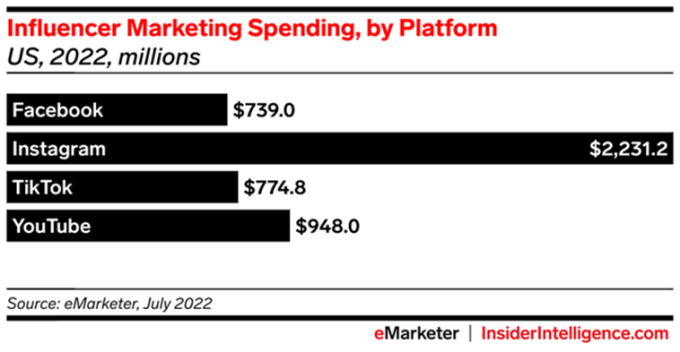
Instagram may be worried about TikTok’s threat to its business, but in the near-term, it’s still far ahead when it comes to the influencer marketing dollars spent on its platform in the U.S. According to a new analyst report, Instagram is on track to capture nearly 3x the amount of influencer marketing spend compared to TikTok in 2022 — or $2.23 billion spent on Instagram compared with the $774.8 million spent on TikTok.

However, while Instagram is faring well against TikTok on this front, Meta’s other app, Facebook, is not as lucky.

The new data, which hails from analysts at Insider Intelligence (previously eMarketer), indicates that TikTok is now on track to overtake Facebook in terms of influencer marketing spend this year and will overtake the No. 2 platform, YouTube, by 2024.

Currently, YouTube is seeing $948.0 million in influencer marketing dollars spent on its platform in the U.S., ahead of Facebook’s $739.0 million. In addition, TikTok has already overtaken YouTube based on marketer usage for influencer-based marketing, the report notes.

Image Credits: Insider Intelligence

Instagram has been steadily adjusting its algorithm and feed to highlight creator content, recommended posts and advertising, despite complaints from users who want to see more of their friends’ photos and videos. But as Instagram tweaks how content is ranked in its main feed, some creators have worried their reach could be negatively impacted by the constant changes.

Last week, Instagram agreed to roll back some recent updates which saw the app morphing itself into TikTok with a full-screen home feed and increased number of recommended posts, after two of the Kardashians posted a complaint to their Instagram profiles. Of course, mega influencer celebs like the Kardashians could lose out if Instagram shifts its algorithm to feature a greater number of smaller creators.

The report also points out that could be the eventual plan for Instagram, adding that the mix of influencers benefiting from this form of monetization has been shifting over time.

Specifically, Instagram’s feed adjustments would allows smaller “micro” and “nano” influencers, as they’re called, to take a large slice of the pie, it says. Nano-influencers are defined as individuals with 1,000 to 4,999 followers, while micro-influencers are individuals with 5,000 to 19,999 followers. These influencers are already benefitting on TikTok, which has been part of the app’s draw for creators.

The report notes, too, that marketing spend on smaller influencer partnerships has been growing quickly. This year, “nano” influencer spending will rise 220.5%, the analysts predict, while spending on “mega” influencers will grow only 8.0%. (Mega influencers have at least 1 million followers, as the firm defines it.)


Marketers may also prefer working with smaller creators for a variety of reasons, including the fact that their rates are cheaper but their posts may have higher engagement rates.

They may be less likely to have their view counts elevated artificially through the use of fake views or bots, as well.

For what it’s worth, TikTok is often accused of having inflated view counts and is known to have lower limits for what qualifies as a view for marketers’ purposes. It’s said to count a view as soon as the video plays and counts rewatches as views. (Plus, some believe there are questions as to how much TikTok itself could be complicit in inflating views, given its owner ByteDance directly involved itself with making fake accounts in a prior app that was a sort of TikTok precursor.)

“TikTok is surging in popularity for influencer marketing, but it’s still nowhere near Instagram in terms of spending or marketer adoption,” Insider Intelligence principal analyst Jasmine Enberg said. “That’s in part due to the higher prices Instagram creators charge for content, but also because of its wide array of content formats, most of which are now shoppable. Still, Instagram is trying to be more like TikTok so that it can attract smaller creators, which TikTok is known for. That’s key for Instagram to retain its lead in the influencer marketing space, especially as many creators on TikTok now boast follower counts that rival or surpass those on Instagram and YouTube.”

In total, the report estimates that 74.5% of U.S. marketers will use influencer marketing in 2022 and influencer marketing spend will rise by 27.8% to $4.99 billion this year.


from https://ift.tt/u7vDB4C
via Technews
Share:

Aurora Hydrogen raises $10M, but will its process decarbonize or facilitate tar sand exploitation?

A number of startups have cropped up to tackle the challenge of making hydrogen cheap and accessible for industrial users, including the latest, Aurora Hydrogen.

The startup announced a $10 million Series A yesterday led by Energy Innovation Capital and joined by Williams Companies, Shell Ventures, Chevron Technology Ventures and the George Kaiser Family Foundation.

Aurora said its microwave-based approach can make hydrogen using 80% less electricity than the cleanest form of hydrogen production and with less carbon emissions than the cheapest.


from https://ift.tt/KcGTZXa
via Technews
Share:

SEC spears ‘Crypto Crusaders’ over alleged pyramid scheme

U.S. regulators are seizing their moment during this ongoing crypto bear market to crack down on bad actors in the space as many investors are already souring on the asset class.

The U.S. Securities and Exchange Commission charged 11 people today in connection with Forsage, a crypto project that raised over $300 million from “millions of retail investors worldwide,” the agency announced today. The individuals charged include the project’s four founders — Vladimir Okhotnikov, Jane Doe aka Lola Ferrari, Mikhail Sergeev, and Sergey Maslakov — who were last sighted in Russia, Georgia and Indonesia. Several members of the “Crypto Crusaders,” a group that promoted the scheme in at least five different U.S. states were also charged, according to the announcement.

Forsage was launched in January 2020 as a website that allowed retail investors to transact on the Ethereum, Tron and Binance blockchains, the SEC complaint says. In June 2020, Forsage was the most popular decentralized application on Ethereum and consumed so much bandwidth on the chain that it caused gas fees to spike. At the peak of its popularity in July 2020, over $20 million worth of ETH was sent to the platform in a single day, Dune Analytics data shows.

According to the SEC, the project has operated as a pyramid scheme for more than two years and used assets from new investors to pay off old ones, typical of a Ponzi scheme structure. Operating a pyramid scheme, a fundamentally unsustainable business model wherein participants recruit others to buy in with the promise of quick returns, is illegal in the U.S.

“Fraudsters cannot circumvent the federal securities laws by focusing their schemes on smart contracts and blockchains,” wrote Carolyn Welshhans, acting chief of the SEC’s Crypto Assets and Cyber Unit, a division of the SEC that rebranded to include crypto in its title and embarked on a hiring spree in May this year.

This isn’t the first time Forsage has been in regulators’ crosshairs. The Securities and Exchange Commission of the Philippines sent the company a cease-and-desist order in 2020 for operating as a fraud and in 2021, the Montana Commissioner of Securities and Insurance did the same. Despite these warnings, the defendants kept promoting the scheme and denied that they were operating a pyramid scheme on various social media platforms, the SEC says.

Besides the founders, Cheri Beth Bowen, Ronald R. Deering, Samuel D. Ellis, Mark F. Hamlin, Carlos L. Martinez, Alisha R. Shepperd and Sarah L. Theissen were all also charged with violating federal securities laws in connection with Forsage, according to the SEC complaint. Ellis and Theissen, the agency says, have agreed to settle the charges.

The charges come at a time of heightened regulatory scrutiny over the digital asset space, particularly from the SEC itself. Coinbase has been locked in a battle with the agency over its sale of cryptocurrencies listed on its platform that it insists are commodities, not securities.

Meanwhile, U.S. Senators Kirsten Gillibrand and Cynthia Lummis are seeking to build consensus in Congress for their bill that would classify most cryptocurrencies as commodities, bringing the industry largely under the jurisdiction of the U.S. Commodity Futures Trading Commission rather than leaving it open to the stricter SEC.


from https://ift.tt/m9MVF3A
via Technews
Share:

The disappearance of Bolt Mobility shows how corrosive depreciation can be for IRL startups

With the apparent demise of Bolt Mobility, the divide between technology businesses and those that are merely tech-enabled is back at the forefront of our minds. Once a key point of discussion when the IPO market was alive, today we’re sifting through what is left of the micromobility sector, now freshly depopulated to a new local maximum.

Not every great product makes for a good business. Renting fashion? Great idea, lovely product, fun service. But as Rent the Runway has demonstrated during its life as a public company, making something that people want is not always enough to cement long-term value.


from https://ift.tt/Px185GZ
via Technews
Share:

Twitter tests a ‘tweets per month’ counter

Twitter is testing a feature that lets you see how many times a user tweets per month. Reverse engineers spotted this in development about a month ago, but as of this morning, some Twitter users have shared that they have gained access to this feature.

For those of us who already know that we spend way too much time on the app, this feature feels a bit … intimidating. But it could probably be useful as a metric when determining whether to follow someone. If someone tweets thousands of times a month, maybe you don’t want them on your timeline — or if they barely tweet at all, maybe you don’t think it’s worth throwing them a follow.

Based on past studies, it’s not surprising that the general reaction to this feature among dedicated users is horror at how much we tweet. In 2019, the Pew Research Center found that 10% of Twitter users create 80% of the tweets on the platform. The study also showed that the median user on Twitter only posts twice per month. As of last quarter, Twitter has 237.8 million monetizable daily active users.

Twitter didn’t respond to requests for comment, so it’s unclear how many people are part of this feature test, or whether it will roll out more broadly. The platform is also testing features like statuses and downvoting, which haven’t fully rolled out yet.

So, if you feel personally attacked by Twitter’s “tweets per month” test, you may be entitled to compensation. For legal reasons, that was a joke, although we assume Twitter’s lawyers are a bit preoccupied at the moment.


from https://ift.tt/KEUonvI
via Technews
Share:

Study of Facebook friendships explores how economic mobility works in the US

A large-scale study of Facebook data sheds new light on the ties between Americans — and how those relationships in turn shape economic outcomes.

A research team led by Harvard economist Raj Chetty published the results today across two papers in the journal Nature, exploring how social connections lead to economic opportunity. The researchers examined data from 21 billion friendships on Facebook, collected from 72.2 million U.S.-based Facebook users between age 25 and 44 who listed their zip code.

The first paper looks at those outcomes through the lens of “economic connectedness” — basically how close people from different economic classes are to one another. The researchers found that people with lower incomes were more likely to improve their financial situations over time if they were connected to people with higher incomes.

“The share of high-SES friends among individuals with low SES — which we term economic connectedness — is among the strongest predictors of upward income mobility identified to date,” the researcher writes. “If children with low-SES parents were to grow up in counties with economic connectedness comparable to that of the average child with high-SES parents, their incomes in adulthood would increase by 20% on average.”

Research on income mobility isn’t just for idle academic interest. As the researchers point out, more knowledge about the social ties that bind communities and how those lead to different economic outcomes can inform interventions designed to help elevate low-income communities and provide them with more financial opportunity.

The second paper dives into those connections themselves and how they are formed. The Harvard team found that connections between high- and low-income people were often forged through structured social organizations, like schools and religious groups. Still, the researchers found that even with social exposure to other income levels, people were still more likely to forge social bonds with other people who share their socioeconomic status.

The research is interesting and potentially consequential given the widening wealth gap in the U.S. Upper-income families continue to accumulate wealth at a quickening pace, leaving the have-nots even farther behind. And the top 5% of wealthiest U.S. families are growing their wealth the fastest of all.

“Differences in economic connectedness can explain well-known relationships between upward income mobility and racial segregation, poverty rates, and inequality,” the researchers write.

With the largest user base of any social platform ever created, Facebook offers a wealth of potential data for researchers interested in studying myriad aspects of human behavior and social structures. Historically, Facebook parent company Meta has a somewhat fraught relationship with researchers, particularly those interested in shining a light on how the social network itself shapes society, but there are signs that Meta is warming up to more outside research.

Meta also remains sensitive to potential abuses of the vast trove of personal data it monetizes. The company is still living down a reputation for lax data management in the aftermath of the Cambridge Analytica scandal, even four years later. Still, the company seems to be aware that empowering research for social good could help offset its long history of sowing social discord.

“This work is a major contribution to our understanding of the relationship between social connections and economic opportunity,” Meta wrote in a blog post on the research. “And it shows how Meta’s data can be used for societally significant research when shared responsibly and in a way that protects people’s privacy.”

The data is also available through a new interactive site called the “social capital atlas.”


from https://ift.tt/9ach1Qj
via Technews
Share:

Popular Post

Search This Blog

Powered by Blogger.

Labels

Labels

Most view post

Facebook Page

Recent Posts

Blog Archive