How to approach building your first employee benefits package

I’ve been the first human resources leader at two successful startups. In both instances, I’ve built the human resources function and people teams from the ground up.

Doing this from scratch means you have to consider everything, from compliance to compensation. Often, processes and procedures just fell into place before I joined, so it was my job to evaluate whether they made sense.

One of the most complex and interesting topics I tackle is employee benefits packages. It’s a subject that comes up often at startups that want to ensure they have a competitive edge when it comes to hiring and retaining talent.

However, it’s also been known to get out of hand, and with startups tightening their budgets, I believe we’ll start to see benefits changing drastically in the coming months.

Founders need to ask themselves what really matters to their business, and which benefits best align with their cultural values.

Virtually every company will have its own take on what should be offered to employees, so founders inevitably struggle with what makes the cut (and what doesn’t). There’s no “one size fits all” benefits package, and nor should there be, as each company has its own objectives and goals.

Here are four aspects for founders should consider when building benefits packages:

Focus on what matters most to your people

It’s imperative that startups should not try to match what other technology companies are offering. It’ll be impossible to offer every flashy new perk that you come across, or provide extravagant packages like Google or Facebook.

For example, Netflix offers unlimited parental leave, which is incredible, but for an early startup, offering this would be daunting and difficult.


from https://ift.tt/qrxBkHL
via Technews
Share:

Sling TV continues to drop subscribers, loses 55K subscribers in second quarter

Dish reported today that its streaming service Sling TV declined in subscribers during the second quarter of 2022, with a net loss of 55,000. This significantly differs from the first quarter of 2022, when it lost 234,000 subscribers. However, this is the third straight quarter that it has seen a drop.

The figure was also less of a loss than Q2 2021, when Sling TV lost 65,000 subs. Now, Sling has a total of 2.197 million subscribers, a decrease of 242,000 from the 2.439 million in the second quarter last year. During the first quarter of 2022, Sling TV had a total of 2.252 million, for comparison.

The company wrote in a regulatory filing, “The decrease in net Sling TV subscribers was primarily related to higher subscriber disconnects following seasonal sports activity. We continue to experience increased competition, including competition from other subscription video-on-demand and live-linear OTT service providers.”

While Sling TV is considered one of the first live TV streaming services, launching in 2015, it still has yet to beat Google in the streaming wars. YouTube TV continues to be a live TV streaming service to watch after revealing that it topped the 5 million subscriber mark, which included those on trials. Disney reported during its Q1 2022 report that Hulu Live TV had 4.3 million subscribers — but it only includes paid subscribers in its numbers.

Sling TV still beats FuboTV, which has 1.05 million subscribers. Philo has around 800,000 subs.

The company has been focusing on retaining customers with new content, such as the free Elvis Presley Channel, which launched in June. Also, in July, Sling TV provided customers free previews to premium streaming services via its “Freeview Weekends,” which include AMC+, EPIX, Sundance Now, Hallmark Movies Now, and more.


from https://ift.tt/etSVmhk
via Technews
Share:

Extended early bird savings on TC Disrupt passes end this Friday

We’re coming down to the wire, folks. Your chance to save early-bird pricing on passes to TechCrunch Disrupt ends this Friday. Our three-day flagship tech startup conference offers superior ROI at full price, but why spend more when you don’t have to?

To-do today: Buy your early-bird pass to TechCrunch Disrupt by Friday, August 5 at 11:59 p.m. PT, and you can save more that $1,000.

Here’s another time-sensitive opportunity for early-stage startup founders. The application windows to apply for the Startup Battlefield 200 also closes on Friday, August 5, at 11:59 p.m. PT.

Get more info on how the Startup Battlefield 200 works, and take a look at what SUB 200 founders receive at absolutely no cost:

  • Full access to Disrupt
  • Exhibition space for all three days of the show
  • Investor interest and media exposure
  • Workshops and pitch training
  • Flash-pitch in front of investors and TechCrunch editors
  • A shot at competing for $100,000 in Startup Battlefield

At Disrupt — where founders go to grow — you’ll find a wide range of experts sharing their knowledge, perspective and advice. Roundtable sessions — 30-minute, expert-led discussions for up to 20 people — are perennial favorites. This year, during our first Audience Choice vote-a-rama, TechCrunch readers chose the roundtable topics they wanted to hear at Disrupt.

Read about the first five Audience Choice winners and what they’ll talk about at Disrupt.

You’ll find plenty of founder-focused sessions and growth opportunities. At the TechCrunch stage, you can learn:

  • How to Raise First Dollars When Investors Are More Cautious, The Founder Perspective — with Amanda DoAmaral (Fiveable), Sara Du (Alloy Automation) and Arman Hezarkhani (Parthean)
  • How to Build Your Early VC Network: Turning Social Capital Into Financial Capital — with Nik Milanović (This Week in Fintech), Josh Ogundu (Heart to Heart) and Gefen Skolnick (Couplet Coffee)

Try your hand at speed networking:  You’ll be randomly matched with other attendees for three-minute conversations — based on mutual interest in predetermined topics.

Sign up for Dinners for 6: A tasty way to meet potential investors, customers or other founders. You’ll have the opportunity to sign up to go out to a local restaurant for dinner with five other Disrupt attendees.

TechCrunch Disrupt 2022 takes place in San Francisco on October 18–20 with an online day on October 21. Why spend more than necessary? Buy your pass by Friday, August 5 at 11:59 p.m. PT, and you can save more than $1,000.

Is your company interested in sponsoring or exhibiting at TechCrunch Disrupt 2022? Contact our sponsorship sales team by filling out this form.


from https://ift.tt/hvo0pil
via Technews
Share:

TikTok Music’s trademarks spotted in multiple countries, hinting toward global launch plans

ByteDance may be preparing for a global launch of TikTok Music service, according to trademarks filed in several countries found by TechCrunch. The China-based conglomerate has filed TikTok Music trademark in countries like the U.K., Singapore, New Zealand, Mexico, Malaysia and Costa Rica.

This comes after a Business Insider report last week, which pointed toward a “TikTok Music” trademark filing in the U.S. ByteDance had also filed another trademark in Australia under a similar name.

All of these trademark filings include similar text about the application’s functionality of listening to music, creating playlists, commenting on songs and participating in karaoke.

The trademark application says it would allow “users to purchase, play, share, download music, songs, albums, lyrics, quotes, create, recommend, share his/her playlists, lyrics, quotes, take, edit and upload photographs as the cover of playlists, comment on music, songs and albums.”

ByteDance already operates a music streaming service called Resso in India, Brazil and Indonesia, and a former ByteDance employee told us it had previously considered bringing this service to more markets under a “TikTok Music” title. Specifically, it had been considering launches in mature markets like the U.K. and Australia, the source said.

Resso has identical features to the ones described above, with TikTok-like vertical scrolling to go through songs, the ability to change cover photos for playlists, lyrics displayed on the lock screen, and comments on songs and albums.

Since its launch in 2020, Resso has seen solid progress in its existing markets, mobile data indicates. According to analytics firm Sensor Tower, the company saw 42.3 million downloads from the App Store and Google Play from January to May this year — growth of 19% year over year for the same period. The music streaming app has had 184 million overall lifetime downloads, as well.

TikTok, meanwhile, has had a major impact on the music industry with many hits being driven by different viral videos on the platform. A report released by the company last year suggested that 175 songs that trended on the short-video platform ended up on the Billboard 100 chart. In addition, a recent report published by a U.K.-based music investor noted that songs that are popular on TikTok drive additional views on YouTube and streams on other music streaming platforms, like Spotify. Record labels are also benefitting from TikTok’s success in the music sector. Reports estimate that TikTok paid $179 million to recorded music right owners in 2021.

ByteDance would want to grab all that traffic and streaming money from its own music service, and its recently launched music marketing and distribution platform SoundOn. Last week the company launched a pre-release feature so the artists can “leak” their songs to the TikTok audience before the official release.

The launch of TikTok Music would mean an additional revenue stream for ByteDance and a complete music solution service that can offer artists solutions to publish their songs through SoundOn, market them on TikTok and get people to listen to whole songs on TikTok Music/Resso. This service would directly compete with music streaming giants like Spotify, Apple Music, Deezer and Pandora.

We have reached out to ByteDance for a comment.


from https://ift.tt/EzjtWRy
via Technews
Share:

Cybersecurity could offer a way for underrepresented groups to break into tech

Last week at AWS re:Inforce, the company’s security event that took place in Boston, there was a welcome message about diversity. It seems that given the sheer number of people needed in cybersecurity in the coming years could represent a way for historically underrepresented groups to find their way into tech.

CJ Moses, CISO at AWS, spoke at the company keynote about the importance of diverse ways of thinking when it comes to keeping companies secure. “Another key part of our culture is having multiple people in the room with different outlooks. This could be introversion or extroversion, coming from different backgrounds or cultures, whatever enables your culture to be looking at things differently and challenging one another,” he said.

He added that new ways of thinking can be transformative to cybersecurity teams. “I also think new hires can offer a team high levels of clarity because they don’t have years of bias or a group think baked into their mechanisms. So when you’re hiring, our best practices encourage being sensitive to the makeup of the interview panels, having multiple viewpoints and backgrounds, because diversity brings diversity.”

Jasmine Henry, field security director at startup JupiterOne, recently helped put together a book called Reinventing Cybersecurity, looking at how women and trans people are helping transform the cybersecurity field. But to fully achieve that transformation, companies will need to hire more diverse candidates. Henry sees it as the industry’s responsibility to make the workforce more diverse, especially larger organizations like AWS.

“I think there’s a lot of folks who really want to break in. I think of it more as a kind of a skill mismatch than a skill gap, since there are individuals who are willing and able and want to work [in this field]. So I think there’s a lot of responsibility on employers, especially large employers, to train these apprenticeships, to upskill their own workforce, to partner with community groups…to train individuals who want to take those roles,” Henry said.

She said as people like her make their way into the field, they can help others up the ladder by helping them get the skills they need to work in this area. “I am a first-generation college grad, I do not come from wealth. Security was how I became middle class, and I’m proud of that. And I am very passionate about mentoring others, particularly first-generation college grads,” she said.

In general, the tech industry has not done a good job when it comes to diversity. According to hiring site, Zippia, just 25% of technology employees are women, even though they are half the population, 7% are Black in spite of being 14% of the total U.S. population and 8% are Latinx in spite of being over 18% of the total U.S. population.

When you look at cybersecurity jobs specifically, women hold 24% of these jobs, Blacks hold 9% and Latinx just 4%, according to research from The Aspen Institute.

Jenny Brinkley, director of security at AWS, says Amazon does take this responsibility to hire more diversely very seriously. In fact, she says that the company sees security as a way to bring more diversity into the company in general. “We’re really focused on how we can contribute [as a company], whether that be through open source contributions to upscaling talent, to creating and identifying skill gaps shortages for these cybersecurity jobs,” she said.

Echoing what Moses said in the keynote, Brinkley believes that security in particular takes a diverse mindset. “We can start talking more about neurodiversity and as we think about inclusion and equity and diversity as a whole. Security really represents a moment where we can start talking about how do you create and find individuals to fulfill these jobs?” She added that these are jobs that have the potential to create multi-generational wealth for individuals, and she sees a big opportunity for people who have historically been left behind by the industry and these kinds of high paying jobs in general.

Henry says that when she put together the book earlier this year, she saw a way to amplify a variety of voices and see the diversity that already exists in the field. “I really learned a lot about myself along the way because I realized that I had to be intentional about diversity when assembling the authors as well, and realize that a lot of folks wanted to talk about identity. They wanted to discuss security through an intersectional lens,” she said.

The Aspen Institute has some concrete suggestions to increase diversity in cybersecurity, including taking away the burden of the cost of certification, something larger companies could certainly do; establishing partnerships with organizations that can bring in more diverse candidates; and creating mentorship programs that focus on diverse people, among other things.


from https://ift.tt/0oC5acz
via Technews
Share:

Google backs Indian rewards payments startup Twid

Twid, an Indian startup operating a rewards-based payment platform, has raised $12 million to scale its network of merchants and issuers and expand its solution in the South Asian market.

Rakuten Capital led the startup’s Series A round, which also saw participation from Google and existing investors including Sequoia Surge and Beenext.

Twid allows customers to pay at offline and online stores using their existing loyalty and reward points from banks, fintech platforms and e-commerce websites. The Bengaluru-based startup’s partners include online grocer JioMart, pharmacy NetMeds, ticketing platform Yatra and music streamer Gaana.

“The problem has been very simple and quite large across the globe, that people have got rewards from multiple places, but they have primarily been very much like a locked asset,” said Amit Koshal, founder and chief executive of Twid, in an interview with TechCrunch.

Koshal founded Twid with Rishi Batra and Amit Sharma in 2020 to build a network effect platform for the masses. The company claims to have amassed more than 40 million registered users.

Twid

Twid co-founders Amit Sharma, Amit Koshal and Rishi Batra (from left to right). Image Credits: Twid

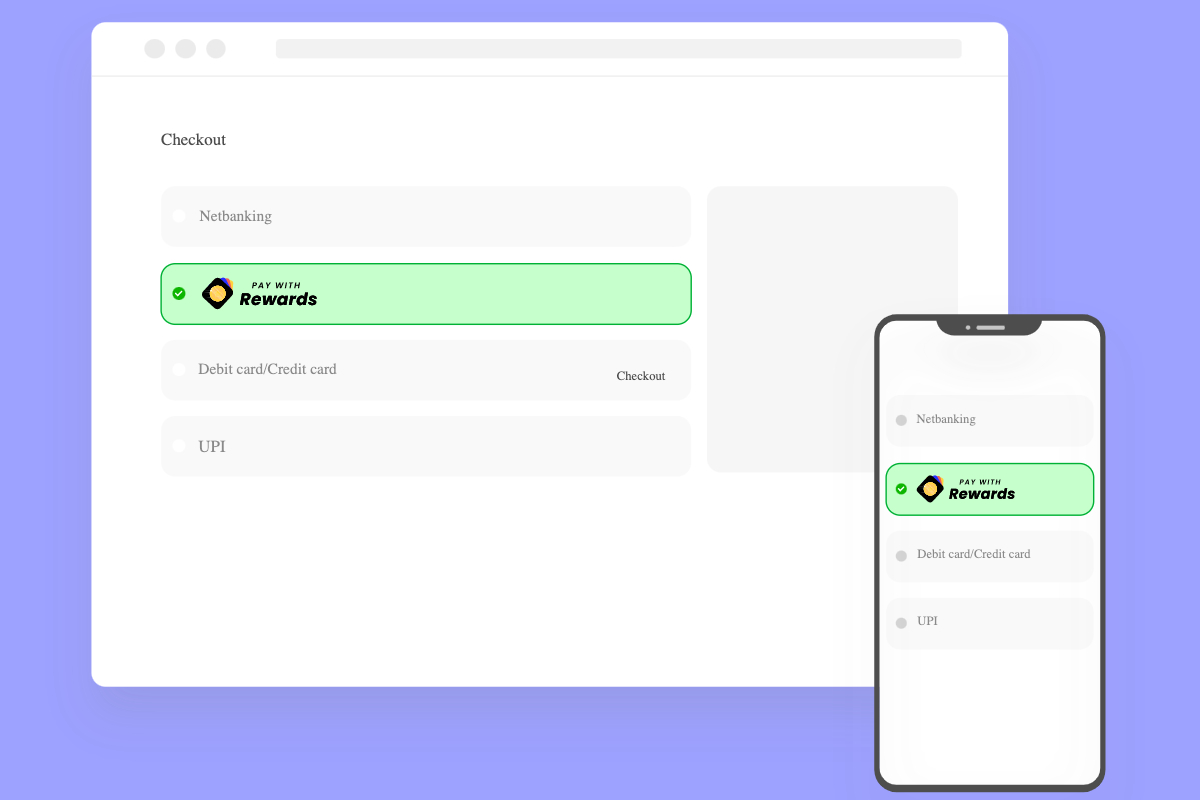
Twid brings a “Pay with Rewards” option that is available on the checkout page of an online store or at a retailer to let customers redeem their reward points for their purchases. The reward points, in this case, can come from a list of issuers, and users can pick which loyalty program or reward points they wish to redeem. 

IndusInd Bank, Payback and InterMiles are some of the key reward point issuers for Twid users. The platform also fetches reward points from Flipkart to let users make payments using their SuperCoins — the term the e-commerce firm uses for its loyalty points.

Twid claims that through its issuer partners, it provides access to more than $1 billion in reward points pool and has presence across over 50,000 merchants.

Koshal told TechCrunch that Twid controlled more than 5-8% of the total digital transactions of its merchant partners. The startup has also integrated its platform with payment gateways including PayU, RazorPay and CCAvenue to offer the rewards point-based payment option on several online stores.

“The idea is that we can control 80% of all the redemption that happens in the country,” Koshal said. The executive also claimed that merchants are actively integrating Twid’s platform as it is helping them acquire customers at a low cost — instead of luring them into making purchases after giving discounts or cashbacks.

“We give a lot of intelligence back to our partners; what are the kinds of categories that are doing good, what is the average order value that we have increased for you, how many transactions per customer that we are increasing for you,” Koshal said. “Similarly, from an issuer perspective, the issuer has good clarity because it’s their points getting used.”

Twid also helps its issuer partners fine-tune their offerings by sharing which reward points are making fast inroads with customers.

“When we are integrated with all these issuers, we have access to over 300 million customers from them,” he said.
Twid

Twid shows a “Pay with Rewards” option to let users pay using their reward points. Image Credits: Twid

Twid plans to use the fresh funds to grow its network and go deeper into the business, Koshal told TechCrunch. “The second one is that we want to build a great moonshot talent team. So, we are growing in all departments,” he said. The company currently has a headcount of 42 people.

The executive noted that there are plans to bolster the technology and “invest a lot” in data science. Rakuten India CEO Sunil Gopinath is joining the Twid board of directors on behalf of Rakuten Capital.

“Rakuten Capital sees tremendous potential and future synergies in this investment. Given our global membership products are developed here in Bengaluru by Rakuten India, I’m thrilled to join the Twid board of directors and look forward to working with Amit Koshal, Rishi Batra, Amit Sharma and their very capable team to transform the way reward points are viewed and used in India,” Gopinath said in a prepared statement.

Twid plans to leverage Rakuten’s expertise in reward points to enhance its platform.

“Whatever their [Rakuten’s] expertise is, from the kind of products, platforms etc., they have built, the skill that they have achieved, those are the learnings that we would be inculcating from them to build a very strong business in India to begin with,” Koshal told TechCrunch.

In a statement to TechCrunch, Rakuten Capital said that it saw a huge market potential for Indian-based rewards business opportunities, and Twid was well-positioned to take advantage of this opportunity to build and scale its business model.

“We are also looking forward to make available our tech talent at Rakuten India who has been building Rakuten Group’s global reward program platforms to support Twid with developing best-in-class solutions for India,” the corporate venture capital arm of the Japanese company said.

In parallel with Rakuten, Google’s addition is expected to help Twid expand its model of enabling customers to make purchases using their multiple reward points.

“Google has a long history of investing in early-stage startups across a variety of industries. And we are very excited to collaborate with credible players like them in the journey,” Koshal said.

In July last year, Twid raised $2.5 million in funding led by Beenext and Sequoia’s Surge. “What we liked when we met the team and what stood out to us is that rather than building out a closed-loop system, they tried to make this thing fungible and create an open-loop system,” Hero Choudhary, managing partner, Beenext, told TechCrunch, while describing what made the Singaporean venture capital firm support Twid since its early stage.


from https://ift.tt/otP8KV1
via Technews
Share:

Getting acquired is a legitimate strategy for building your business

Good companies get bought not sold.

This saying has been passed down as conventional wisdom through generations of entrepreneurs, but it doesn’t tell the entire story. While the IPO is characterized as the pinnacle for venture-backed startups, far more companies see successful exits via an M&A process than by going public. Being bought by the best acquirer for you takes thoughtful planning, and, yes, selling.

As an entrepreneur, you probably started your company because you wanted to make a big impact. You’re building something that you truly believe will shift the world in a positive direction. And yes, there’s also an implied financial outcome there. People — maybe your investors, the media, your team — will often focus on the exit strategy in the context of a financial outcome.

Any investor or mentor will tell you that when a company says they want to buy you, the right answer is, “We are not for sale.”

In my experience, many founders are more motivated by the potential for impact. For these kinds of founders, my advice is to always consider acquisition as an option. It might not be obvious at first, but an acquisition can be your best path to massive scale.

Prior to becoming an early-stage investor at DTC, I ran business development and M&A for Microsoft across Europe and Israel. I was on the other side of the negotiations as Microsoft looked for innovative teams and technologies to bring into its fold. The founders who were able to capitalize the most on the acquisition process were those who’d planned for it from day one.

Planning for a potential acquisition is not a defeatist attitude

Companies are 10x more likely to be sold than to go public.


from https://ift.tt/8jtiQwA
via Technews
Share:

Popular Post

Search This Blog

Powered by Blogger.

Labels

Labels

Most view post

Facebook Page

Recent Posts

Blog Archive