How you invest your time is just as important as how you invest your money

One night, a policeman is doing his typical evening neighborhood walk. The sun has set, and he’s on high alert for any potential danger as he strolls slowly down the street. Soon, he comes across a professionally dressed man frantically pacing beneath a streetlight, periodically dropping to his knees to look between the cracks of the sidewalk.

He is desperately offering $100 to any passerby who can help him find his misplaced keys. Relieved at the sight of law enforcement, he asks for the policeman’s help and explains that he urgently needs to get home to his family. Together, they search every inch of the sidewalk, the gutter, and the road beneath the light and come up empty. Anyone they have enlisted for help similarly gives up after finding nothing beneath the streetlight.

Frustrated and disappointed, the policeman finally asks, “Well, sir, are you sure you lost them here? Is there anywhere else they could be?”

The man replies, “Well, no, I actually lost them in the park across the street, but the light is better over here.”

This tale encapsulates a concept commonly known as the streetlight effect. Its origins can be traced back to a Turkish parable from the thirteenth century, but the concept has been repeated throughout history in everything from jokes about people who lost their keys to scientific explanations of observer bias in which observers only see what they expect to see. The point is that you can spend a lot of time searching for something, but if you’re looking in the wrong places, you’ll never find it.

Unfortunately, in my early days of venture capital, nobody told me this story, so I immediately started searching for deal flow where it was easiest: in Hong Kong. I had a strong personal network and brand in the Hong Kong region, and I had no trouble finding local entrepreneurs who wanted to pitch Fresco Capital for funding. I spent my days meeting with new companies that were willing to come to my favorite coffee shop on Hollywood Road in Hong Kong, though they were not the businesses I was most excited about or thought were most likely to go on to be massively successful. Soon, I found myself with an extremely packed schedule but little excitement about any prospective investments.

At the end of every week, I would sit back and wonder where the time went. I was growing self-conscious that I had nothing to show for my packed schedule.

You can spend a lot of time searching for something, but if you’re looking in the wrong places, you’ll never find it.

Invest time in places where there is a high concentration of what you are looking for

I had been investing my time in meeting with local entrepreneurs, a strategy that wasn’t producing results. Clearly there was a light shining directly in front of me in Hong Kong, but I had a feeling my keys were across the street in a park somewhere. I knew I had to stop doing what was easy and start looking beyond Hong Kong for deal flow. Along with my business partner, I began to spend my time researching the major hubs of entrepreneurial and tech activity that had a high concentration of entrepreneurs seeking funding. I also hunted for those who had produced big outcomes in the past decade (unlike Hong Kong, which was still early in its journey as a startup ecosystem and did not have as many examples of successful venture-backed businesses). Then I hit the road.

My partner and I spent time in cities like San Francisco, Austin, and New York, as well as London, Beijing, and Singapore. I spent the better part of my first five years in venture capital on a plane (mostly in middle seats in economy, to be exact). On each trip, I was energized by the entrepreneurial buzz in each region we visited and overwhelmed by the number of promising companies we met in each place. My days were equally jam-packed, if not more so, than my time at home. However, unlike my experience in Hong Kong, each day of meetings was yielding exciting investment opportunities that I was eager to dig into. Time flew by, and I was finally producing results. I had real deal flow! I just had to get on a plane to go get it.

As a new, small fund, we were on a shoestring budget, so I crashed on friends’ couches or stayed in inexpensive Airbnbs while I was traveling. Especially when it came to navigating the San Francisco Bay Area, I could not have felt more like an outsider. Who knew that Google’s headquarters in Mountain View were at least an hour from downtown San Francisco, and that distance ballooned into several hours during rush hour, which in California started not at 5 p.m. like a person might usually expect, but instead at 3 or 4 p.m.? One trip, in hopes of cutting down on travel times, I picked the halfway point between my meetings and splurged on a budget motel in Daly City. I arrived, suitcase in hand, only to discover that the hotel was located directly across the street from a junkyard filled exclusively with old school desks, and that Daly City was affectionately referred to by locals as “Daly Shitty.”

It certainly wasn’t exactly what I had originally envisioned happening once I was on the other side of the investing table, but it was fun and energizing to be hunting for opportunities, trying to find the diamond in the rough or the next big thing. We were simultaneously in the process of raising our fund, so when we did make an investment, it was a very small amount. We were, however, investing a lot of our time in developing new sources of deal flow.

How you invest your time is just as important as how you invest your money by Jenna Routenberg originally published on TechCrunch


from https://ift.tt/lefPB2x
via Technews
Share:

Andreessen Horowitz is now openly courting capital from Saudi Arabia, despite U.S. strains

Andreessen Horowitz is now openly courting capital from Saudi Arabia, despite U.S. strains.

According to Bloomberg, yesterday Marc Andreessen and Ben Horowitz appeared on stage with WeWork co-founder Adam Neumann to talk for at least the second time since November about their firm’s $350 million investment in Flow, which is Neumann’s new residential real estate company. Their choice of venue was intentional: the conference was organized by a nonprofit backed by one of Saudi Arabia’s largest sovereign funds, and Flow may launch in the Kingdom, says Bloomberg. Meanwhile, the three reportedly laid it on thick, with Horowitz praising Saudi Arabia as a “startup country” and saying that “Saudi has a founder; you don’t call him a founder, you call him his royal highness.”

Said Neumann separately: “It’s leaders like his royal highness that are actually going to lead us where we want to go.”

We’ve reached out to Andreessen Horowitz with related questions this morning and have yet to hear back.

That a firm of Andreessen Horowitz’s size and interests is looking to cement relationships in Saudi Arabia isn’t shocking. Though the 14-year-old outfit has never made public who its limited partners are, no one would grab at their pearls were it revealed that sovereign wealth funds from the region have helped boost the assets under management at the firm to $35 billion across its many funds. Back in October, Ben Horowitz spoke at the investment conference dubbed “Davos in the Desert” in Riyadh, which is usually a clue that someone is in the market for more money (or owes a backer a favor).

As for more explicit associations, in 2016, both Andreessen Horowitz and Founders Fund sold some of their share in the ride-share company Lyft to Saudi Arabia’s Prince al-Waleed bin Talal and his Kingdom Holding. In 2017, Marc Andreessen joined forces with the prince’s first cousin, Saudi Crown Prince Mohammed bin Salman (“MBS”), agreeing to join the advisory board of MBS’s ambitious project Neom, a group of futuristic tech-driven communities with its own laws across “an area the size of Massachusetts,” as the WSJ has described it.

If Andreessen stepped off that same board in 2018 after the CIA concluded that MBS ordered the gruesome murder of Washington Post columnist Jamal Khashoggi, he didn’t say. In fairness, neither did Neom’s other high-profile advisory board members, including Travis Kalanick, Sam Altman, or Apple’s then design chief Jony Ive. More broadly, not a single U.S. investor or startup founder with business interests tied to Saudi Arabia spoke out during that prolonged chapter in 2018, even as a Saudi-led military and economic war on Yemen was also garnering headlines for its brutality.

All the while, plenty of very big U.S. businesses have continued to conduct business in the region. KKR and Saudi Arabia’s Public Investment Fund work together routinely; JPMorgan just expanded its operations in Saudi Arabia late last year.

Still, venture firms, which tend to paint themselves as more virtuous than other asset providers in order to win over founders, have been a little quieter about their ties to the region. Which makes comments made yesterday by Ben Horowitz at the Miami event all the more notable. From the story:

Onstage at the conference . . .Horowitz lamented that after Andreessen, the co-founder of their eponymous venture capital firm, had written a blog post in 2020 arguing it was “time to build,” it made waves, but not much changed in the U.S. “Probably 50 people in the U.S. government reached out to Marc to talk to him about it, and absolutely nothing happened,” Horowitz said.

But when Horowitz visited Saudi Arabia in October and ate lunch with Saudi Princess Reema bint Bandar Al Saud, and more recently, met with the governor of its sovereign wealth fund, Yasir Al-Rumayyan, they were enthusiastic.

Al-Rumayyan told him, “Let’s go,” and “within a week we had a half dozen really interesting meetings set up,” Horowitz said. “In April, we’re bringing our companies out to Saudi. And that’s what a startup feels like.”

In so openly praising its connections in Saudi Arabia, Andreessen Horowitz appears to be aligning itself with other global investment firms that are also unapologetic about their associations. If they can do it, so can we, may be the thinking.

Andreessen Horowitz may also be betting that the U.S. will be forced to reconsider its relationship with Saudi Arabia despite its repressive regime. Consider: After President Joe Biden reluctantly visited MBS last summer, asking him to lower gas prices, MBS instead hiked them during U.S. midterm elections in a show of power.

Empowering MBS further, in December, a U.S. federal court further said it was dismissing a lawsuit against the crown prince over Khashoggi’s murder, after he was named prime minister of Saudi Arabia by his father. (Though MBS was already the de facto ruler of the Kingdom, the move gave him immunity by the standards of the U.S. State Department.)

Whether other powerful venture firms follow Andreessen Horowitz’s lead here will be interesting to see. Though the firm has in many ways reshaped the way the wider venture industry operates today, publicly aligning itself with a country that the U.S. continues to distrust is a much bigger gamble than, say, launching a standalone media property or jumping headlong into crypto.

MBS may be making progress on a global comeback, but U.S. concerns abound as Saudi Arabia draws nearer to China to develop a nuclear energy program that the U.S. doesn’t want it to build. That’s saying nothing of MBS’s friendly relationship with Vladimir Putin, whose war on Ukraine is believed to have already cost hundreds of thousands of people their lives, or the humanitarian crisis in Yemen it created — one that the United Nations says is the largest in the world.

It’s hard to forget, too, that business is done differently in Saudi Arabia, no matter how successfully the region portrays its transformation.

Last summer, according to the WSJ, after their fans drove two game companies to cancel sponsorship deals with Neom over Saudi Arabia’s human rights record, its CEO reportedly called an emergency meeting to complain to his communications team and ask why he wasn’t warned of the game companies’ positions.

“If you don’t tell me who is responsible,” said the executive, “I’m going to take a gun from under my desk and shoot you.”

Andreessen Horowitz is now openly courting capital from Saudi Arabia, despite U.S. strains by Connie Loizos originally published on TechCrunch


from https://ift.tt/wR3tx0s
via Technews
Share:

Virgin Orbit runs low on cash, ByteDance pushes a TikTok replacement, and Canoo settles with the SEC

It’s the weekend, party people, and you know what that means: It’s Week in Review (WiR) time. For the uninitiated, WiR is where TechCrunch recaps all the tech news that took place for the week. It’s like the morning paper, but in digital form, and without all the extraneous stuff unrelated to tech. So…not much like the paper, really, but very much worth a read (in this reporter’s humble opinion).

To get WiR in your inbox every Saturday, click here. And for this edition’s roundup, scroll down. But before you do that, don’t forget to check out TechCrunch’s upcoming events lineup, including the startup-focused Early Stage in Boston on April 20 and our mega-conference, Disrupt, in San Francisco on September 19–21.

most read

Crash and burn: Virgin Orbit is laying off around 85% of its workforce in order to further reduce expenses after the troubled space company said it was unable to secure additional funding to keep it afloat. The news, which Virgin Orbit filed with the U.S. Securities and Exchange Commission on Thursday, comes just two weeks after the company furloughed all employees and entered an “operational pause” in order to find more cash.

Date while filing taxes: There’s a new anime dating sim that does your taxes — and it actually works. Amanda played Tax Heaven 3000, a game produced by MSCHF, the venture-funded creative studio behind projects like Push Party and the Lil Nas X blood shoes. What’s the verdict? If you don’t mind risking sharing your personal information with an anime girl obsessing over the tax process, it’s not the least pleasant way to file your return.

The replacement TikTok: As U.S. lawmakers move forward with their plans for a TikTok ban or forced sale, the app’s Chinese parent company, ByteDance, is driving another of its social platforms into the top charts of the U.S. App Store. ByteDance-owned app Lemon8, an Instagram rival that describes itself as a “lifestyle community,” jumped into one of the U.S. App Store’s top-downloaded slots on Monday, becoming the number 10 overall app across both apps and games.

Groupon has a new CEO: Groupon, which shot to fame popularizing the online group buying format, has appointed Dusan Senkypl as interim CEO. As Ingrid writes, Groupon has 14 million active users, but almost consistently for the last decade, the company’s financial position has been in a slow decline — with stagnation in its core business model, little success in efforts to diversify, declining revenues and ongoing losses.

Get your own Lyft: Lyft might once again drop its shared rides offering, just one of several changes the company’s newly appointed CEO, David Risher, could make in a bid to focus on Lyft’s core ride-hailing business and become profitable. Risher told Rebecca in a wide-ranging interview that other features may also be axed, like the Wait & Save option that allows riders in certain regions to pay a lower fare if they wait for the best-located driver.

Twitter’s APIs go paid: After weeks of stalling, Twitter finally announced its new API pricing structures on Wednesday. The three tiers include a bare-bones free level mostly meant for content-posting bots, a $100 per month basic level and a costly enterprise level. Subscribing at any level affords access to Twitter’s ads API at no additional cost.

Hard times, slashed valuations: Manish reports some of the biggest Indian startups are taking a haircut in their valuations — at least in the eyes of their investors, as some backers adjust their estimates amid the weakening global economy. BlackRock has cut the valuation of Byju’s, which is India’s most valuable startup at $22 billion, by nearly half to $11.5 billion, while Swiggy, India’s most valuable food delivery startup at $10.7 billion, has been marked down to a valuation of about $8 billion by Invesco.

Ledger wins big: French startup Ledger has added more money — about €100 million ($108 million) — to its Series C funding round, Romain writes. The company’s main products are hardware crypto wallets that offer a high level of security, shaped like USB keys and featuring a tiny screen to confirm transactions on the device.

Supply chain attack: Multiple security firms have sounded the alarm about an active supply chain attack that’s using a Trojanized version of 3CX’s widely used voice and video-calling client to target downstream customers, Carly writes. The malware is a particularly dangerous sort, capable of harvesting system information and stealing data and stored credentials from Google Chrome, Microsoft Edge, Brave and Firefox user profiles.

Canoo settles with the SEC: Electric vehicle startup Canoo has agreed to a $1.5 million settlement with the U.S. Securities and Exchange Commission, according to a regulatory filing. The SEC began investigating Canoo in May 2021, focusing on the startup’s operations, business model, revenues, revenue strategy, customer agreements, earnings and the departures of certain company officers, including co-founder and CEO Ulrich Kranz.

audio

TechCrunch’s podcasting output was as robust as ever this week, in case you had doubts. The Equity crew talked about AI, crypto, equity crowdfunding and — in a story out of complete left field — former startup founders trying to bribe China. Meanwhile, Found interviewed Angela Hoover, CEO and co-founder of Andi, an ambitious generative AI search chatbox company. And on TechCrunch Live, AtoB co-founder Harshita Arora and Contrary Capital founder and partner Eric Tarczynski discussed red flags investors keep an eye out for, how the VC and startup world reacts to the “girl genius” versus “boy genius,” and the pain points of the trucking industry.

TechCrunch+

TC+ subscribers get access to in-depth commentary, analysis and surveys — which you know if you’re already a subscriber. If you’re not, consider signing up. Here are a few highlights from this week:

Crypto on the upswing: “Crypto-focused venture capital investors are trucking along in their work,” Jacquelyn writes. Many remain confident in their investing strategies despite an enervated first-quarter market for crypto startup fundraising, while others are noticing a sharper decline in investing pace.

AI is the new oil: Being an AI company has become the soup du jour of startup land. Companies are scrambling to either incorporate AI into their existing business model or change up their marketing so whatever they were already quietly using AI to do is front and center. And Y Combinator’s latest class is no different, Rebecca reports.

Substack turns to its writers: Alex writes about Substack’s effort to crowdfund a venture-sized extension round. The platform, popular with writers and known for its email service, has collected more than $5 million in pledges for an extension to its Series B from its community and the internet at large.

A look at Sweden’s startup scene: In the wake of Techstars’ decision to discontinue its Swedish accelerator program, Alex and Anna decided to dig into the country’s startup scene to understand how one smaller venture market is adapting to a changed investing climate.

Virgin Orbit runs low on cash, ByteDance pushes a TikTok replacement, and Canoo settles with the SEC by Kyle Wiggers originally published on TechCrunch


from https://ift.tt/vBysqla
via Technews
Share:

Always be prompting

Welcome to Startups Weekly, a nuanced take on this week’s startup news and trends by Senior Reporter and Equity co-host Natasha Mascarenhas. To get this in your inbox, subscribe here.

Reporter’s note: Before we get into this, thank you to the Startups Weekly readers who pointed out that last week’s link to my column was broken. If you want to know about the state of solo GPs — which oh boy, is it rocky — please read my TC+ story here: Are Solo GPs screwed? Ok, now into this week’s newsletter! 

“AI whisperer” jobs are roles made for people who are savvy prompt engineers and able to manipulate ChatGPT or other generative AI tools to get what they want from it. As Bloomberg reported earlier this week, these jobs can land up to $335,000 in annual salary. Cha-ching.

It’s an impressive price tag for a job role that would’ve blown minds just one year ago. It’s also a reminder that generative AI’s boom will create a whole new set of questions about how we ask questions. By just spending a few minutes playing around on ChatGPT, I learned that you can elicit a diversity of AI-generated answers to questions just by changing a few select words and demanding bullet points versus three sentences.

Before we see a whole wave of AI prompt engineering consultancy practices for hire — just kidding, we already are — I figured it would be helpful to aggregate some of the top tips I’m hearing from the community on how to better interact with AI to get it to give you the answers you want. We already know it’s imperfect, it can’t be trusted with every single fact, and it sometimes is left speechless. What can we do with what we’ve got, though?

Many techies weighed in on Twitter — you can see the full thread here — but here are the top five tips:

1. Overdescribe. As one person put it, don’t be afraid to be extra when prompting artificial intelligence. There’s a difference between asking for a banana bread recipe and asking for a simple banana bread recipe that incorporates cardamom, takes less than one hour to bake and has a surprise ingredient. Or put differently, don’t just keep it high level, get specific about the tone and complexity you prefer in answers. Over explanation and adjective use was probably the most common tip I received when asking for advice on how to be a better prompter.

2. Ask for help. It’s not always easy to know how specific to get when you’re prompting the AI — so why not ask for help? One entrepreneur told me to ask ChatGPT how to prompt it based on what I want, so ask something like, what information do you need from me to create an itinerary for a San Francisco hiking trip? The AI will tell you what it needs — I wish humans were like this — and as a result, you’ll get a more tailored answer.

3. Give feedback. Let’s say I ask for: “a chatty but informative three-sentence explanation about the impact of generative AI on education, incorporating at least one metaphor.” ChatGPT had a pretty good response, but I didn’t love the response. Tell it that! Feedback is helpful to train the AI on the types of answers you like and takes a split second. Here’s how that process went for me:

Natasha: Give me a chatty but informative three-sentence explanation about the impact of generative AI on education, incorporating at least one metaphor.

ChatGPT: Generative AI has the potential to transform education by serving as a virtual Sherpa, leading students on personalized learning expeditions. Just as a Sherpa uses experience to guide climbers through treacherous terrain, AI can harness vast data to provide a customized path to knowledge. With the help of generative AI, education can become a more accessible and tailored journey, empowering students to reach new heights.

Natasha: I don’t like the virtual sherpa metaphor. Also, can you be more specific on which new heights students can reach?

ChatGPT: Generative AI can be thought of as a personal tutor, providing students with a tailor-made curriculum that meets their individual needs and interests. Like a skilled coach, AI can identify students’ strengths and weaknesses, and provide them with targeted guidance to help them excel. With the help of generative AI, students can reach new heights by unlocking their full potential and gaining a deeper understanding of complex topics.

4. Ask for nuance. ChatGPT only answers what it is asked, so why not ask for nuance? A founder said that they ask for pros and cons on every recommendation that they prompt ChatGPT to give.

5. Be a little cringe. Is it self-indulgent to tell AI to speak like me, specifically nudging it to be voicey, charismatic and informative? Maybe, but it helps. One of the biggest hacks I’ve learned is to throw my Twitter handle in when asking for a deep dive on a topic. ChatGPT responds better to “Make an argument for why Cauliflower is the best vegetable in the tone of @nmasc_” than “Make an argument for why Cauliflower is the best vegetable in the tone of Natasha Mascarenhas.” And because I know you’re curious about the former, I’ll leave you with ChatGPT’s argument on cauliflower supremacy:

Alright, buckle up folks, because I’m about to make a case for why cauliflower is THE BEST vegetable out there. First of all, let’s talk versatility. This baby can be roasted, grilled, mashed, pureed, riced, and even turned into buffalo wings. Name one other vegetable that can do all that, I’ll wait.

And don’t even get me started on the health benefits. Cauliflower is packed with vitamins and minerals like vitamin C, vitamin K, and potassium, not to mention it’s high in fiber and low in calories. Plus, it’s a great source of antioxidants, which help fight off disease and keep your body in tip-top shape.

But let’s be real, the best thing about cauliflower is how dang delicious it is. Whether you’re enjoying it as a creamy soup, a spicy stir-fry, or a crispy pizza crust, cauliflower has a flavor and texture that can’t be beat. And let’s not forget about its ability to take on different flavors and spices, making it the ultimate canvas for creative cooking.

So, there you have it folks. Cauliflower is the MVP of vegetables, and I challenge anyone to prove me wrong.

Those are some starter tips I’m incorporating but I’d still love to know what else I’m missing so please do throw your top tips in this thread. Also, shout out to Fundrise CMO Jon Carden for the headline inspiration!

In the rest of this newsletter we’re talking about Cerebral Valley and Substack. As always, you can follow me on Twitter or Instagram to continue the conversation. And if you feel like supporting me extra, subscribe to my personal (and free!) Substack.

Overheard in Cerebral Valley

I attended the Cerebral Valley AI conference on Wednesday, which brought together the top 200 minds in artificial intelligence for a one day deep dive. The event, put on by Newcomer and Volley, was immersive to say the least. I spoke to half a dozen YC founders who are building AI companies, bullish and surprisingly bearish VCs, and, briefly, Stability CEO and founder Emad Mostaque, about keeping it real.

Here are some great one liners:

  • “The pause for six months seems destructive and probably exorbitantly expensive to consider,” said Kleiner Perkins partner Bucky Moore in response to the recent open letter.
  • “Safety research is one of the areas were best known for … I don’t necessarily think that’s un-synonymous with a technology company, a company that is also thinking about how to take that research and turn it into something that is practical,” said Daniela Amodei, co-founder of Anthropic.
  • “You’re building for GPT-4, but you want to be building for GPT-10,” said Lisha Li, CEO of Rosebud AI.
  • “Of course we’re not in a bubble, this is bigger than 5G and self-driving customers,” Emad Mostaque, CEO and founder of Stability AI, said about AI’s hype. “When founders come to me, I say build good products and solve problems … most of the stuff is still surface level.”

And finally: If you’re still looking for more Stability, listen to my podcast interview with Credo AI founder Navrina Singh, who spoke about responsible AI, governance and fear as a not-so-great motivator. 

Robot with shopping cart.

Image Credits: Getty Images

Substack’s newsy week

Blogging and media platform Substack opened up a community fundraising round this week, seeking capital from its writers, readers both accredited and unaccredited. As of Friday morning, over 6,000 investors have pledged around $6.9 million in funding.

We spoke about the crowdfunding campaign on our podcast Equity this week, too, which was spicier than I expected. To me, if Substack successfully raises money from its community after disclosing its financials — the equity crowdfunding world will get a much needed reputation and public perception boost.

Here’s what to know, via my colleague Alex Wilhelm:

Ironically, Substack’s users could be giving professional money managers in the company a bit of a breather. The venture investors that once put a mountain of capital into Substack don’t have to invest more, the incoming dilution is effectively zero and the company gets more total funding to pursue its long-term goals. For Substack, this is a win.

We won’t see this sort of conundrum too often. Most startups could not manage this sort of crowdfund because their customers pay them, not the other way around. In contrast, Substack users make part or all of their living from the company, so they are more invested in it sticking around. This makes the Substack crowdfund unique.

Image Credits: AndreyPopov / Getty Images

Etc., etc.

Seen on TechCrunch

StellarFi lands $15M to help people build credit by paying bills, rent on time

Groupon, which has lost 99.4% of its value since its IPO, names a new CEO… based in Czech Republic

US investors slash Byju’s and Swiggy valuation

Twitter is dying

Apple acquired a startup using AI to compress videos

Seen on TechCrunch+

The layoffs will continue until (investor) morale improves

Investors unfazed by Q1 crypto funding decline

Pitch Deck Teardown: Northspyre’s $25 million Series B deck

What’s going on with the TikTok ban?

Blinded by the speed of change

Talk soon,

N

Always be prompting by Natasha Mascarenhas originally published on TechCrunch


from https://ift.tt/YD3HxfS
via Technews
Share:

This Week in Apps: WWDC23, ByteDance pushes Lemon8 ahead of TikTok ban, T2 capitalizes on Twitter chaos

Welcome back to This Week in Apps, the weekly TechCrunch series that recaps the latest in mobile OS news, mobile applications and the overall app economy.

The app economy in 2023 hit a few snags, as consumer spending last year dropped for the first time by 2% to $167 billion, according to data.ai’s “State of Mobile” report. However, downloads are continuing to grow, up 11% year-over-year in 2022 to reach 255 billion. Consumers are also spending more time in mobile apps than ever before. On Android devices alone, hours spent in 2022 grew 9%, reaching 4.1 trillion.

This Week in Apps offers a way to keep up with this fast-moving industry in one place with the latest from the world of apps, including news, updates, startup fundings, mergers and acquisitions, and much more.

Do you want This Week in Apps in your inbox every Saturday? Sign up here: techcrunch.com/newsletters

Top Stories

DUB DUB Returns

WWDC 2023 banner

Image Credits: Apple

As expected, Apple announced its plans for this year’s Worldwide Developers Conference (WWDC). The big event will return to Apple Park in Cupertino on June 5-9. However, the event looks like it will still be another scaled-down version, similar to last year, with its keynote and State of the Union again livestreamed.

Apple also noted it will host a special all-day event for developers and students on June 5. And, as in previous years, developers will be able to meet some of the teams at Apple, celebrate top apps at the Apple Design Awards ceremony and enjoy various evening activities. Student developers will also participate in a Swift Student Challenge competition, which could win them WWDC23 outerwear, AirPods Pro, a customized pin set and a one-year membership to the Apple Developer Program. The deadline to apply is April 19.

The company will continue to post WWDC announcements leading up to and during the conference, so keep an eye on your inboxes and the Apple Developer app for updates.

The big question on everyone’s minds is whether or not Apple will present its AR/VR headset during WWDC this year. Various reports have suggested mass production on the device has been pushed back a couple of months to the third quarter of 2023. Plus, a concerning report by The New York Times indicated the device is among the first to generate rare, internal dissent among Apple employees — some of whom don’t believe it’s a fit for the company. Expected to be priced at $3,000, some are worried about its utility and the still unproven market. Still, Bloomberg is betting on a headset reveal and the accompanying xrOS software.

The company will also likely introduce the latest updates to its existing OS lineup, including iOS 17, iPadOS 17, watchOS 10, macOS 14 and tvOS 17. Not much is known about these coming releases except that iOS 17 is codenamed Dawn and will include several of users’ “most-requested” features.

ByteDance pushes another social app, Lemon8, into the App Store’s Top Charts as a TikTok ban looms

Lemon8 screenshot

Image Credits: Lemon8

As U.S. lawmakers moved forward with their plans for a TikTok ban or forced sale, the app’s Chinese parent company, ByteDance, began driving another of its social platforms into the Top Charts of the U.S. App Store. The ByteDance-owned app Lemon8, an Instagram rival that describes itself as a “lifestyle community,” jumped into the U.S. App Store’s Top Charts on Monday, becoming the No. 10 Overall app, across both apps and games. By the next day, it ranked No. 9 on the App Store’s Top Apps chart, excluding games.

This is a dramatic chart climb for the little-known app and one that points to paid user acquisition efforts powering this surge. Prior to Monday, the Lemon8 app had never before ranked in the Top 200 Overall Charts in the U.S., according to app store intelligence provided to TechCrunch by data.ai.

The firm confirmed that such a quick move from being an unranked app to being No. 9 among the top free apps in the U.S. — ahead of YouTube, WhatsApp, Gmail and Facebook — implies a “significant” and “recent” user acquisition push on the app publisher’s part.

The app was launched globally back in March 2020 but was only more recently launched on the U.S. App Store, seemingly for testing purposes. Over the past few days this week, it was more “officially” launched — that is, it was accompanied by the clearly sizable spend on paid discovery or app install ads. Globally, Lemon8 had 16 million total installs, Apptopia’s data indicates, with Japan as its largest market.

To push the app up the charts, ByteDance simply leveraged its own channels with influencer reviews on TikTok. Across a number of undisclosed ads, many creators began posting about Lemon8, with their new videos appearing in just the 24 hours prior to the app’s skyrocketing. Most of the reviews used similar language, describing the app as “cute” and a mix of “Pinterest and Instagram.” The creators didn’t tell their followers they were being paid to boost Lemon8.

Despite these efforts, Lemon8 may not be a viable backup plan for a TikTok ban, as lawmakers could consider a wide-ranging set of restrictions on Chinese tech, including on mobile applications far beyond TikTok alone.

Twitter alternative T2 capitalizes on Twitter’s plan to kill legacy verification, hires from Discord

As Twitter begins its shift to a “pay to play” business model, a new Twitter alternative is preparing to take flight. T2, the seed-funded Twitter rival developed by Google and Twitter veterans, is ready to capitalize on Twitter’s upheaval with the launch of a verification program specifically targeting those who are poised to lose their checkmark under Elon Musk’s new Twitter policies. T2 also this week announced a notable new hire with the addition of Discord’s former Senior Director of Engineering Michael Greer as its new chief technology officer (CTO).

Greer joined Discord in 2017, initially as director of Engineering, which touched on a number of areas, including revenue, growth, apps, community servers, design systems, messaging and more. He was promoted to senior director of Engineering just last June. Prior to Discord, Greer worked as the CTO at Tapp Media and The Onion for multiyear stints. At T2, Greer will now oversee the development team and guide the company’s technical growth.
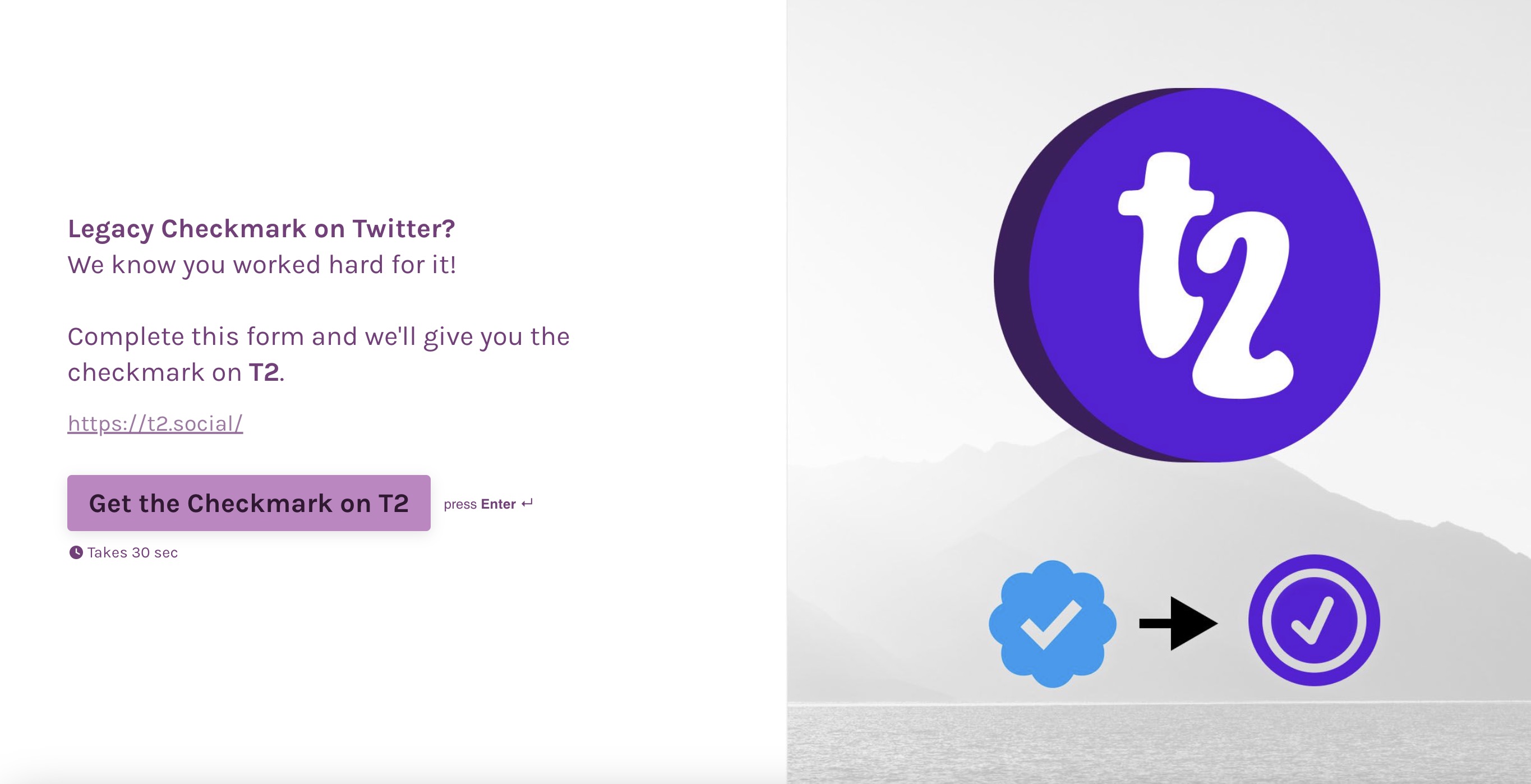
Image Credits: T2 screenshot

Also this week, T2 debuted a new verification process with the launch of its “Get the Checkmark” program timed to correspond to Twitter’s removal of legacy verification checkmarks across all users who aren’t paying for the Twitter Blue subscription. Twitter said its own checkmark removals will begin on April 1st and will include removing the verification from organizations and individuals who had previously qualified as “notable” under the company’s prior rules. Ahead of this change, T2 users who are legacy Twitter checkmark holders can claim their T2 checkmark by filling out this form and then following the subsequent email instructions which involve communicating with T2 via Twitter DM or reply.

After April 1 (or whenever legacy checks actually disappear), will switch over to a new verification flow. For now, while the app is small and in closed testing, this will involve chatting directly with a T2 representative. (A process that would make it very hard for bots to be verified!) Later on, T2 plans to scale this verification using in-app identity and selfie checks. These will be designated as “T2 Authenticated” profiles and will have the standard verified check, not the ruffled edge version of the previously Twitter verified crowd.

Too bad T2 still requires an invite to get in — this is clever marketing!

Platforms

Apple

  • Meanwhile, iPadOS 16.4 brings new Pencil hover features. By hovering a Pencil 2 up to 12 millimeters above the new iPad Pro’s screen, you’re able to view line and line width and color previews, along with the ability to choose drawing implements in Markup.
  • Apple reminded developers that starting on April 25, 2023, iOS, iPadOS and watchOS apps submitted to the App Store must be built with Xcode 14.1 or later. Xcode 14, which includes the latest SDKs, is a free download on the Mac App Store.
  • Apple launched Apple Pay Later, a payment option that lets you split the cost of an Apple Pay purchase into four equal payments over six weeks without interest or late fees. However, the feature isn’t yet broadly available, despite its public debut. Instead, Apple said it will invite randomly selected users to access a pre-release version before rolling it out to all eligible users in the coming months.

Android

  • Google won partial relief in its Android antitrust case in India. A tribunal court set aside four out of 10 directives, including the need to allow third-party app stores within Play Store and restrictions around the uninstallation of pre-installed apps by users. However, the National Company Law Appellate Tribunal upheld the $161 million penalty levied on Google by the local watchdog, the Competition Commission of India (CCI).
  • PayPal introduced Android support for Passkeys, a quick new way to sign into PayPal. This password-free login system is backed by Apple, Google, Microsoft, the FIDO alliance and others. Android mobile device users in the U.S. running the Android 9+ OS can create a passkey for their PayPal personal account using the Chrome browser. The feature is rolling out as of March 23 and is becoming more broadly available over time.

App Updates

AI

  • Snap said it’s seeking AI experts for its Safety Advisory Board. The company had clearly put the cart before the horse with its implementation of AI in its new chatbot. While chatting with a Washington Post columnist pretending to be a teen, the bot allegedly advised the columnist about hiding pot and alcohol at a birthday party. In addition, researchers at the Center for Humane Technology found that the bot gave sex advice to a user pretending to be 13 years old. Snap recently said it was working on giving parents more control around teens’ use of the My AI chatbot — another thing it should have done before, you know, launching the thing.
  • Microsoft already slipped ads into Bing. The company said it was exploring putting ads in the responses given by Bing Chat, its new search agent powered by OpenAI’s GPT-4 which is available on the desktop web and Bing mobile app.

Social

mastodon mascot peeking out of the flipboard logo holding an android phone

Image Credits: Flipboard

  • Magazine app Flipboard is integrating Mastodon in its Android application, as the company broadens its commitment to the federated social web. The feature allows users to browse a feed of short updates from the people they follow, reply to, like and boost posts, as well as click on hashtags to follow discussions, among other things. As on iPhone, where the functionality launched first, Android users can find the new feature by navigating over the accounts section and then logging in with their Mastodon credentials for the instance they’re on. And if the user doesn’t yet have a Mastodon account, they can request access to join Flipboard’s own server from here.
  • Twitter unveiled new API pricing, weeks after initially announcing its plan to shut down its free API. Now, there will be three new tiers for developers: a “Free” tier with 1,500 tweets per month, a $100 per month “Basic” tier with expanded access and an “Enterprise” tier that reportedly costs $42,000 per month. Many developers, including Twitter bot makers, are unhappy with the changes as they won’t be able to afford the access needed to run their smaller projects.
  • Twitter will remove the legacy checkmarks on April 1st. Afterward, only Twitter Blue verified accounts will appear on the algorithmic “For You” timeline starting April 15.
  • Twitter also open sourced some of its code on GitHub, including its algorithm for tweet recommendations on the For You feed, but not its ad recommendation algorithm.
  • Meta will allow Facebook and Instagram users to opt out of tracking in Europe, according to The WSJ and confirmed by Meta. Users will be able to opt for a version of the service where they’re only targeted with ads based on broader categories, like age and location. The changes follow multiple multimillion-dollar fines in the EU.
  • Reddit said it removed 473% more subreddits in 2022 and permanently suspended 244% more accounts for violations of its non-consensual intimate imagery policies.
  • Snap’s head of growth and previously longtime product head Jacob Andreou announced he will be leaving the company in May after eight years to join Greylock as a general partner.

Media & Entertainment

  • YouTube expanded its Analytics for Artists tool with the addition of YouTube Shorts-related data to the “Total Reach” metric, which gives artists and their teams an overview of how their music is reaching audiences across YouTube. Before this, the Total Reach metric only included official content uploaded by the artists and long-form videos uploaded by fans. Now it will include Shorts, too.
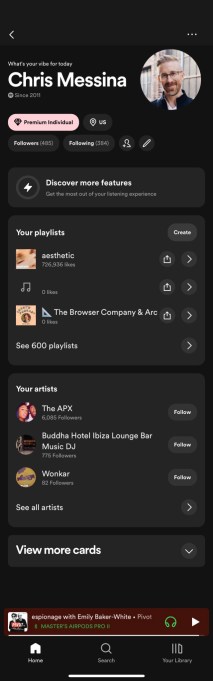
  • Spotify was spotted testing out new card-style user profiles that offer the ability for users to establish more of a social identity on the platform in addition to providing easy access to Spotify’s unique features — like its personalized recommendations, Blend playlists, co-listening experiences and more.
  • Spotify launched new personalized playlists called Niche Mixes that let you create mixes based on just a few words of description in the Search tab. For instance, you could type in an “activity, vibe or aesthetic,” the company notes, then append the word “mix” to generate the custom playlist. For example, you could make a “feel good morning mix,” “90s running mix” or “driving singalong mix.” The feature is available to all free and premium users in English.
  • While the U.S. government debates TikTok’s future, the video app announced a new product called Branded Effects aimed at businesses. The solution will allow brands to collaborate with TikTok effect creators to design custom effects — like AR experiences and other interactive features — to accompany their online campaigns and marketing efforts.

Gaming

  • Netflix appears to be working to bring its games to the TV with the iPhone as a controller. New code discovered inside the Netflix app is set to ask the user: “A game on your TV needs a controller to play. Do you want to use this phone as a game controller?” Netflix declined to comment on its plans.
  • Pokémon GO fans are upset over changes to the pricing of Remote Raid Passes. The game’s maker Niantic said the cost of these items will nearly double to 195 coins for one pass or 525 coins for three passes. Previously, one pass was 100 coins (about $1) and three passes were 250 coins (about $2.50). Plus, players will only be able to participate in five raids per day. The pricing changes suggest the company is facing economic headwinds. Niantic has not been successful in translating its AR platform to other titles to create another hit as big as Pokémon GO.
  • In Epic Games’ antitrust case against Google, lawyers for the plaintiffs submitted a number of exhibits to demonstrate Google employees’ tendency to switch off chat history on internal discussions. Epic believes this behavior is meant to destroy sensitive communications related to its Fortnite lawsuit. Shortly after the new filing, a federal judge ruled that Google’s failure to preserve messages requires sanctions. The judge is requiring Google to pay attorney fees and is debating what other non-monetary sanctions will be needed.

Fintech

  • Block said on Thursday it had verified 44 million of its over 51 million monthly active users through its identity program as of December 31. The statement was made following an investigative report from short seller Hindenburg Research, which claimed 40-75% of Cash App accounts they reviewed were fake, committing fraud or were additional accounts belonging to a single individual.

Etc.

  • Google Fi subscribers can finally use 5G on the iPhone. The support requires the new iOS 16.4 update on an iPhone 12 or newer, then the phone has to be switched over to 5G Auto in cellular settings.
  • Google Search, including its mobile search app, will now include extreme heat alerts that will tell users when a heat wave is expected to start along with tips to help users stay cool.
  • Lyft’s co-founders, CEO Logan Green and president John Zimmer, are stepping down. Green on April 17 and Zimmer on June 30. Ex-Amazon exec David Risher will be the new CEO.
  • OverDrive, a longtime digital reading companion used by library patrons, will be shutting down for good. After announcing its plans to sunset the app and removing it from app stores last year, the company now says that OverDrive will fully shut down on May 1, 2023. Readers will be directed to use the newer digital app Libby instead.

Security Concerns

  • Two targeted spyware campaigns involving several zero-day exploits for Android, iOS and mobile versions of the Chrome browser were detailed by researchers from Google’s Threat Analysis Group. Hackers were able to install a tool that allowed them to track the location of devices in Italy, Malaysia and Kazakhstan.
  • A Washington Post report warns that many of the most popular VPN services and apps have misled users about their practices while also disguising their origins, ownership and locations. It noted also that many of these apps are based in China or controlled by Chinese nationals.

Funding and M&A

  • New York City-based LeapXpert, which monitors employee communications with customers and co-workers across chat apps like iMessage, WhatsApp, Telegram, Signal and WeChat, raised $22 million in Series A funding led by Rockefeller Asset Management.
  • Indian fintech PhonePe will no longer be acquiring BNPL service ZestMoney, in a deal that was set to be between $200-300 million. The M&A was called off over due diligence concerns.
  • YC and Foundation Capital-backed meditation app Simple Habit was acquired by wellness marketplace company Ingenio for an undisclosed sum. Simple Habit will rebrand itself to Sleep Reset as a result of the deal.
  • Autio, a location-based audio entertainment app co-founded by actor Kevin Costner (previously known as HearHere), raised a $5.9 million seed extension led by iHeartMedia.
  • Cabify — the Madrid-based platform that competes against Uber in Spain and Latin America — announced $110 million in funding. However, the exact breakdown of the funding is unclear. The figure includes a €40 million loan from the European Investment Bank announced in December 2022 and the proceeds of a funding round of an unconfirmed amount that Cabify secured in July 2022.

Downloads

Perplexity AI
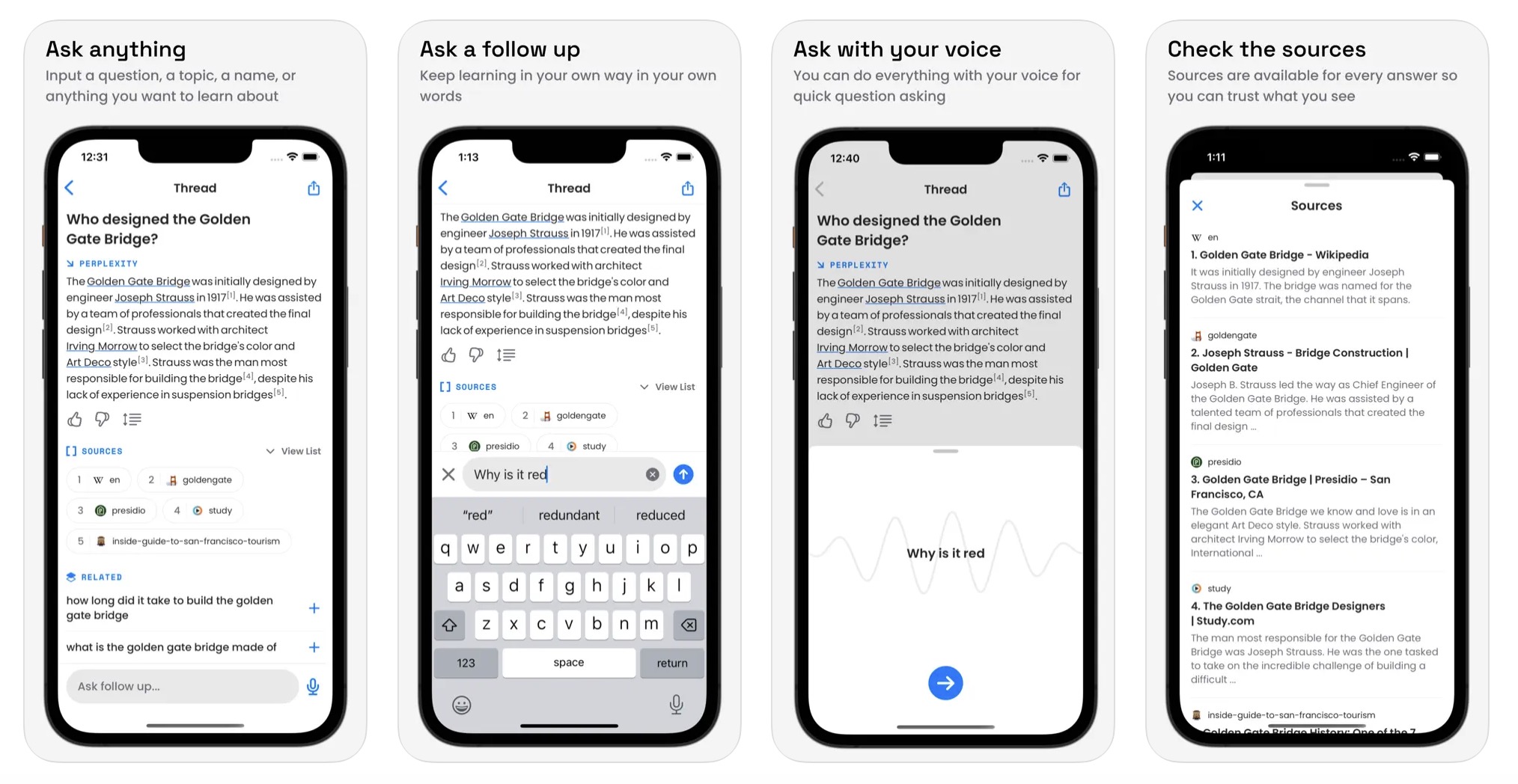
Image Credits: Perplexity on the App Store

AI search startup Perplexity AI this week announced $25.6 million in a new funding round led by New Enterprise Associates (NEA). The San Francisco-based company is one of now several hoping to challenge Google by offering users a new way to ask and get answers to their everyday system. Notably, Perplexity’s CEO worked previously as a researcher at DeepMind and the Google Brain project. That connection has brought some half dozen AI researchers at Google and DeepMind as investors, including SVP for Research and AI, Jeff Dean. While Perplexity launched in December, it’s been recently gaining more traction, Bloomberg reported, with February’s 13 million visits more than double that of January’s.

However, the company’s mobile app only launched this past week (March 28), offering a way for iPhone users to get instant answers on any topic with up-to-date (and cited!) sources. You can also ask the chatbot follow-up questions and engage with the app using either typing or your voice. Plus, you can keep your thread history to pick up where you left off. Noted one App Store review, “this really is too good to be true,” noting that the app was free to use despite all the functionality — making it a possible threat to OpenAI.

Apple Music Classical
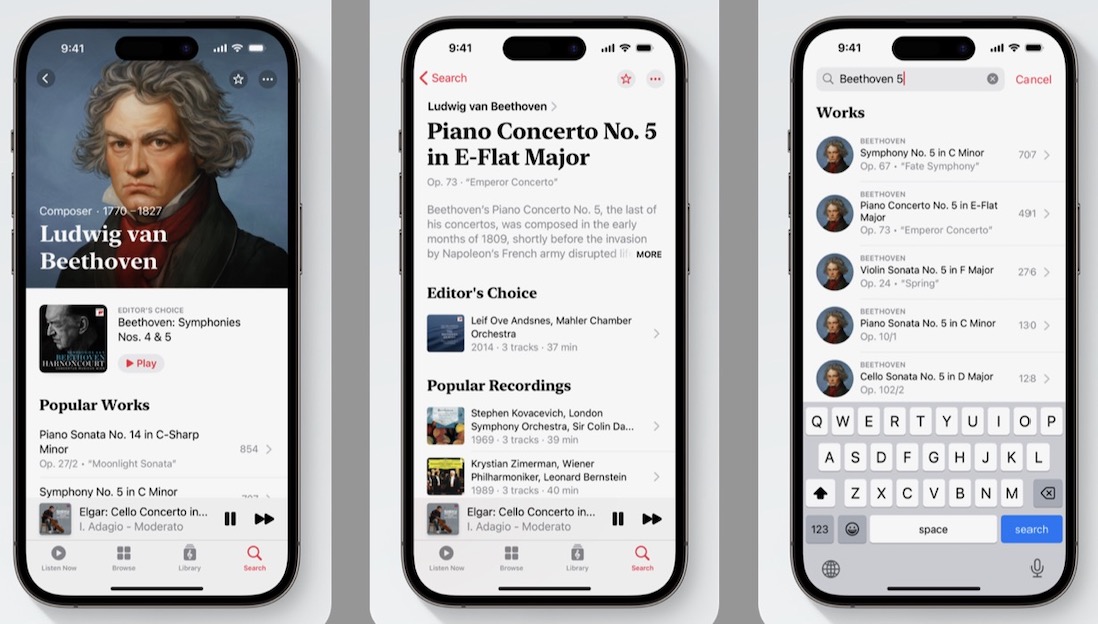
The new Apple Music Classical app, shown on 3 smartphone screens, offers Apple Music subscribers access to over 5 million classical music tracks.

Image Credits: Apple

Apple’s new app for classical music, Apple Music Classical, is now available as a free download for Apple Music subscribers. At launch, the service will be available globally, except in select markets, including China, Japan, South Korea, Russia, Taiwan and Turkey. However, Apple says it will arrive in these countries at some point in the future.

The company said that there are more than 5 million tracks available on the app right now, as well over 50+ million data points with data attributes of 20,000+ composers, 115,000+ unique works and 350,000+ movements. This data helps Apple Music subscribers find recordings across the catalog through the app’s specialized search engine built for classical music.

As Apple explains, classical works have multiple movements and tracks, while famous pieces have hundreds of recordings with different orchestras, conductors and soloists. In addition, many composers have their own special catalog classifications, which means classical music search has to be built differently with these complexities in mind. Because of these challenges, it’s been difficult to find classical works on traditional music streaming apps.

In the new app, users can search for works using keyword combinations that include composer, work, opus number, conductor, artist, instrument or even the work’s name. Plus, when you look up a work on the app, you’ll find all its associated recordings as well as a hand-picked “Editor’s Choice” performance. Apple Music Classical’s editors created over 700 playlists to guide listeners through 800 years of music and plans to add more over time.

Arc’s mobile browser companion app
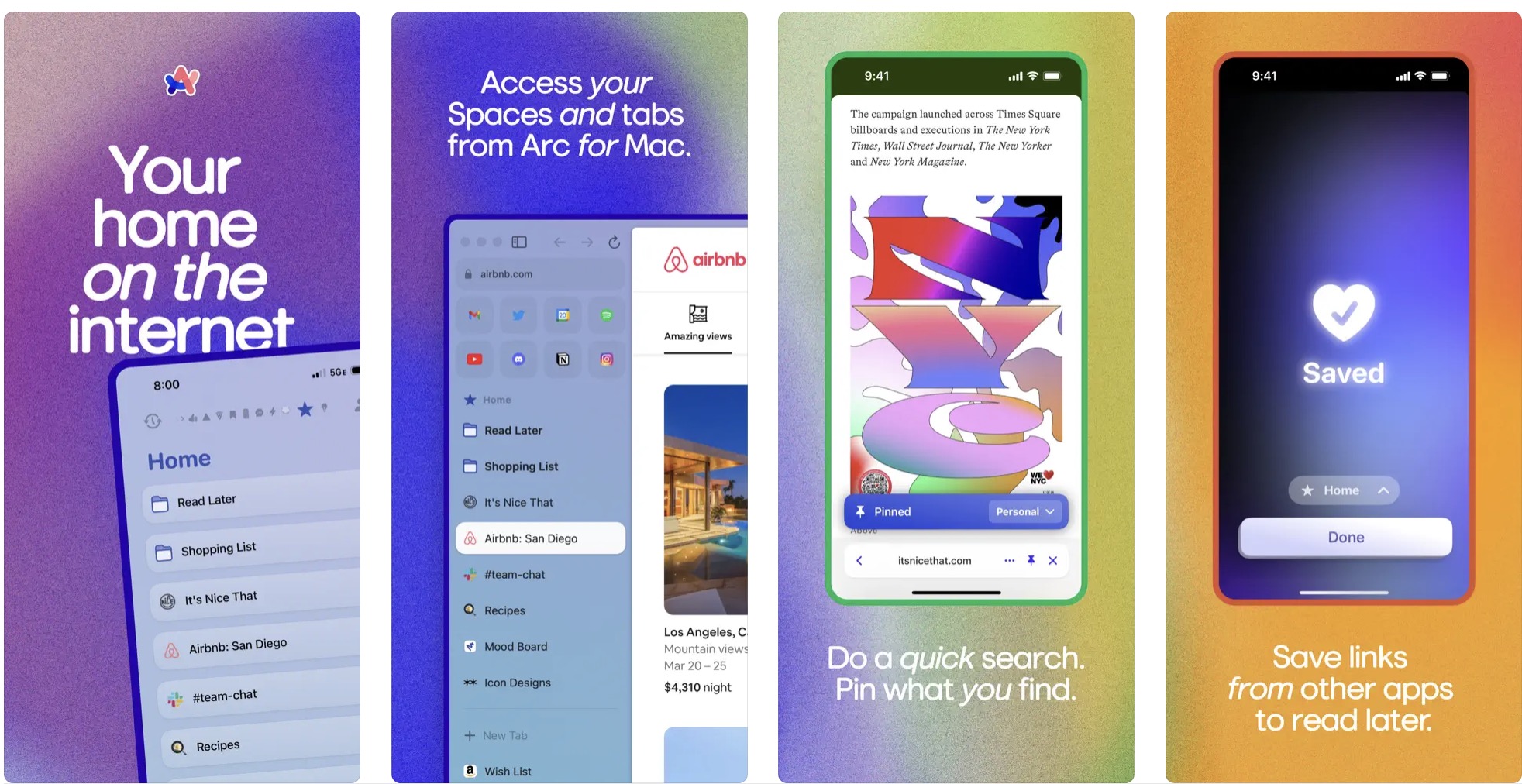
Image Credits: Arc

A buzzy new desktop web browser Arc has been rethinking how browsers should work. However, with the launch of its mobile app this week, Arc opted not to create another browser to compete with Safari. Instead, its app serves mainly as a mobile companion to Arc, offering users access to their Spaces and tabs from Arc for Mac while on the go, as well as the ability to save links from other apps to read later, and a way to view your saved Easels (a scrapbooking feature) and Notes. Arc is interesting because it’s trying to reimagine a basic part of everyday computing with an eye on the future — and it has a lot of fans. However, its focus is scattered, trying to solve many problems at once at the same time it’s inventing new tools to use, like its web scrapbooks which feels more like a standalone product idea that’s been mashed into a browser. The real test for Arc will be when it exits its private beta testing and opens to the wider public.

This Week in Apps: WWDC23, ByteDance pushes Lemon8 ahead of TikTok ban, T2 capitalizes on Twitter chaos by Sarah Perez originally published on TechCrunch


from https://ift.tt/djXU9Nw
via Technews
Share:

There’s trouble in Startup Nation

W
elcome to the TechCrunch Exchange, a weekly startups-and-markets newsletter. It’s inspired by the daily TechCrunch+ column where it gets its name. Want it in your inbox every Saturday? Sign up here.

Tel Aviv has the fifth most unicorn companies in the world. Yet, relatively little has been written outside of Israel about the major concerns local entrepreneurs are currently dealing with. We talked to one of them, MDI Health CEO Avishai Ben-Tovim. — Anna

To SVB and back

The Exchange recently noted how Sweden was punching above its weight in terms of startup dollars raised per capita. But Israel is even more outstanding when it comes to tech — so much so that it earned the nickname “Startup Nation.”

Israel’s tech scene is also remarkably resilient and relatively immune from the country’s global and local political woes. But in recent months, the Israeli startup ecosystem has found itself at the forefront of the protests against the government’s highly controversial judicial reform plan.

The reform, its opponents claim, would harm Israel’s democracy and its economy, in a country where the tech sector “makes up about 25 percent of Israel’s income taxes and contributes about 15 percent to the country’s annual GDP,” according to The Jerusalem Post.

Driven by these political and economical worries, major players from the Israeli startup scene took a public stance; Index Ventures, for example, “denounce[d] the proposed reforms in Israel that foster discrimination and threaten democracy.”

Others chose not to make official statements or formally join the strikes, leaving it up to their employees. But regardless of their position, many are concerned about the economic consequences that this political crisis might have.

These concerns have also turned into actions, especially finance-related ones. In January, Reuters reported that an Israeli venture capital fund and a local startup were moving their bank accounts out of Israel, and others similarly started looking into keeping funds in different locations.

MDI Health CEO Avishai Ben-Tovim was one of these. His health tech company, which has raised $26 million to date according to Crunchbase, is both Israeli and American. As political instability increased in Israel, it made sense to make good use of its Silicon Valley Bank account … until it didn’t. Ironically, Ben-Tovim found himself in the position of moving money back to Israel in a rush before the banking entity collapsed.

There’s trouble in Startup Nation by Anna Heim originally published on TechCrunch


from https://ift.tt/e3yJUkp
via Technews
Share:

Popular Post

Search This Blog

Powered by Blogger.

Labels

Labels

Most view post

Facebook Page

Recent Posts

Blog Archive