Tesla delivers record EVs amid federal tax credits price cuts

Tesla has topped Wall Street delivery estimates in the second quarter of 2023 as the automaker’s many price cuts and the Biden administration’s federal electric vehicle tax credits take effect.

The Elon Musk-owned EV-maker reported record global production of 479,000 units and record deliveries of 466,140. That’s up 10% from the 422,875 Tesla EVs delivered in the first quarter, and up 83% year-over-year. Analysts and investors look to delivery numbers over production numbers because they are more indicative of true sales numbers, which Tesla doesn’t release.

Tesla delivered far more Model 3 and Y vehicles than its more expensive Model S and X vehicles. In total, Tesla delivered 460,211 Model 3 and Y units and 19,489 Model S and X units. The automaker said 5% of its sales were subject to lease accounting.

About half of those deliveries came likely from Tesla’s Shanghai gigafactory, according to data from the China Passenger Car Association. The CPCA hasn’t released sales numbers for June yet, but Tesla delivered 75,842 China-made EVs in April and 77,695 in May. Roughly 82,610 of those vehicles in total were delivered to mainland China in April and May.

In the second quarter in the U.S., Tesla’s Model 3 vehicles joined its other models in being eligible for the full $7,500 EV tax credit.

While Tesla’s price cuts in the U.S., China and other countries indicate that the strategy is helping boost sales, investors will want to see how the cuts have affected margins. In the first quarter, the decreases in price did affect the company’s bottom line — Tesla reported a 24% drop in net income compared to the same period a year before.

We’ll see come earnings day. Tesla said it will release second quarter earnings after the bell on July 19.

Tesla delivers record EVs amid federal tax credits, price cuts by Rebecca Bellan originally published on TechCrunch


from https://ift.tt/fi9cD58
via Technews
Share:

Lucid scores a win Birds founder leaves the nest and Zoox robotaxis roll out in Vegas

The Station is a weekly newsletter dedicated to all things transportation. Sign up here — just click The Station — to receive the full edition of the newsletter every weekend in your inbox. Subscribe for free. 

Welcome back to The Station, your central hub for all past, present and future means of moving people and packages from Point A to Point B.

Not all of our readers are in the United States. But for those who are (or are Americans living abroad) Happy 4th of July! It’s a busy travel weekend and be safe out there on the roads.

A couple of items before jump into the rest of the news. I would be remiss not to mention the death of John B. Goodenough, the creator of the lithium-ion battery and a Nobel prize winner. Without his critical work, we wouldn’t have rechargeable lithium-ion batteries and all the products that are powered by them.

Another story you might have missed was a feature article about Porsche and how CEO Oliver Blume thinks the company can achieve greater profit margins and push into the luxury segment. (The automaker has traditionally put itself in a performance category).

OK, let’s dive in.


Want to reach out with a tip, comment or complaint? Email Kirsten at kirsten.korosec@techcrunch.com. You also can send a direct message to @kirstenkorosec

Reminder that you can drop us a note at tips@techcrunch.comIf you prefer to remain anonymousclick here to contact us, which includes SecureDrop (instructions here) and various encrypted messaging apps.

Micromobbin’

the station scooter1a

After a series of deadly fires, New York City is getting a $25 million emergency grant from the federal government to fund the installation of 170 micromobility charging and storage stations in 50 locations. The goal is to provide delivery workers, who rely on e-bikes, safe places to recharge the lithium batteries that power their vehicles.

NYC also recently issued a citywide ban on the sale of non-UL certified batteries, so the combination of these initiatives should help curb the spread of e-bike battery fires.

Outside New York, a new bipartisan bill in the U.S. Senate would limit the import of unregulated e-bikes and batteries into the U.S. Today, China and other countries can sell products directly to U.S. consumers without customs and border patrol inspections if the products are under $800. A sub-$800 e-bike is exactly the type of bike that’s more likely to have an uncertified battery or a poor battery management system.

Of course, the reason e-bikes have been causing so many fires is complicated, and not just a result of cheap bikes. It’s also the product of overcharging, misuse and mishandling. I plan to do a deep dive on this in the future, so stay tuned, but in the meantime, some tips to stay safe in this issue of The Station.

In other news …

Bird founder Travis VanderZanden has left the nest. The former CEO and president’s slow-motion departure from Bird is now complete after stepping down from his role as chairperson of Bird’s board, “effective immediately.” John Bitove is replacing VanderZanden.

Connecticut’s e-bike rebate program has begun and eligible residents can get up to $1,500 in incentives.

Gogoro, the Taiwanese scooter battery swapping company, is eyeing a $1.5 billion deal with India’s Maharashtra state to manufacture electric vehicles, smart battery packs and battery swap stations, and deploy an open and accessible battery swapping infrastructure in the state later this year.

Italy is cracking down on e-scooters. The proposed rules would require owners to have insurance and for scooters to have a registration plate and be equipped with turning signals. Riders would also be required wear a helmet.

A new McKinsey survey found that 30% of global mobility users are planning to boost their usage of micromobility, and 27% would consider using microcars in the coming decade. The battle is not yet won, but the progress is steady.

Yadea, the Chinese e-scooter brand, is getting ready to invest up to $1 billion in its first factory in the Philippines. The Philippines will be a hot new market for Yadea. The company already has six facilities in China and one in Vietnam.

 — Rebecca Bellan

Deal of the week

money the station

Two Chinese IPOs got my attention this week. Robosense, the Chinese lidar company, and Black Sesame the chipmaker that focuses on autonomous vehicle systems, have filed to go public with the Hong Kong Stock Exchange.

One item to note on Black Sesame. This looks like the first to file under a new IPO framework called Chapter 18C, for so-called “specialist-technology” companies that have yet to meet required revenue levels of at least 500 million Hong Kong dollars ($63.8M). According to its preliminary prospectus, the company generated $177.75 Hong Kong dollars in 2022 (or $165.4 RMB).

Black Sesame and Robosense didn’t disclose how much they want to raise from their respective listings.

Other deals …

Faraday Future has managed to raise more money. How? No, really, I’m asking a serious question here. The beleaguered EV SPAC said raised $90 million from existing investors to help it get its much-delayed FF 91 luxury electric SUV to production and delivery.

General Motors acquired Israel-based software startup Algolion for an undisclosed sum. The company developed software that can detect potential hazards in battery cells. Algolion’s six employees, including the company’s founders, will remain based in Israel and join more than 850 employees at the GM Technical Center in Herzliya, Israel.

Joby received a $100 million equity investment South Korean telecommunications company SK Telecon. This is an expansion of Joby‘s existing partnership with SK Telecom, which began in February 2022.

NoTraffic, an AI-based traffic management platform, raised $50 million in Series B funding round led by M&G Investments with participation from VNV Global and UMC Capital. Existing investors Grove Ventures, Vektor Partners, Next Gear Ventures, North First Ventures, Meitav Investment House, Alchimia Investments and TMG also joined in the round.

Nuvocargo, a Mexican digital logistics platform, raised $36.5 million in a Series B round with a valuation of $250 million. 

Service4Charger, a Berlin-based startup that installs, operates and maintains EV charging infrastructure, raised €10 million in Series A funding round. BP ventures invested €7.5 million ($8.2M) into the company, while Smart Energy Innovationsfonds, the corporate venture capital arm of Energie 360, invested the remaining €2.5 million ($2.73M).

Notable reads and other tidbits

Autonomous vehicles

Car and Driver dug up some fresh evidence that suggests the not-so-secret, secret Apple car project is still chugging along and even testing out in Arizona.

Halo.Car, a startup that uses remote operators to deliver rental cars to a customer’s door, has launched driverless operations in Las Vegas.

Police departments have issued warrants to Cruise and Waymo asking for footage from its self-driving cars, suggesting that the robotaxi is the new proving ground for privacy advocates and law enforcement, especially as companies scale to new cities.

TuSimple may sell its U.S. business as it turns more of its attention and resources to Asia.

Zoox started testing its purpose-built, electric, autonomous robotaxis on public streets in Las Vegas. The testing area is limited to a one-mile loop around the neighborhood where its facilities are located in the southwest part of the city.

Electric vehicles, charging & batteries

Lordstown Motors may be circling the drain, but it’s not going out without a fight. The EV SPAC filed for Chapter 11 bankruptcy protection in Delaware and has also sued Foxconn, after failing to resolve its dispute with the Taiwanese manufacturer over a previously agreed upon investment.

Lucid landed quite the partnership — and one that could give the luxury EV maker a much needed boost. I’m talking about the deal to supply Aston Martin with powertrain components and battery technology for future electric vehicle models. The iconic British luxury automaker aims to launch an EV in 2025. TC+ reporter Tim De Chant provides analysis on what this means for Mercedes-AMG and legacy automakers.

Stellantis launched Free2move Charge, the first product under its new charging and energy management business unit that aims to handle every aspect of powering up an EV whether at home, work or on the road. The automaker was scant on details (stay tuned execs said) and no commitment of whether it will adopt Tesla’s North American Charging Standard.

TechCrunch contributor reviewed the Mercedes AMG S 63E, a plug-in hybrid with F1 tech.

Tesla’s North American Charging Standard (NACS) is still on a roll. Ford was first to commit to adopting the standard, followed by GM and Rivian. The latest entrants are Volvo, Polestar and (wait for it!) the Electrify America, the EV charging network under VW Group.

Future of flight

Joby Aviation’s production prototype eVTOL received a special airworthiness certificate issued by the Federal Aviation Administration (FAA) and can now begin flight testing. The certificate puts the company on track to deliver its electric aircraft to customers by 2024 and commercialize an air taxi service by 2025.

Gig economy

DoorDash will give delivery workers the option to be paid a guaranteed hourly minimum rate instead of being paid per delivery — but there’s a catch.

People

Audi CEO Markus Duesmann is out. He’ll be replaced by VW Group strategy chief Gernot Doellner.

Harley-Davidson promoted Jonathan Root to CFO. He was previously senior vice president of Harley-Davidson’s financial services division.

What’s in my driveway

2024 alfa romeo tonale

Image Credits: Kirsten Korosec

People have LOTS of opinions about plug-in hybrids. Are they a bridge technology for consumers to battery electric vehicles? Or is it just an overpriced overly complex vehicle with two propulsions systems?

This past week I drove the 2024 Alfa Romeo Tonale AWD in the TI trim, a compact SUV equipped with a plug-in hybrid electric all-wheel-drive system that delivers 285-horsepower and fuel economy of 77 miles per gallon equivalent.

Like other PHEVs, drivers can opt for EV only mode, which in the Tonale is accessed via a dial with the letters d-n-a on it (dynamic, natural and advanced efficiency, that’s the EV one). And like the plug-in hybrid Jeeps, a brand that’s also under Stellantis, there’s an e-save option that allows drivers to preserve all of that EV range. And like other Stellantis brands it also has an infotainment system powered by its UConnect 5 software.

Quick thoughts. It’s very much an Alfa Romeo and certainly stands out in a crowd — there’s even some fun details like the emblem of an electrified Biscione on the back window. And the TI trim, which costs $51,790 including the destination fee) offers some nice add ons like interior ambient lighting, heated seats and a wireless charging pad.

The Tonale doesn’t handle quite as well as the Stelvio though and I found that when pressed it rolled a bit in the corners. But really my main complaint is that the regenerative braking can’t be independently controlled. Instead, the regenerative braking setting is linked to whatever letter on the d-n-a selector you pick. Adding some paddles to the back of the steering wheel to control the regenerative braking would be a lovely addition.

Lucid scores a win, Bird’s founder leaves the nest and Zoox robotaxis roll out in Vegas by Kirsten Korosec originally published on TechCrunch


from https://ift.tt/Z1fd3zl
via Technews
Share:

15 investors talk about their investment cadence in H1 2023

As part of our ongoing coverage of VC performance in the first half of 2023, TechCrunch+ surveyed 15 investors about their investment cadence and their plans for the second half of the year.

As expected, it appears a good mix of investors wrote checks at the rate they’d aimed for, while others fell a bit short. However, there is a sense that a slower investment cadence is going to become the new norm. Rajeev Dham, partner at Sapphire Ventures, and Mark Grace, investor at M13, both noted that the rapid investment cadence of the pandemic years has passed, and the adjustment period has been a bumpy ride for some.

However, those who operated at a slower cadence seem to be favoring a more cautious approach. Gen Tsuchikawa, CEO of Sony Ventures, said, “We have always been selective in our investments, and we are keeping the cadence of those investments flexible for now.”

Dham also advocates prudence for the coming period. “Once we understand what the new operating cadence is of businesses and then apply the appropriate price, which we now all know what it is (what it has always been!), then we can act accordingly. The other massive shoe to drop is further retreat from the most active investors in the 2018–2021 era. The more they retreat, the more likely there is to be less capital in the system chasing startups, which also level sets on price.”

Grace has his eyes firmly set on the full-half of the glass: “I think dealmaking cadence will continue to rebound. You need to be an optimist in this industry!”

Logan Allin, managing partner and founder of Fin Capital, stated that his firm was the most active fintech investor across the globe in Q1 thanks to its focus on early-stage startups founded by repeat founders.

He gave us some insight into his firm’s confidence: “This accelerated rate of new company formation is a function of (a) Management teams turning over the reins to professional management to take the company public or exit via M&A or buyout, and (b) seasoned entrepreneurs with underwater options that are not worth sticking around for to vest further.”

Read on to learn more about the investing climate of the past six months, and how these investors aim to tackle the next few months.

We spoke with:
Matt Murphy, partner, Menlo Ventures
Sheila Gulati, managing director, Tola Capital
Gen Tsuchikawa, CEO, Sony Ventures Corporation
Logan Allin, managing partner and founder, Fin Capital
Jason Lemkin, CEO and founder, SaaStr
Kaitlyn Doyle, vice president, venture, TechNexus Venture Collaborative
Rajeev Dham, partner, Sapphire Ventures
Jenny He, founder and general partner, Position Ventures
Oliver Keown, managing director, Intuitive Ventures
Rex Salisbury, founder and general partner, Cambrian Ventures
John Tough, managing partner, Energize Ventures
John Henderson, partner, AirTree
Christopher Day, CEO, Elevate Ventures
Mark Grace, investor, M13
Howie Diamond, managing director and general partner, Pure Ventures


Matt Murphy, partner, Menlo Ventures

Did your investing cadence meet your expectations? Did you exceed your targets or undershoot them?

The back half of 2022 was dead. Things suddenly picked up in late February, and we felt it across the board. We made investments in Anthropic and Typeface and have continued at a fairly rapid pace since then. In Q2, we made several commitments, including two life sciences companies, one digital health, one hard tech company and a few SaaS companies. So, the end of Q1 picked up and Q2 really accelerated. We even had a term sheet in on a company and we won the deal, but it got acquired.

Is your firm planning on accelerating its dealmaking cadence in the back half of 2023? Why or why not?

Q2 was already busy and active for us, but mainly at the early stage. We have three funds: an incubation fund (Menlo Labs), which has been steady state; our Venture Fund, which picked up significantly in Q2; and our Inflection Fund (defined as early growth in companies with $3 million to $10 million ARR), which was still slow in Q2.

We expect Labs and the Venture Fund to remain just as busy as they have been from a pacing standpoint, but [we] expect the Inflection Fund will accelerate significantly in the back half of the year. About 80% of the companies in our sweet spot haven’t raised in two-plus years, and many will need to come back to market in 2H 2023. We’re excited about that segment of the market, where there is early but predictable scale and where valuations have settled substantially.

There will be many flat and down rounds, and there should be no stigma around that. The multiples VCs will use to value companies will be different, but that doesn’t change whether a business is good or not. So we’ll all get past valuation and focus on building great companies.

Sheila Gulati, managing director, Tola Capital

Did your investing cadence meet your expectations? Did you exceed your targets or undershoot them?

Our current focus is AI, primarily in the areas of domain-specific foundation models, AI/ML tooling, AI SaaS applications, AI compliance and governance, and AI security tools.

We have closed deals in these spaces in 2023, but the frenzy around AI has definitely meant a lot of capital has rushed into this market. The result has been that we have backed off certain deals based on valuation, and we expect this to continue in the AI world. It has meant fewer deals overall.

Is your firm planning on accelerating its dealmaking cadence in the back half of 2023? Why or why not?

We’re focused on doing the right deals. Generational companies will emerge from this transformative period defined by AI, but there will be many losers, too.

15 investors talk about their investment cadence in H1 2023 by Karan Bhasin originally published on TechCrunch


from https://ift.tt/4dlraUQ
via Technews
Share:

Fintech M&A gets a big boost with Visa-Pismo deal

It was a very busy week in the world of fintech, which certainly kept us on our toes. We covered a couple of notable M&A deals (including one of the biggest of the year so far), a different kind of financial services startup aimed at undocumented immigrants, Brex’s official recommitment to the startup community and more.

End-of-quarter frenzy

As the generative AI craze rages on, Ramp acquires customer support startup Cohere.io

We started the week with some M&A news out of corporate spend management company Ramp. The team shared with us exclusively that it had scooped up an AI-powered customer support called Cohere.io, which had raised $3.5 million in seed funding over its lifetime from backers such as Initialized Capital, Y Combinator and…Ramp co-founders Eric Glyman and Karim Atiyeh. Notably, Ramp (and companies like Deel and Rippling) were also customers. Glyman told us that it was evident from early on that once his company started using Cohere.io, “suddenly the majority of tickets were being answered properly in an automated fashion. […] It actually really worked,” he said. “The technical sophistication of the team was far beyond anything we had ever seen.”

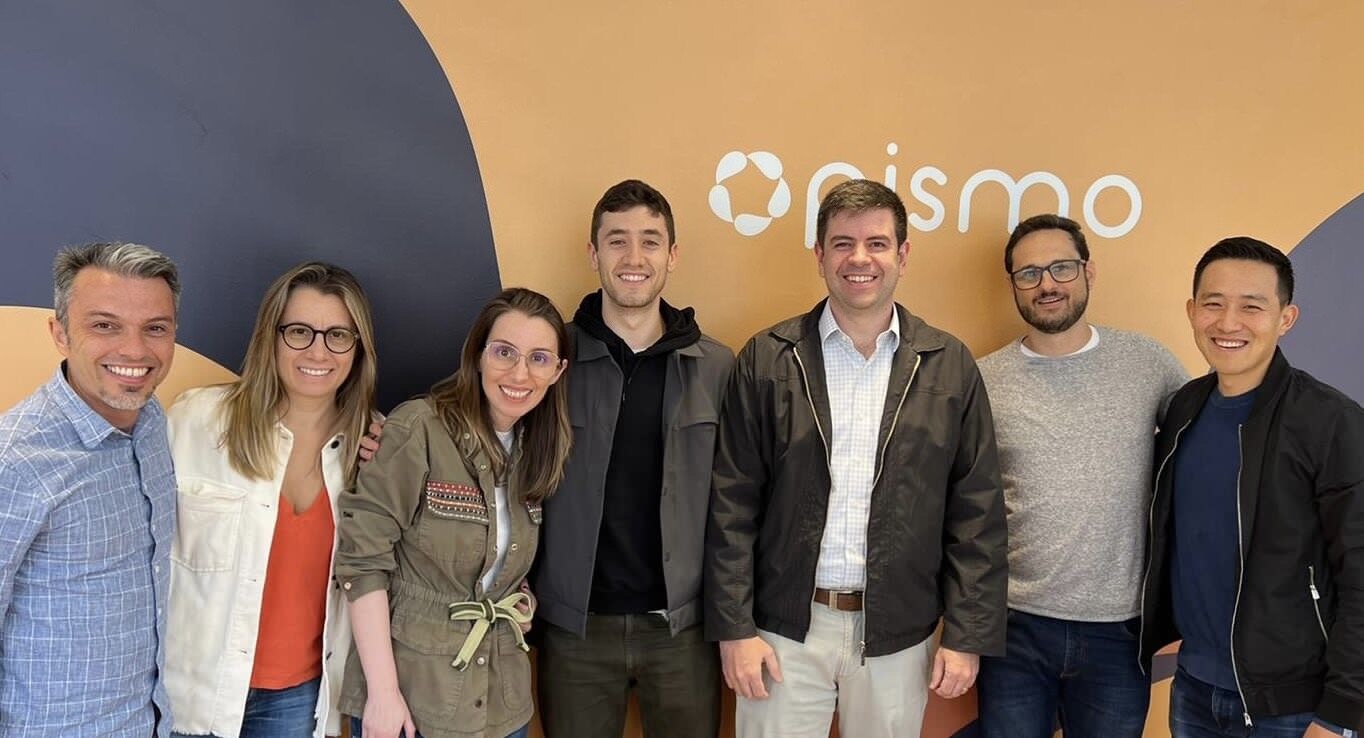
Visa acquires Brazilian fintech startup Pismo in $1B blockbuster deal

Then later in the week came confirmation of one of the biggest, if not the biggest, fintech M&A deals of the year. It was rumored for months that Visa, Mastercard and potentially a bank and private equity firm were all courting Brazilian payments infrastructure startup Pismo. The acquisition was definitely a coup for the Latin American startup community, considering that Visa could have likely considered companies from all over the world. Pismo has apparently seen some explosive growth in recent years — jumping from 10 million accounts at the end of 2020 to 80 million today. Also, at the beginning of 2021, Pismo was doing less than $1 billion per month in transaction volume compared to processing $40 billion in transaction volumes annually today.

However, as noted by KBW managing director Sanjay Sakhrani, the $1 billion purchase price is roughly 30% below the $1.4 billion that Visa was rumored to have offered for Pismo earlier this year. We don’t know what Pismo was valued at when it raised $108 million in a round co-led by SoftBank, Amazon and Accel in 2021. But Accel partner Ethan Choi told us the sales price was “a very strategic multiple.”

Sakhrani also said in a report that in addition to beefing up Visa’s issuer processing capabilities across card products, Pismo also brings “differentiated core banking capabilities and will allow Visa to provide connectivity and support to emerging payment rails like Pix in Brazil.”

The last week in recent memory where we remember seeing such a flurry of fintech M&A activity was in mid-January, when Jonah Crane, partner at Klaros Group, predicted we would continue to see more acquisitions in 2023 thanks to the continued venture slowdown and practically dead IPO and SPAC markets. And according to CB Insights, fintech M&A exits rebounded in the first quarter, but not as much as one might have expected. They were up 15% QoQ to 172 deals. Most of Q1’23’s top M&A deals involved fintechs based outside of the U.S. For the first time in the previous year, the top M&A valuation fell below $500 million.

Side note: The acquisition represented a rare win for SoftBank, which has had a number of high-profile disappointments in recent years with investments in the likes of WeWork, the now defunct Katerra and FTX. Alex and I talk more about that on Friday’s episode of Equity Podcast here.

Brex refocuses on startups with hire of SVB veteran, ex-a16z operating partner

Last summer, Brex made headlines for announcing it would stop serving SMBs and non-funded startups. This summer, it’s making headlines for pledging its recommitment to the startup community. After Silicon Valley Bank imploded in March, Brex (along with the likes of Arc and Mercury) saw an influx of new customers. Specifically, the company says it opened 4,000 new accounts and received $2 billion in deposits in the first week after the SVB shutdown alone. That obviously led the company to rethink its strategy. Last week, Brex told us exclusively that it had hired Jason Mok, a former operating partner at Andreessen Horowitz (a16z) and 16-plus-year veteran of Silicon Valley Bank to serve as its head of startups. I talked with Mok about his previous experience and how he thinks that will help him in his new role, which includes providing more “Brex ambassadors” who can serve as the face of the brand that founders, operators and VCs can go to for advice, perspective and connections to other founders.

No SSN, no problem, says Maza, a fintech startup aimed at undocumented immigrants

I also wrote about Maza, a fintech startup that raised $8 million in a seed-funding round led by a16z to help undocumented immigrants get an ITIN (individual tax identification number) and access the U.S. financial system. TechCrunch has previously reported on a number of startups focused on the immigrant community — including Welcome Technologies, Fair, Majority and TomoCredit. (It’s unclear whether Fair is still around considering its website appears to no longer exist or is down.) But what makes Maza different is its focus on undocumented immigrants specifically. “We’re doing much more than just providing a bank account — we’re really giving immigrants a stable and legal financial foundation from which to build credit and wealth indefinitely,” said co-founder and COO Robbie Figueroa.

Fun fact: The name Maza came from a song about perseverance called “La Maza” that co-founder and CEO Luciano Arango used to listen to with his mom growing up.

Nubank’s CEO explains what the US could learn from LatAm fintech

In one of the Equity podcasts this week, I spoke with David Vélez, the co-founder and CEO of digital bank giant Nubank. (Did you know it has a market cap of  $37 billion?!) Digital banking is always top-of-mind over here at TechCrunch, so we quickly got into discussing Nubank’s strategy for achieving profitability and how the company has been able to maintain that in a challenging macroeconomic environment. Vélez also compared and contrasted the Latin American and U.S. fintech markets and dished on how he sees banking evolving in the next few years. One particularly interesting part of the conversation, as one Equity listener pointed out: Vélez’s reasoning for only expanding Nubank in three markets over 10 years: “‘I am extremely wary of any deck where people tell me ‘18 markets in 2 years.’”

Announcing the Fintech Stage agenda at TechCrunch Disrupt

And last but not least, we’re incredibly excited to share that this year at TechCrunch Disrupt (held from September 19–21), we’ll have a dedicated Fintech Stage, where we’ll have plenty of time to talk about the most interesting fintech topics at length. Here is your first peek at the agenda — but stay tuned for more to come! — Mary Ann

Image Credits: Pismo

Weekly News

For TechCrunch+, Alex Wilhelm reports on Gusto, a payroll management software company that reached a big milestone this week — $500 million in revenue. He also goes over Gusto’s path toward profitability, its new partnership with Remote and why an IPO could be in its future. Read more.

Now let’s go over to Ivan Mehta’s story on PayPal. The company rolled out a “tap-to-pay” feature for both Venmo business users and Zettle users in the U.S. This enables sellers to accept payment from cards and digital wallets (support for payment via iPhone coming soon) without any additional hardware. Find out more.

Financial super app Revolut now has an automated investing tool for U.S. users. The robo-adviser enables customers to invest in one of five portfolios, according to their risk tolerance, which rebalances automatically on a monthly basis. This offering has lower fees as well, including an annual fee of 0.25% and a monthly minimum of 25 cents. In 2022, Revolut launched a stock trading tool for the U.S. 

Consumers’ love-hate relationship with buy now, pay later continues. According to a recent report from J.D. Power, “more than half (60%) of customers who are aware of BNPL say the option is helpful, but the majority (64%) of those customers don’t believe using the option improves their financial health.” More here.

Other headlines

Stripe lays off dozens, mostly in recruiting (Stripe’s comms team sent us the following statement: “We’ve made a series of structural changes within our People team to better align with the evolving needs of Stripe’s business. These changes are never easy, and we had to say goodbye to about 40 very talented employees, in areas like recruiting.”)

Square rounds out banking services with rewards that pay for processing

Five fintechs join Mastercard startup program to bring digital economy ‘promise’ to more people

Dock embeds financial education with responsible credit solutions

Amadeus and Emburse partner on business travel and expense solution 

Fundings and M&A

Seen on TechCrunch

Social trading app Shares receives EU stock trading license

Flowie wants to make invoices flow freely

Socure acquires identity verification startup Berbix for $70M

TreasurySpring raises $29M to expand its investment platform aimed at businesses with excess cash

Seen elsewhere

JustPaid debuts suite of AI-powered finance services

Gr4vy secures investment from W23 to expand in APAC

Nuvocargo bumps valuation to $250 million, snags new funds to expand U.S.-Mexico shipping efforts (Fintech-focused VC firm QED Investors led the round, telling TechCrunch that while Nuvocargo is primarily a digital logistics platform, the company’s embedded fintech is where it sees itself being able to add value. TechCrunch covered Nuvocargo’s last raise, where co-founder and CEO Deepak Chhugani explained that technology to us.)


Join us at TechCrunch Disrupt 2023 in San Francisco this September as we explore the impact of fintech on our world today. New this year, we will have a whole day dedicated to all things fintech, featuring some of today’s leading fintech figures. Save up to $600 when you buy your pass now through August 11, and save 15% on top of that with promo code INTERCHANGE. Learn more.


Image Credits: Bryce Durbin

Fintech M&A gets a big boost with Visa-Pismo deal by Christine Hall originally published on TechCrunch


from https://ift.tt/GnT3xLN
via Technews
Share:

Netflix axes its basic plan in Canada IRL shuts down and Sheins influencer stunt backfires

It’s that time of week again, folks. Welcome to Week in Review (WiR), TechCrunch’s regular digest of the past week in tech. New here? Not to worry — sign up here to get WiR in your inbox every Saturday, then read on for the week’s recap.

This week, we’re covering Netflix quietly axing its basic plan in Canada, the IRL social app shutting down after it was discovered that most of its users were fake and the blockbuster sales of the Flipper hacking device. Also in store, TC has reporting on Lenovo’s Yoga Book 9i dual-screen laptop, DeepMind’s next chatbot to rival ChatGPT and Robinhood acquiring a credit card startup. Phew.

Most read

Netflix axes basic plan — in Canada: Netflix has quietly killed the $9.99 CAD per month basic plan in Canada for new subscribers. This simplifies the streaming company’s offering but leaves a big gap between the ad-supported plan and the standard plan, Ivan writes.

A unicorn social app shuts down: Ironically, the social app IRL‘s users don’t exist in real life. An internal investigation by IRL’s board of directors found that 95% of the app’s reported 20 million users were automated or from bots. So, after raising more than $200 million in venture capital, IRL is shutting down.

A laptop, but double: Lenovo’s Yoga Book 9i drew both appreciative and skeptical stares at CES earlier this year when it made its official debut. With two 13-inch OLED screens attached with a central hinge, it’s one of the most unusual laptop designs to ever make it into actual production. And, according to Darrell, it’s the first that proves the dual-screen paradigm can work — and work really well — for a lot of people.

Flipper sells like hotcakes: You may have stumbled across the Flipper Zero hacking device that’s been doing the rounds, which includes a bunch of ways to manipulate the world around you — including RFID card systems, remote keyless systems, key fobs, barriers to entry and more. The company claims that it’s on track to sell $80 million worth of products this year after selling almost $5 million worth as Kickstarter preorders — and claims it sold $25 million worth of the devices last year.

Robinhood acquires X1: Robinhood announced on Thursday that it would acquire no-fee credit card startup X1 for $95 million in cash. X1, which offers an income-based credit card with rewards, has raised a total of $62 million in venture-backed funding from investors like Soma Capital, FPV, Craft Ventures and Spark Capital since its 2020 inception.

Shein’s stunt backfires: As Shein eyes an IPO, the company’s image needs a serious makeover. From stealing indie designers’ work to violating local labor laws, Shein has fallen out of vogue on social media — so the company invited a group of influencers to tour one of its factories in Guangzhou, China. Critics point out that it was a highly curated brand trip wherein influencers were offered free travel opportunities and gifts, encouraging them to promote a favorable image of the company.

Databricks acquires MosaicML: This week, Databricks announced that it’ll pay $1.3 billion to acquire MosaicML, an open source startup with neural networks expertise that built a platform for organizations to train large language models and deploy generative AI tools based on them. Prior to that, MosaicML had raised just under $64 million from investors, including Atlas, Playground Global and Samsung Next.

ChatGPT gets Bing: ChatGPT on mobile can now surf the web. But only via Bing — for better or worse. This week, OpenAI announced that subscribers to ChatGPT Plus, the premium version of the company’s AI-powered chatbot, can use a new feature on the ChatGPT app called Browsing that lets users use ChatGPT to search Bing for answers to questions.

Audio

Hunting for a podcast to while away the hours? You’ve come to the right place. TC has you covered.

On Equity, the crew kicked things off with Honey Homes’ recent funding and Gusto’s teaming up with Remote; they then dove deep into the latest wave of M&A, from Visa’s purchase of Pismo to Databricks’ deal with MosaicML.

Meanwhile, Found featured the founders of Spout, a startup that makes a device that can pull fresh drinking water out of the air.

Over at Chain Reaction, this week’s episode welcomed Jack Lu, co-founder and CEO of NFT marketplace Magic Eden, to discuss the state of the crypto market.

And The TechCrunch Podcast covered Shein inviting several fashion influencers to its facilities in China. The internet didn’t take kindly to the stunt.

TechCrunch+

TC+ subscribers get access to in-depth commentary, analysis and surveys — which you know if you’re already a subscriber. If you’re not, consider signing up. Here are a few highlights from this week:

M&A is back: It’s been a quiet year when it comes to tech M&A. But suddenly this week, it’s as though the M&A floodgates finally opened and we started to see some movement.

Big Tech embraces generative AI: As the race to build generative AI tools for the enterprise devolves into a battle royale, Big Tech companies are busy wielding their most powerful weapons: checkbooks. Will the trend continue? That’s an open question.

When companies have more influence than countries: According to the CIA’s World Factbook, if Apple were a country, its revenue would be No. 50 on the list of countries ranked by GDP. While it’d lag the likes of the U.S., France and Egypt, as a country, Apple would produce more wealth than Norway, Portugal or Greece, and only slightly less than Hong Kong, Peru or Israel. Should it be this way? Haje explores.


Get your TechCrunch fix IRL. Join us at Disrupt 2023 in San Francisco this September to immerse yourself in all things startup. From headline interviews to intimate roundtables to a jam-packed startup expo floor, there’s something for everyone at Disrupt. Save up to $600 when you buy your pass now through August 11, and save 15% on top of that with promo code WIR. Learn more.

Netflix axes its basic plan in Canada, IRL shuts down and Shein’s influencer stunt backfires by Kyle Wiggers originally published on TechCrunch


from https://ift.tt/DliJsRQ
via Technews
Share:

Twitter limits the number of tweets users can read amid extended outage

Twitter is putting limits to how many tweets its users can read as the Elon Musk-owned service suffers extended outage that has stymied users’ ability to track new posts.

In a tweet, Musk detailed the revised usage quotas. Verified account holders can peruse a maximum of 6,000 posts daily, while unverified users must contend with a drastically reduced limit of 600 posts.

Newly registered, unverified users face even tighter restrictions with an allowance of a mere 300 posts per day, according to the Tesla and SpaceX chief executive.

Musk said that Twitter is wrestling with “extreme levels of data scraping” and “system manipulation.” These new constraints, he says, are essential measure to curb these pressing issues. Musk did not say who was scraping Twitter’s data — or how long had the issue persisted — nor did he elaborate the system manipulation claim.

The billionaire has previously expressed concerns about data scraping at Twitter and suggested that he may take action against the bad actors. Musk was briefly outraged over Microsoft “illegally” using Twitter’s data and threatened that it was “lawsuit time.”

The curb follows tens of thousands of users complaining on Saturday that Twitter was not populating their feeds with newer tweets. Instead, users were greeted with the “rate limit exceeded” error.

This is not the first technical hiccup that Twitter has grappled with in recent months, nor is it the first instance of an unorthodox solution being devised to hold the situation together.

Earlier this week, Twitter started to restrict access to its platform for anyone not logged into an account.

The hiccup arrives at a time when social media giant Meta is reportedly preparing to launch its own Twitter rival.

Twitter limits the number of tweets users can read amid extended outage by Manish Singh originally published on TechCrunch


from https://ift.tt/fUk61Ao
via Technews
Share:

What do FinOps and parametric insurance have in common?

W
elcome to the TechCrunch Exchange, a weekly startups-and-markets newsletter. It’s inspired by the daily TechCrunch+ column where it gets its name. Want it in your inbox every Saturday? Sign up here.

The rise of FinOps already fueled multiple acquisitions, including IBM’s plan to acquire Apptio for a whopping $4.6 billion, but I bet there’s more to come. And there’s another trend I’m sure we’re not done hearing about: parametric insurance. — Anna

The ongoing rise of FinOps

When cloud optimization startup ProsperOps raised a $72 million funding round last February, my colleague Kyle Wiggers argued that consolidation in this space wasn’t necessarily over.

Sure, several cloud optimization companies had been nabbed by incumbents over the years, from Cloudyn’s acquisition by Microsoft in 2017 to CloudHealth Technologies’ purchase by VMware in 2018. But more could still follow, Kyle argued, citing Intel’s 2022 $650 million purchase of Granulate as evidence.

He was right: In a busy week for M&A news, IBM announced its intent to buy Apptio from its current private equity owner for $4.6 billion in cash. In 2019, Apptio itself had acquired Cloudability, a cloud spending management vendor. Reporting on IBM’s announcement, Ingrid Lunden noted that Apptio’s activities fall into a broader category.

What do FinOps and parametric insurance have in common? by Anna Heim originally published on TechCrunch


from https://ift.tt/puNhSyx
via Technews
Share:

Popular Post

Search This Blog

Powered by Blogger.

Labels

Labels

Most view post

Facebook Page

Recent Posts

Blog Archive