X, formerly Twitter, streamlines its crowdsourced fact-checking system Community Notes

Elon Musk-owned X, the company formerly known as Twitter, is streamlining its crowdsourced fact-checking feature Community Notes. The feature historically has provided information to users about why they were seeing a fact check appended to a tweet, er, post. Now, after three years of development, the company says this extra context will be removed for those who are already experienced with Community Notes.

In a post by X employee Lucas Neumann, he explains that Community Notes will evolve alongside people’s usage. As users become familiar with the feature, the company will remove the detailed explanations about how Notes work — though these will continue to appear for audiences new to Community Notes, he says.

“When we first introduced @CommunityNotes, it was a very unfamiliar concept to most users. Understandably, people were naturally skeptical and had many questions when they encountered a note,” writes Neumann. “Our research consistently found that versions with more text, rather than less, helped people perceive notes as friendly, helpful, fair and trustworthy. It also helped them understand that these came from the community instead of company employees. My minimalist designer soul resisted these findings initially, but our research was solid, so we leaned on the side of text abundance,” he continues.

“Now, after 3 years, as @CommunityNotes matures as a first-class feature and earns more people’s trust, we can finally start streamlining and refining it. We’re taking a ‘progressive onboarding’ approach: detailed explanations will continue to appear for audiences new to Community Notes, and where space permits, while streamlined versions will start showing to those with more experience,” Neumann says.

The change is small and subtle, but one that speaks to the growing understanding among X’s user base of how the crowdsourced fact-checking process works. Launched to Twitter’s global users in December 2022 after earlier tests, the feature previously known as Birdwatch has been refined over the years so the “wisdom of the crowds,” so to speak, couldn’t be easily gamed by someone or a group of people wanting to spread misinformation.

The system is not as simple as having a post or fact check upvoted or downvoted for accuracy. If that were the case, brigades of like-minded contributors could team up to promote their own viewpoints. Instead, Community Notes uses a “bridging” algorithm that attempts to find consensus among people who don’t usually share the same views. Not everyone can immediately become a contributor to Community Notes, either. They first have to prove they’re capable of writing helpful “notes” by correctly assessing other notes as either Helpful or Not Helpful, which earns them points. Once reaching contributor status, users must then continue to add quality contributions or they will have their contributor status removed.

The Community Notes also can’t be edited or modified by X’s team members and don’t represent the company’s official viewpoint, the company explains on its website.

Musk, in particular, felt strongly about Community Notes, after having been highly critical of Twitter’s former content moderation efforts before he took ownership.

“Community Notes is a gamechanger for improving accuracy on Twitter!,” Musk tweeted last year.

While originally designed to provide additional context for tweets that didn’t technically violate Twitter’s rules, but could be misleading or lacking critical context, Community Notes play a larger role on the new X as the company’s employee headcount, including in trust and safety and moderation, has declined through layoffs.

Though other areas of the old Twitter have been cut or revamped — from subscriptions to newsletters to the status of third-party clients — Community Notes appear to be the focus of continued development.


from https://ift.tt/wjarmzc
via Technews
Share:

Subaru doubles its plans for new EVs, targeting 8 models by 2028

It seems like Subaru is finally getting ready to release a full lineup of electric vehicles.

Known for clever marketing schemes that won over sporty lesbians, dog-loving dinks, outdoorsy families and Crocodile Dundee fans alike, the Japanese automaker has so far lagged behind the competition as far is its electrification plans go. The firm was late to the party with the launch of its first EV — the 2023 Solterra crossover.

Subaru says it’s ready to get serious. At least, that’s what the conglomerate told investors today.

Subaru upped its EV sales goals on Wednesday during its quarterly earnings report. It now aims to sell 600,000 EVs per year by 2030 — a milestone that would make up roughly half of the firm’s global sales. Most of these sales will come from the U.S., Subaru’s biggest market. The automaker also said it would boost its planned battery-electric lineup to eight models.

Earlier this year, Subaru announced that would up its electric-vehicle lineup to four vehicles by 2026, and now the conglomerate plans to double that lineup by the end of 2028. In the mix is a three-row electric SUV, which Toyota will reportedly build for Subaru in Kentucky starting in 2025, according to Automotive News.

Subaru added that it plans to back up these announcements by investing around $10.5 billion (1.5 trillion yen) toward its electrification efforts “by around 2030.”


from https://ift.tt/LsQI8P5
via Technews
Share:

UK privacy watchdog warns Meta over plan to keep denying Brits a choice over its ad tracking

The UK’s data protection watchdog has responded to Meta’s announcement yesterday that it intends to offer (other) Europeans a free choice to deny its tracking-for-ad-targeting but won’t be asking UK users for their consent to its surveillance — with some, er, pointed remarks.

Take it away Stephen Almond, the Information Commissioner’s Office (ICO)’s executive director of regulatory risk, with this “ICO statement on Meta“:

As a digital regulator, we pay close attention to how companies operate internationally and how people’s rights are respected.

We’re aware of Meta’s plans to seek consent from users for behavioural advertising in the EU, to the exclusion of the UK. This follows related findings by the Court of Justice of the European Union, Irish Data Protection Commission and Norwegian Data Protection Authority.

We are assessing what this means for information rights of people in the UK and considering an appropriate response.

Almond’s carefully worded remarks (“close attention”; “assessing what this means for information rights of people in the UK”, “considering an appropriate response”) suggest the regulator is not best pleased that the adtech giant formerly known as Facebook isn’t intending to give UK users the same level of respect for their data rights as people in the EU, European Economic Area (EEA) and Switzerland are, apparently, set to get soon.

Simply put it looks very awkward indeed for the ICO, and terrible news for UK users stuck in their post-Brexit not-so-sunny-uplands, that Meta has calculated it doesn’t have to offer the same degree of respect for their information as it must for Europeans living elsewhere in the region.

Especially since Meta is doing this at a time when UK data protection law is still based on the pan-EU General Data Protection Regulation (GDPR). (I mean, the UK government’s plan to water down the domestic privacy regime, via touted post-Brexit data “reforms”, hasn’t even made it onto the statute books yet! So, on paper, the privacy regime is the same as it was when the UK was in the EU.)

The specific issue the ICO is facing up to here is that defence of domestic data protection rules now falls squarely on its shoulders — with no protective shielding from the Court of Justice of the EU handing down the last word on how the law must be enforced. Since January 31 2020, when Brexit was fully enacted by the UK government, rulings made by the CJEU don’t apply in UK law. And, notably, Meta has only been moved to — finally — announce its intention to give Europeans a choice to deny its tracking-for-ads in the wake of a major CJEU ruling last month.

That also followed a significant January 2023 GDPR enforcement by EU data protection regulators. And an emergency intervention by Norway last month banning Meta’s behavioral ads locally over the legal basis issue — rather than waiting for Ireland, Meta’s lead regulator, to do it across the whole EU.

The cumulative impact of all these EU procedures has left the tech giant with no lawful basis left to claim under EU law for the data processing it carries out to “personalize” ads — except consent. So there is now momentum behind GDPR enforcement that is having a tangible impact on reforming privacy-hostile business models. But, sadly for people in the UK, it sits outside the EU’s implementation of GDPR. And so… no Meta consent intent for Brits!

The bloc also hasn’t stood still on lawmaking since the UK upped and left. It’s actually been highly active on digital regulations. Including undertaking a major piece of ex ante competition reform, called the Digital Markets Act — which also appears to be giving Meta pause for thought on its ads data processing.

The company’s blog post update yesterday announcing its intention to switch to consent for ads data processing in the EU referenced “a number of evolving and emerging regulatory requirements in the region, notably how our lead data protection regulator in the EU, the Irish Data Protection Commission (DPC), is now interpreting GDPR in light of recent legal rulings, as well as anticipating the entry into force of the Digital Markets Act (DMA)” as informing its decision.

And, well, the DMA doesn’t apply in the UK either. Just as the Irish DPC’s GDPR enforcement and the CJEU’s interpretation of how to apply the GDPR don’t.

Meta switched UK users’ data from falling under its Irish subsidiary to its US entity earlier this year, taking UK users firmly out of EU jurisdiction. That’s Brexit folks!  (A ‘Made in the UK’ digital ex ante competition reform also hasn’t made it into domestic law after facing delays as a result of political turmoil in the governing Conservative party in the wake of, er, Brexit… So there’s no UK equivalent to the DMA yet either.)

The even more particular problem for the ICO is it has systematically failed to act on similar complaints about adtech tracking lacking a proper lawful basis for — literally — years.

It was actually sued for inaction back in 2020 over just such a complaint. And even paused its investigation into adtech entirely during the pandemic, saying it didn’t want to saddle the industry with “undue pressure” at such a difficult time.

What about UK users’ rights not to be unlawfully creeped on by advertisers during Covid? The ICO evidently didn’t feel it should press the industry to care about such details back then — or, well, ever since really. So it’s a bit rich for the ICO to suddenly square up to Meta with implicit concerns that Brits’ info rights aren’t being properly respected. Unless this is the regulator’s Damascene conversion moment — on the need to actually enforce against adtech abuses it has been publicly critical of for years.

Previously the UK regulator has considered an “appropriate response” to rampant law-breaking by the adtech industry to mean convening a few roundtables where advertising execs were seemingly able to fill the room with hot air about respect for compliance while being allowed to continue lucrative data-mining business as usual as the ICO continued ‘investigating’.

So it’s not clear what action the UK regulator might deem “appropriate” to take against Meta if it keeps trampling local users’ rights to deny its tracking. Hopefully we’re not going to see another open-ended/neverending investigation.

Technically the UK GDPR allows for penalties for confirmed breaches that can reach as high as 4% of global annual turnover — which, in Meta’s case, could sum to a few billion pounds. But the ICO hasn’t strayed anywhere near the theoretical maximums in the GDPR enforcements it has chalked up to date. So the adtech giant may have decided there’s minimum regulatory risk on UK turf — and set the level of respect for local users’ data accordingly. Ergo: No consent for you, you’re British.

We reached out to the ICO with questions about its historical lack of enforce against adtech’s tracking and profiling, and to ask what specific responses it may consider if Meta continues to provide UK users with a lesser level of data protection than other people in European, but the regulator told us it had nothing more to add beyond Almond’s public remarks.

Meta also declined comment on the ICO’s statement. But its spokesman pointed us back to the section of its blog post we quoted above — where it says its intention to switch to consent in the EU and EEA was taken in response to a number of enforcement decisions by the region’s regulators and courts. So, basically, Meta is making the salient point that its looming switch of lawful basis tracks enforcement action. No enforcement, no switch. Simples!

Of course this also means the ICO does have the power to change how UK users’ rights are treated by Meta or any other adtech entities operating on UK soil. I.e. by actually enforcing UK law on the adtech industry as privacy campaigners have been calling for it to do for years.

Michael Veale, a lecturer in digital rights at the University College London, who was one of the individuals behind the aforementioned complaint about adtech industry practices to the ICO back in 2018 — and who also subsequently took legal action after the regulator closed the complaint a couple of years later without taking a decision — urged the ICO to seize the opportunity it now has to act on its stated concerns for UK users’ rights by regulating adtech giants like Meta directly.

“Since Meta moved its relevant headquarters for UK users from Ireland to the US, the UK is now obliged to regulate the tech firm for itself, not to wait for Ireland. This would be a great time [for the ICO] to show it is ready for these significant new responsibilities,” he told TechCrunch.

“The text of the relevant law applying to Meta is in all relevant ways identical in the EU and the UK. Meta’s choice not to extend the same rights to UK users is it making a calculated decision that privacy enforcement in the UK is weak enough to ignore,” Veale added. “Some of the court judgements do apply to the EU and not the UK, as they were handed down after the end of 2020. But that does not mean that the regulator cannot take clear action using the information provided in the course of these judgements, and on the solid reasoning within them.”


from https://ift.tt/WfUAX9t
via Technews
Share:

Tuesday Capital, a Silicon Valley firm that moved to Austin during the pandemic, captures $31M for its newest seed-stage fund

Austin seems to agree with Tuesday Capital.

When the 12-year-old seed stage outfit — originally called CrunchFund  —  was co-founded by longtime Patrick Gallagher and TechCrunch founder Michael Arrington, it was interwoven with the Silicon Valley scene. In has since widened its net. Part of the shift owes to the pandemic, when many venture firms began meeting with far-flung founders online. Part of it owes to Prashant Fonseka. He joined Tuesday Capital as an associate in 2015, was promoted to partner in 2020, and lived like a “nomad” for much of that strange time, connecting in person with founders Tuesday Capital might have missed otherwise.

Indeed, Tuesday’s team ultimately decided to move the firm from San Francisco to Austin, and it has “definitely been easier to get to NY and other East Coast cities,” says Gallagher, who says he feels “great about the decision” to pull up the firm’s Bay Area stakes. “We have a strong community of founders from our portfolio companies that are now based in Austin,” he says, referring to  some who moved during the pandemic and three other teams that Tuesday Capital has backed since it relocated. Austin also “expanded our reach and increased our access to really great deal flow,” Gallagher insists.

The transition went smoothly enough that Gallagher says the outfit just closed its fifth seed-stage fund with $31 million in capital commitments from many of the same family offices and institutions that have supported Tuesday Capital for years.

It wasn’t a piece of cake, suggests Gallagher. The firm is too small for large institutional investors. SPACs have fallen out of fashion, cutting off one avenue for some of Tuesday Capital’s portfolio companies to go public. (Those of its portfolio companies that merged with blank-check companies and got themselves onto the market: Rover, Opendoor, Satellogic, Inspirato, and Getaround.)

Meanwhile, the economic climate has obviously changed meaningfully between now and when Tuesday Capital announced a similar size fund ($30 million), almost exactly two years ago. “I definitely think that it is harder than ever to raise a fund in general, regardless of size,” Gallagher says.

Nevertheless, the firm’s portfolio, along with the support it offers startups — which includes PR, design, and community building — were leading reasons that LPs have continued to back the firm across its various funds, Gallagher says. Though Tuesday Capital doesn’t yet have the kind of cash on cash returns about which some firms might brag (“it takes a long time for our funds to start to generate meaningful liquidity,” he explains), it has shown its ability to get into buzzy deals, certainly. In addition to writing checks to Uber, Digital Ocean, Gitlab, Opendoor, and Airbnb, among others, its still-private portfolio also holds some highly valued companies, including Zipline (valued at $4.2 billion back in April), Solugen ($2 billion as of last October), and Human Interest ($1 billion as of a year ago)

LPs also see what a lot of VCs have seen across 2023, suggests Gallagher, including the opportunity for VCs to get more bang for their buck, at long last.

Though the firm plans to continue writing initial checks of $250,000 to $500,000, it’s “definitely getting more ownership today compared to 18 months ago,” though Gallagher adds that it’s “still less” than when the firm started in 2011.

Tuesday Capital is far from alone is choosing to move its headquarters from the Bay Area to Austin. Other venture firms to do so in recent years include Founders Fund, Mithril Capital, 8VC, and Breyer Capital, among others.

Bill Gurley, a Texas native who was long the highest-profile investor at the boutique venture firm Benchmark, also recently made the move to Austin, reportedly fulfilling a promise when he married his wife that they’d move back to Texas once they were empty nesters.


from https://ift.tt/MpyB5qh
via Technews
Share:

Samsung Galaxy Z Fold 5 review

In February 2020, Samsung planted its flag in the sand. Screen issues aside, the original Galaxy Fold was met with a mixed response. “Innovation for innovation’s sake” was a common refrain. The wildly expensive device arrived at just a hair under $2,000. People questioned whether anyone really needed to carry a tablet in their pocket. The device was big and bulky. And then there was the crease.

I won’t go so far as saying the company was definitively proven correct, but in 2023, things are certainly trending that way. According to Counterpoint, foldable shipments grew 64% y-o-y in Q1, hitting 2.5 million. It’s a drop in the bucket versus the overall market, but it’s a positive trend for a category many assumed was dead on arrival. It’s doubly impressive given that — until recently — there simply weren’t many foldables on the market.

Here’s the thing about successfully planting your flag in the sand: The next thing you know, you’re surrounded by everyone else’s flag. Again, I’m not quite ready to declare 2023 the year of the foldable, but it’s certainly the year a lot more companies got into the act. Motorola released a second, Google’s got one, OnePlus is readying its own and its parent company already has a pair, echoing the Samsung’s two form factors.
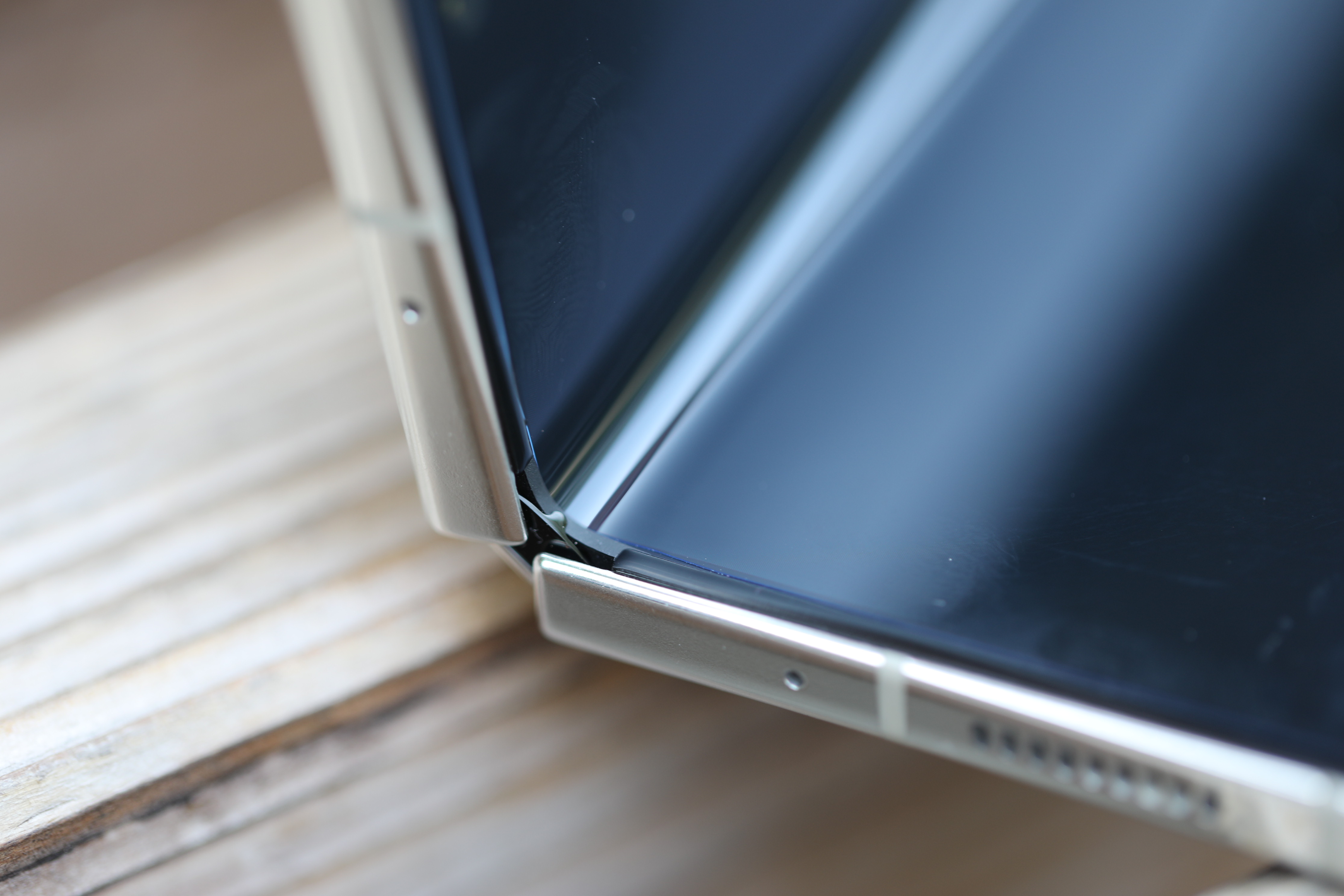
Image Credits: Brian Heater

Heck, even Apple is rumored to be getting into the game in 2024/2025, pending apparent supply chain concerns. The more the category grows, the more competition the Galaxy Z line will face.

China is now the world’s largest foldables market by a sizable distance, courtesy of its own 117% y-o-y growth. Samsung is currently a close third in the country, just behind Huawei and Oppo — of course the former has been struggling on the international stage, courtesy of the trade war. Samsung released the W23 and W23 Flip — variants of the Fold 4 and Flip 4 with a more blinged-out black and gold design — in the country last year and has seen growth as a result.

You only get one chance to make a first impression, as they say. The original Fold undoubtedly made a big one, but even boundary-pushing design is subject to the basic laws of physics. You can’t expect the wheel to be reinvented every year. Some upgrades will be more impactful than others, but on the whole, it’s a game of refinements after you hammer out those initial kinks.

The Fold 5 is one of those iterative devices. It’s a perfectly fine thing for a smartphone to be, but it’s unavoidably made more pronounced amid the rapidly changing category the line helped create. The product’s position in the market means it will invariably be the baseline against which all other foldables are contrast — fairly or unfairly, for better or worse.
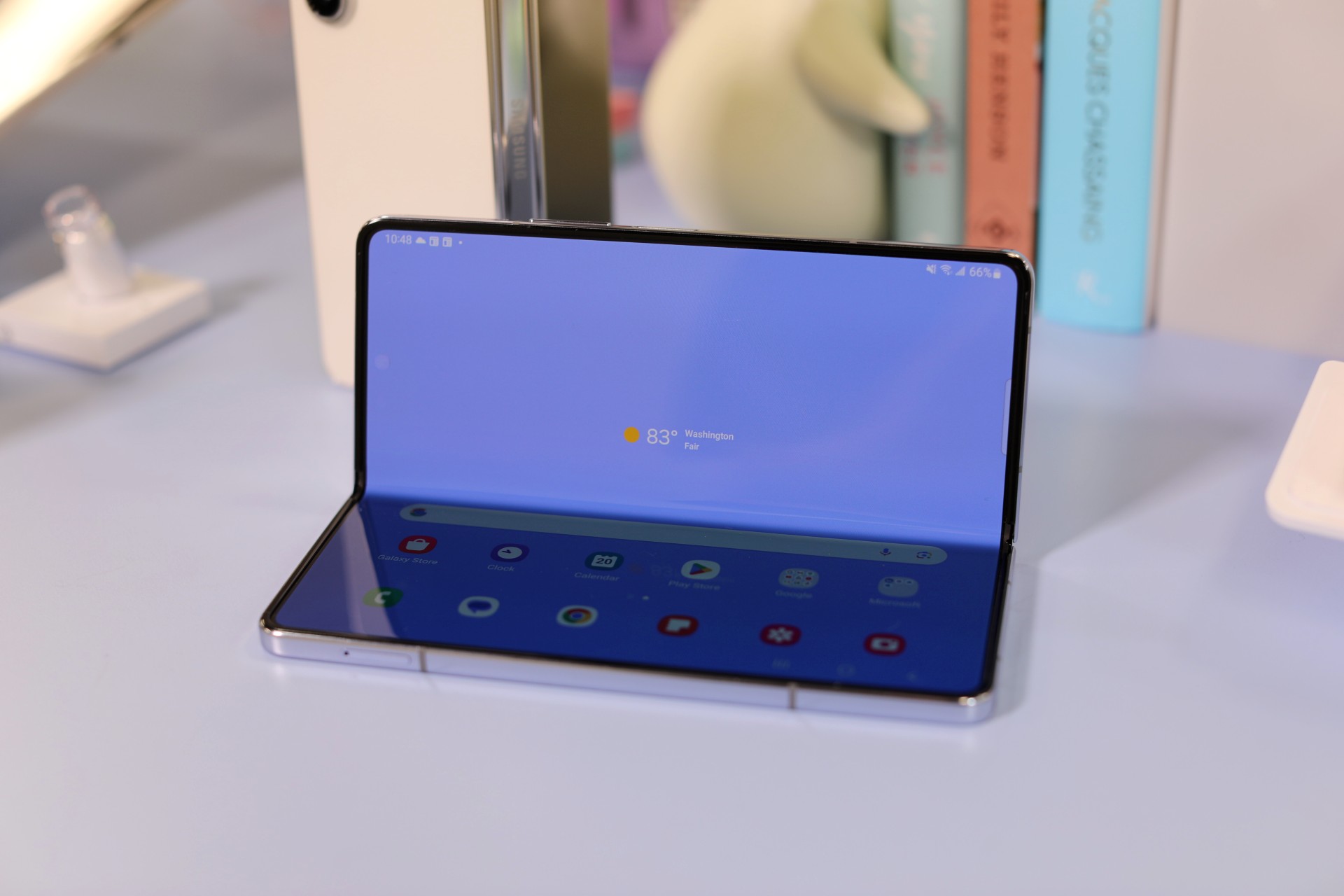
Image Credits: Brian Heater

As personal preferences go, I’ve always found the Fold to be big and bulky. Portability is something I value in foldable design, and this ain’t it. The first Flip spelled out the category’s true potential for me, while this year’s Google Fold delivered something much closer to my platonic industrial design ideal. Each design has its trade-offs, of course — hardware design is a great meditation on compromise. It’s a lesson on prioritizing certain characteristics over others and a tacit understanding that producing things at scale is going to make some people happier than others, while leaving every single one of them at least slightly disappointed.

For the Fold, priority comes in the form of a big screen. It’s the logical extension of the extended project that began with the Galaxy Note in 2011. Much like the Fold, the device had more than its share of detractors. The absurdity of a 5.3-inch screen! This manner of decadence is why Rome fell! Of course, more than a decade ago, that size screen required a much larger phone over all. The device-to-screen ratio improved a great deal over the years, and ultimately the entire Galaxy S line became phablets, making the Note ultimately redundant.

Currently, the largest Galaxy S device is the 6.8-inch Ultra. It’s hard to imagine things expanding too far beyond that in the slate form factor (but listen, I’m a big enough man to admit I’ve been wrong about screen sizes before — me and Steve Jobs have that in common). At a certain point, it’s just too big to carry around.
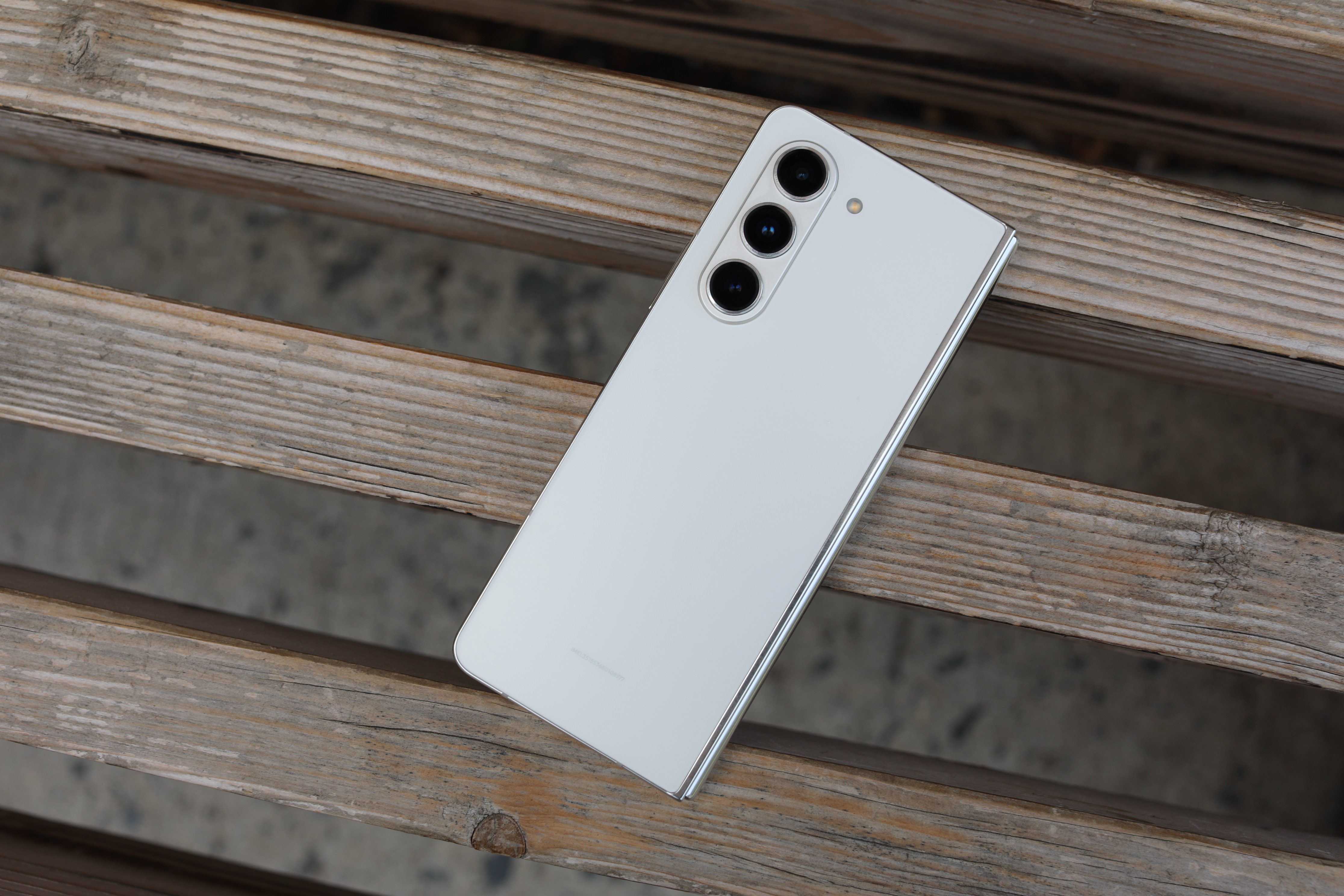
Image Credits: Brian Heater

Of course, for many, phones crossed that threshold long ago. The Fold’s appeal, however, is the ability to carry around a 7.6-inch display in your pocket — well into the realm of what we would call a tablet. The displays are effectively unchanged here. The 7.6-inch main screen sports a 2176 x 1812 resolution, while the external is 2316 x 906. Both have an adaptive refresh rate up to 120Hz.

In spite of what some angry people on the internet will likely say in the social media replies to this very story, the appeal is clear. Given the choice between watching a film on a six-inch smartphone and a 7.6-inch, I know what I’m picking every time. Granted, I also have a larger tablet at home, so I don’t find myself in that specific scenario every day.

As for the trade-offs, well, there are a couple. For one thing, the device is narrow. Again, increasing the width of the device would only make it that much larger and heavier. The external screen has, mercifully, expanded over the generations and become that much more useful in the process. It’s not quite edge-to-edge, but it’s getting there. But while 6.2 inches sounds like more than enough screen, the proportions are out of whack — even more so than the Fold’s main display.

At 23.1:9, it’s extremely long and very narrow. There are certain things you can do just fine with that aspect ratio — reading your Bluesky feed for instance. Typing on said Bluesky feed, however, is a different story. I brought the Fold and Flip to a couple of concerts last week for camera-testing purposes. Unfolding a 7.6-inch screen to post on social media is awkward — as is typing on something that big. I gave the external display a shot, and I have to say, every time I review one of these devices, it feels like I’m learning how to type again and suddenly I assume everyone around me is silently judging (truthfully, it’s New York and almost certainly no one cares).
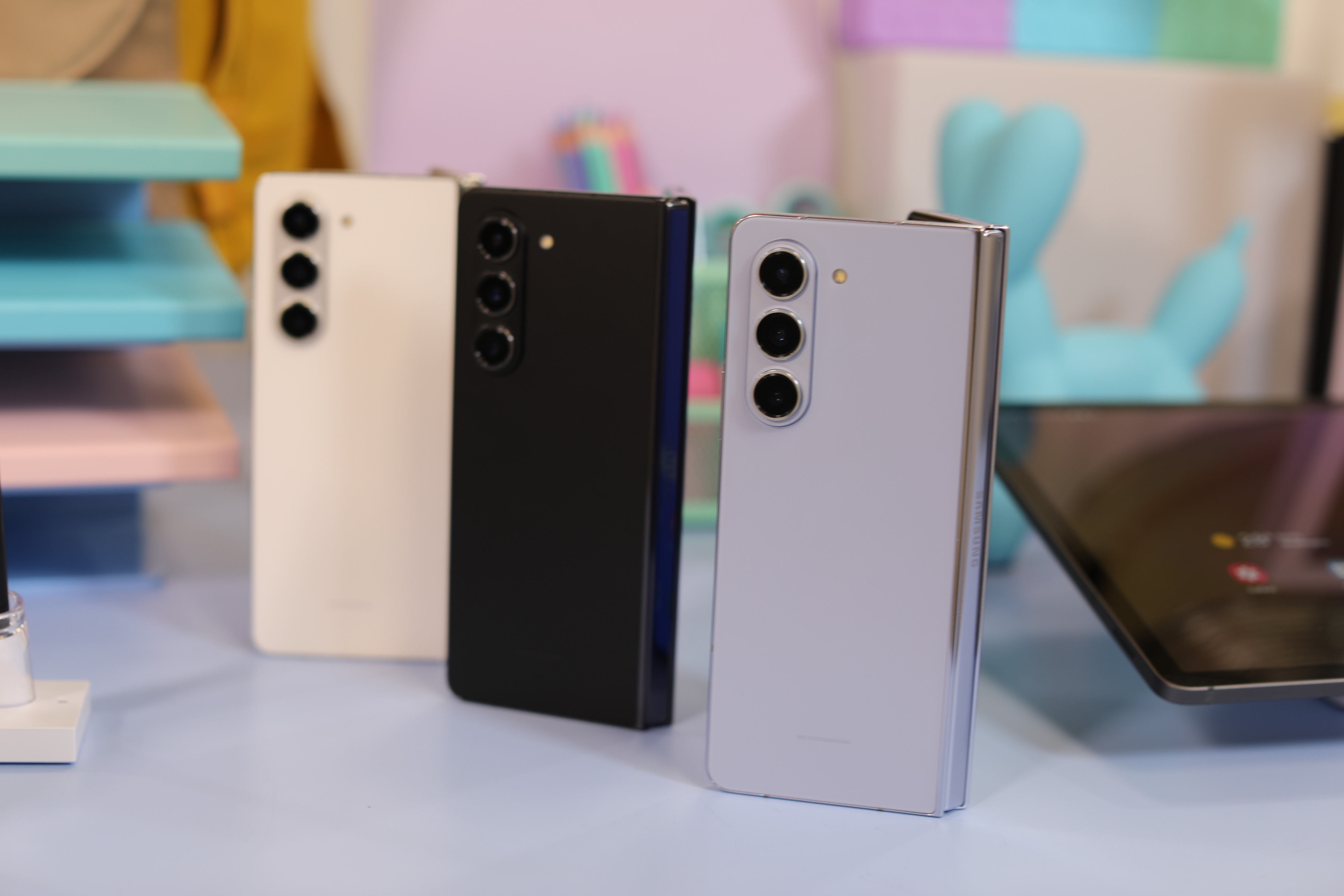
Image Credits: Brian Heater

The other issue with the form factor — as alluded to above — is the sheer size of the device that surrounds it. Again, we’ve got plenty of echoes from the Note’s earliest days. The Fold isn’t my favorite approach to the form factor by any stretch — just one man’s opinion, of course. If foldables were for everyone, we would be in the midst of a very different smartphone market.

More importantly, the company has found success with the design. Now that it has an alternative in the form of the Flip, it’s hard to imagine Samsung straying very far from the established dimensions. Thankfully, one of the key improvements from the Fold 4 to Fold 5 is a thinner design (again, Note echoes). This was accomplished with what the company calls a Flex Hinge. At 13.4 mm folded and 6.1 unfolded, it’s a noticeable decrease from the Fold 4’s 15.8/6.3mm.

The folded profile is a more significant reduction, because 1) It’s two reduced unfolded profiles stacked atop one another and 2) The gap between them has been observably reduced. The move follows the Pixel Fold launch, which touted its own innovative hinge design as a major selling point, including a barely perceptible gap. At 12.1 mm folded and 5.8 millimeters unfolded, Google still comes out on top.

However, it’s worth pointing out that the gap reduction may have contributed to some of the Fold’s reported screen damage. Quoting myself here:

Some have suggested that the issue is a direct result of having two displays that effectively lie flush, allowing debris to get trapped between and damaging the screen in the process. Given the newer, flatter version of the Galaxy Fold, I asked the company about this potential issue, and they cited the inclusion of bumpers as a protection against this potential issue. As always, the real test comes when the device is launched.
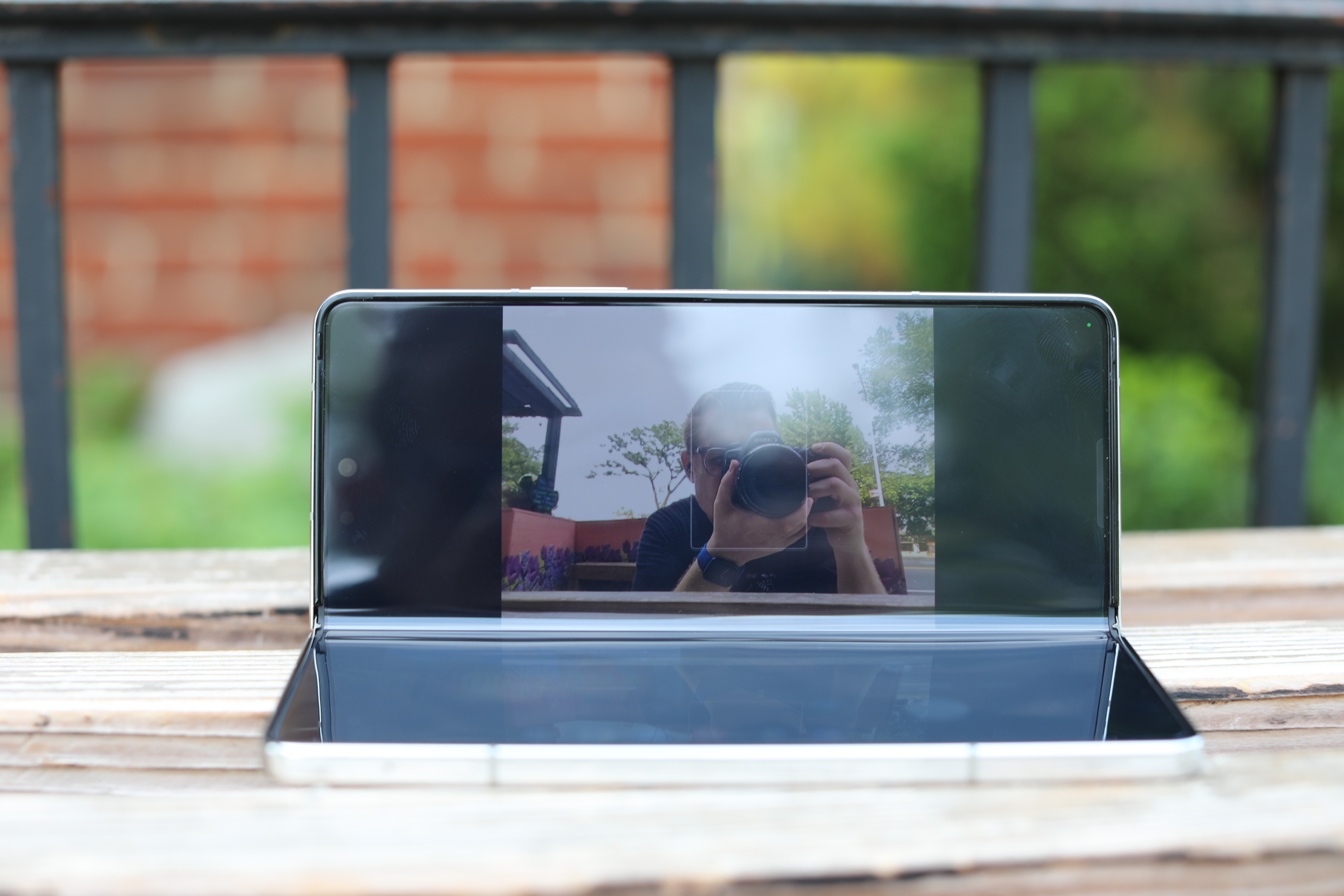
Image Credits: Brian Heater

Something to keep an eye on as more of these are released into the world. When I put the question to Samsung, however, the company noted the inclusion of a bumper around the edge of the device that prohibits the two sides from coming in direct contact with one another.

Along with the thinner design comes a reduction in weight, from 9.28 ounces to 8.92. It’s more than a full ounce lighter than the Pixel Fold, in spite of having the same internal screen size. Beyond the thinner footprint, the biggest update from a hardware perspective is the new(ish) chip. Both the Fold 5 and Flip 5 have been upgraded to the Snapdragon 8 Gen 2 Platform for Galaxy, which debuted back in February with the Galaxy S23. Rumors that the foldables would be among the first to sport a Snapdragon 8+ Gen 2 didn’t pan out — and frankly, it’s not entirely clear whether that chip is going to arrive at all.
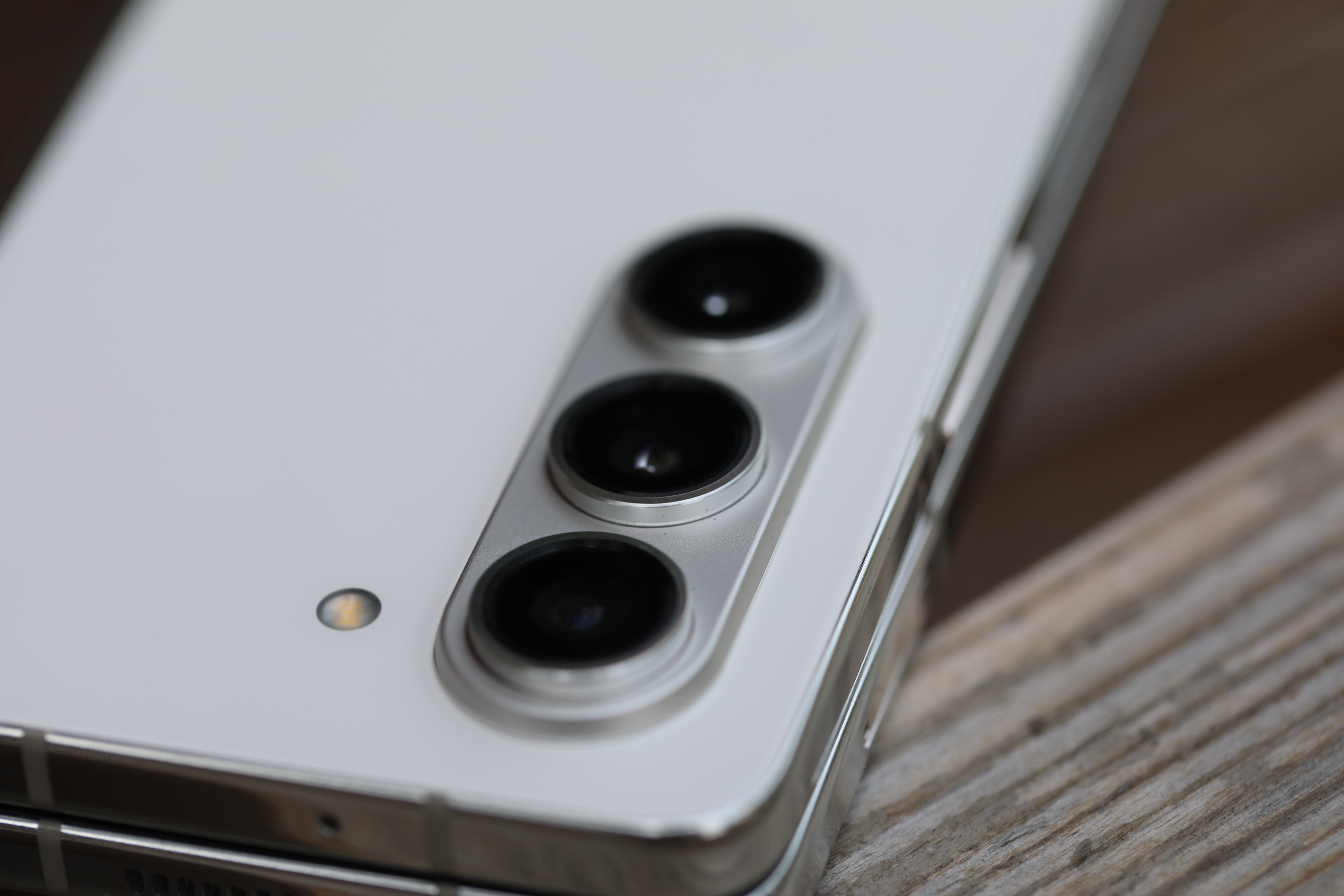
Image Credits: Brian Heater

The Samsung collab brings some slight processing boosts versus the standard 8 Gen 2, but you you’re not likely to see a large difference. What it does deliver however, is arguably just as — or perhaps more — important to users’ day to day. Specifically, it improves battery and camera performance. That’s doubly important, since the hardware for both is, again, functionally the same as the Fold 4.

[gallery ids="2575490,2575499,2575497,2575496,2575495,2575494"]

The importance of computational photography only continues to grow in the smartphone world. While the Fold 5 maintains its predecessor’s excellent triple camera system (50-megapixel main, 12-megapixel ultra-wide and 10-megapixel tele with 3x optical zoom), the Snapdragon’s image signal processing continues to improve. The Fold 5’s rear cameras can take some truly excellent photos. Shots captured in full daylight were extremely sharp and vibrant. I would be more than satisfied using the Fold 5 as a primary camera.

[gallery ids="2577339,2577334,2577344,2577335,2577342,2577336,2577343,2577338,2577340,2577341"]

The system struggled a bit when I took it to last week’s Le Tigre and Nuggets anniversary shows, but that’s a lot to throw at a smartphone camera. We’re talking dynamic motions, ever changing and contrasting lights and a good bit of zoom, since I have the tendency to show up around 10 minutes before the bands start. That said, the inclusion of a telephoto (absent on the Flip) makes a big difference; 3x optical isn’t huge, but it goes a long way toward reducing noise and image degradation.

I also have to give a shout-out to portrait mode. The feature still isn’t perfect with uneven edges, but it’s improved a lot over the years. I was hanging on a bench in Astoria Park on Sunday, reading some Cormac McCarthy on the Fold’s Kindle app, when a…let’s say “friendly” squirrel approached (did I mention I was eating a sandwich?). I snapped some shots in Portrait and was really impressed with the results. When I posted a few on social media, a colleague asked whether they had been shot on a phone or SLR. It’s clearer when you take a closer look, but it’s still impressive that the question had to be asked.

[gallery ids="2577325,2577323,2577329,2577328,2577327,2577326,2577324"]

The battery is 4,400mAh (again, like last year). That’s significantly larger than the Fold’s 3,700mAh, but can’t touch the Galaxy S23 Ultra’s 5,000mAh. Once again, we run into a spatial problem here. Specifically, the nature of a foldable requires the battery to be split in two, on either side of the fold. Likely in the not too distant future, we’ll be discussing flexible batteries (Samsung has certainly been filing patents), but we’re not there yet. All that said, The Fold 5 packs more than enough battery life to get you through a full day of use without concern. It ekes out more than both the Fold 4 and Flip 5.

Samsung continues to refine the Fold’s software experience. In fact, the line is blurring a bit between the desktop and mobile here. Again, the device is functionally a tablet when unfolded. The centerpiece of the experience is a desktop-style taskbar that keeps your four most recent apps front and center, for more seamless switching. You can also drag and drop five frequently used apps to stay there all the time. It’s a handy feature. I like it.

Multiwindow functionality works fairly well as a split screen. You can have up to three apps open at once, but more than two can feel like overkill and real estate is still a valuable commodity on a screen this size. There are other tweaks as well, including the ability to drag and drop images between apps.

It’s been fascinating watching companies backward-engineer desktop functionality for mobile devices, and multitasking has definitely come a long way. The Fold is, once again, compatible with the S Pen. There’s no built-in docking slot (a problem of architecture one imagines), though the company does have some nice-looking cases that do the trick.

The Fold format is great for things like teleconferencing in that it effectively serves as its own stand, though the under-display four-megapixel camera leaves a lot to be desired. I fully understand why some many companies are looking for alternatives to the hole-punch camera, but the technology isn’t where it should be on a premium device like this. The display interference makes for shots that look dim and smudged — not the quality you want for what’s ostensibly a business machine.
Shot with the Samsung Galaxy Flip 5. Image Credits: Brian Heater

I do, however, appreciate what Samsung calls the “Flex Mode Panel.” It’s the allocation of the bottom screen when the phone is folded at a 90-degree angle and placed in landscape mode. It’s effectively a control panel for features like camera, video/music playback and teleconferencing. I should mention, one application I’ve really grown to appreciate on the form factor is Kindle.

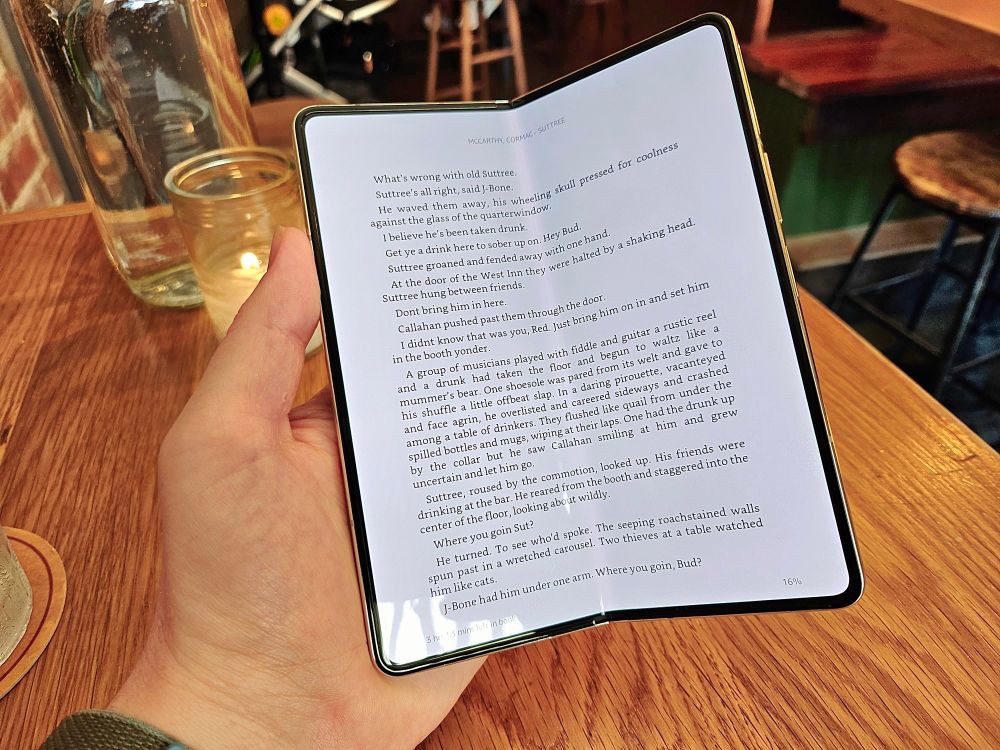
I have a devoted e-reader that I mostly use for travel, but the ability to pull a phone out of your pocket to read a book on a 7.6-inch screen is underappreciated. It’s great for commutes, and the Amazon syncs progress across devices, so you can pick up where you left off. Holding the device open at a slight angle reminiscent of a real book is a nice experience. That said, I’d avoid reading in direct sunlight. That’s where e-readers really shine, so to speak. Sunlight is also a great way to highlight the ever-present crease.

Now we can’t get out of here without talking price. It’s come down a little since the first Fold launched just shy of $2,000. But $1,800 is still prohibitively expensive for a vast majority of consumers — particularly in an era of economic downturns, in which pricing is a major contributor to declining smartphone sales.

Last year, a tear down by Nikkei put the Galaxy Z Fold 4’s component price at an estimated $670. That’s less than 40% of its retail price. Presumably there hasn’t been a huge change for the Fold 5, potentially leaving Samsung with some wiggle room for what it charges (the iPhone, by comparison, is around 46%). Presumably the more of these they sell, the lower the per unit price will become, and if Samsung faces real competition on the international scale, that could potentially impact price.
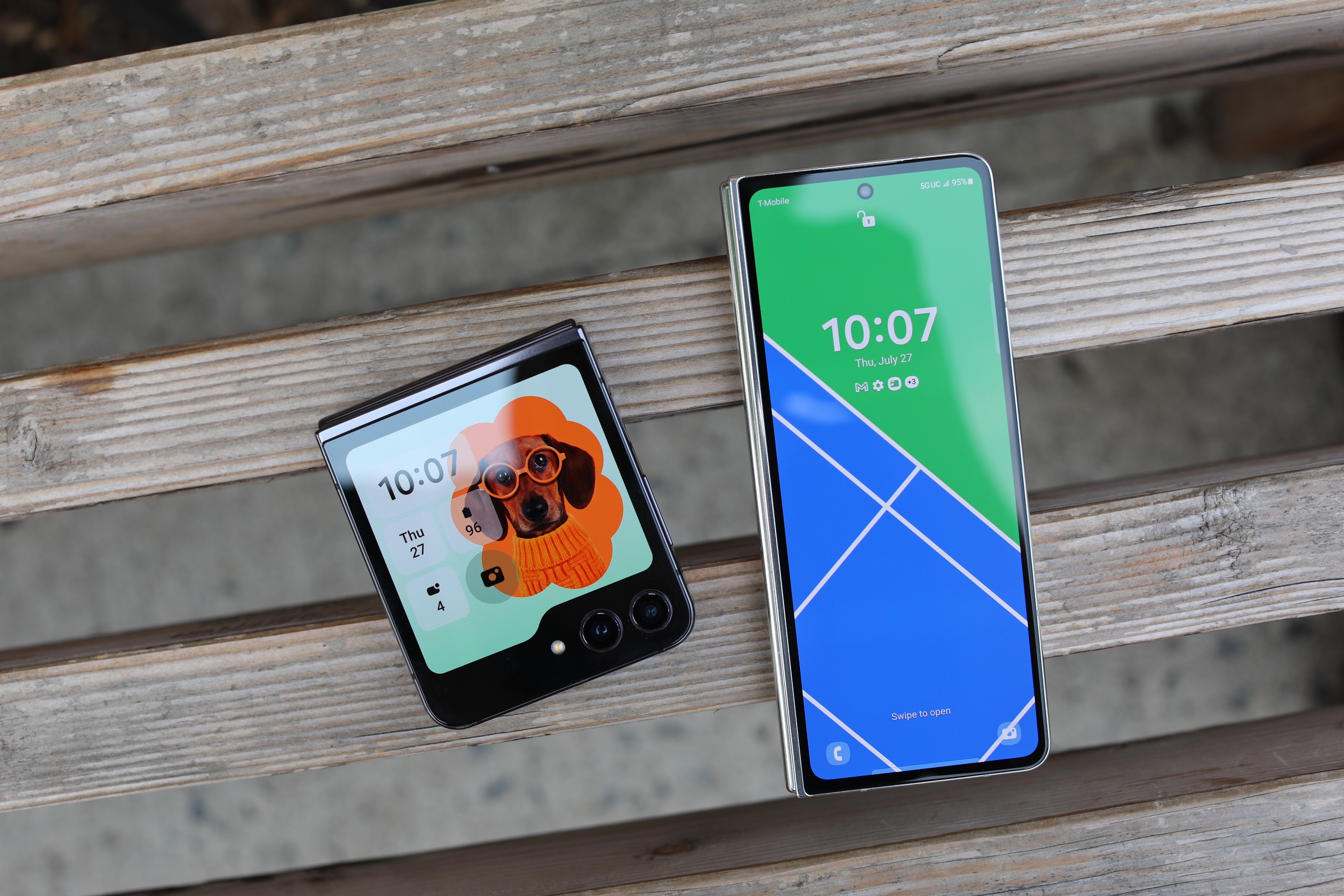
Image Credits: Brian Heater

When I first asked the company about the sales being down between the Fold and Flip, it was implied that the two devices are in an effective dead heat. Upon further questioning, they revealed that the Flip has the advantage — though the company isn’t in the habit of breaking down sales figures. I have to assume, however, that the Flip’s (relatively) reasonable $1,000 price tag is a major contributor.

As a subcategory, foldables have bucked the trend of declining smartphone sales. That’s due in no small part to it being a new form factor, that’s started from a much lower point year-over-year. But it’s an encouraging trend for Samsung and the industry. Given the small list of updates found here, I can’t imagine the Fold 5 winning many converts that the Fold 4 couldn’t. Nor does Samsung offer a super compelling case to upgrade over recent generation Folds.

It’s a slow and steady process, but Samsung’s been at it for a while. Theirs continues to be the most fully realized foldable on the market from a hardware and software perspective. I continue to lean toward the Flip for reasons of personal preferences (ditto the Pixel Fold), but if the Fold is your cup of tea, it continues to be the one to beat.


from https://ift.tt/aKCXxiR
via Technews
Share:

Planet to layoff 10% of staff to focus on “highest ROI opportunities”

Satellite imagery company Planet announced on Tuesday that it is laying off 117 employees, or around 10% of the workforce, as it looks to focus on driving revenue amid an ongoing downturn in the public markets.

In a note posted on the company’s blog, CEO Will Marshall said the decision to cut staff came about after “a deep assessment of our business and spending.”

“Our business has scaled rapidly and continues to grow apace, but the expansion of projects has also increased cost and complexity, which slowed us down in some regards,” he said. “We are making changes to prioritize our attention on the highest ROI opportunities for our business and mission, while reinforcing our path to profitability, consistent with what we shared on our prior earnings call.”

Planet went public in December 2021 after combining with a special purpose acquisition company, or SPACs. Their public listing was part of a huge boom of SPAC IPOs, though most of the space companies that went public in this way have badly failed to hit their projections on revenue and other targets.

But Planet has been one of the notable stand-outs amongst this crowd, consistently reporting growing revenues that end up toward the top end of their projections. But operating costs have also been high, and the company has yet to achieve profitability.

“I want to be clear that I am responsible for the decisions that led us here,” Marshall said. “I know this has significant effects on the lives of our team and their families, and for that I am sorry. We do not make these changes lightly.”

Planet’s stock closed at $11.35 a share the day after it went public; yesterday, it closed at $3.75 a share.


from https://ift.tt/LWazs8Z
via Technews
Share:

TechCrunch+ Roundup: SaaS architecture, Kimberly Bryant’s next move, managing cloud security

“Building a plane in midair” is one of my favorite startup clichés. It’s something Silicon Valley visionaries love to say, but it has little to do with the iterative work of developing software.

Well-designed SaaS architecture makes every company more maneuverable when it comes to pricing, scaling, and onboarding new customers, according to Ratnesh Singh Parihar of Talentica Software.


Full TechCrunch+ articles are only available to members.
Use discount code TCPLUSROUNDUP to save 20% off a one- or two-year subscription.


Before developers get to work, he says three questions should determine which SaaS architecture you select:

  • How would the customers pay?
  • For what services (computation and values) would the customers pay?
  • How will the usage be measured and invoices be created for the customers?

In this TC+ post, Parihar shares a framework for selecting “the right SaaS type for your product,” along with multiple examples and use cases.

Choose wisely — boards tend to hate it when a refactor puts product development on hold!

Thanks for reading,

Walter Thompson
Editorial Manager, TechCrunch+

Strengthening security in a multi-SaaS cloud environment

Safe cloud computing concept, isolated.

Image Credits: luismmolina (opens in a new window) / Getty Images

Managing security across multiple SaaS cloud deployments has an element of risk: A lot can go wrong when using multiple APIs and interfaces to manage data without configuration standards.

“To overcome these challenges, automation and detection have become a crucial piece of the puzzle, and you should be asking about these capabilities,” advises Steven Tamm, a technology adviser to Spin.AI and former Salesforce CTO.

VC Office Hours: Black Girls Code founder Kimberly Bryant starts a new chapter

a door to symbolize VC Plus Office Hours

Image Credits: Bryce Durbin

Nearly a year ago, the board of the nonprofit Black Girls Code fired the group’s founder and CEO, Kimberly Bryant.

Although that “situation is still developing,” Dominic-Madori Davis interviewed Bryant about her next move: launching an accelerator in her hometown of Memphis, Tennessee, “under the umbrella of her newly launched investment firm, Ascend Ventures.”

How to succeed in today’s grocery delivery market

Misfits Market CEO Abhi Ramesh

Misfits Market CEO Abhi Ramesh. Image Credits: Misfits Market

Grocery delivery services were in hot demand when the pandemic began, but in a post-vaccine era, many companies have scaled back operations as they attempt to ride out the downturn.

“One of the strategic mistakes folks in this category made was they assumed that the growth rate and demand in 2020 and 2021 would stay for the next three, four or five years,” said Abhi Ramesh, founder and CEO of Misfits Market.

Get the TechCrunch+ Roundup newsletter in your inbox!

sign up for the TechCrunch+ roundup newsletterTo receive the TechCrunch+ Roundup as an email each Tuesday and Friday, scroll down to find the “sign up for newsletters” section on this page, select “TechCrunch+ Roundup,” enter your email, and click “subscribe.”
Click here to subscribe

Deal Dive: Cutting through the noise in a category clouded by catastrophic failure

Vital Bio, Theranos

Vital Bio hopes it can succeed where past blood testing startups like Theranos failed. Image Credits: Getty Images

Did the Theranos fraud case cast a shadow over other health tech startups hoping to disrupt traditional laboratory services?

Toronto-based Vital Bio recently unveiled a device that performs 50 blood tests and returns results in 20 minutes, reports Rebecca Szkutak, who interviewed co-founder and CEO Vasu Nadella.

“We knew we didn’t want to come out without really good data,” he said. “We didn’t want to even try to ask for credit before we felt that we had something worth showing off that is far enough along.”


from https://ift.tt/Rg4WzOB
via Technews
Share:

Popular Post

Search This Blog

Powered by Blogger.

Labels

Labels

Most view post

Facebook Page

Recent Posts

Blog Archive