The success of any piece of visual communication depends on colour. Research into the impact of colour in marketing tells us that it takes the average person just 90 seconds
If you've been hard at work in your spare time creating stunning paper art or impressive poster designs, selling your merchandise online can be a quick way to...
Originally designed in 1974 and launched internationally in 1980, Rubik's Cube is a design classic that's sold by the hundreds of millions. Over the years, it...
Your design portfolio is one of your most useful tools. It can win you commissions, help you snag a new design job, attract collaborators, and get your work in...
Editorial design can be a daunting task for someone who isn’t used to formatting large amounts of text. The skills you'll need are different to those of...
India has withdrawn a warning that asked users to not share photocopies of their national biometric ID following a widespread uproar from users on social media, many of whom pointed that this is the first time they were hearing about such a possibility.
A regional office of UIDAI, the body that oversees the national biometric ID system Aadhaar, warned users on Friday that “unlicensed private entities” such as hotels and theatre halls are “not permitted to collect or keep copies of Aadhaar card,” a 12-digit unique number that ties an individual’s fingerprints and retina scan, and individuals should avoid sharing photocopies of their Aadhaar to prevent misuse.
The warning prompted an immediate and wide backlash from individuals. “I might have stayed in almost 100 hotels who kept a copy of my Aadhaar! Now this,” an individual tweeted, summing up the dilemma of tens of millions of people in the country, if not more.
UIDAI has now woken up after everyone's distributed photocopies of Aadhaar all over. pic.twitter.com/PuoVK60S7X
About 1.33 billion people in India, or roughly the nation’s entire population, have enrolled in Aadhaar, an ID system that was unveiled about 13 years ago, according to government’s official figures. This scale of adoption makes Aadhaar the world’s largest biometric identity system.
Though Aadhaar has been touted as one of the world’s most sophisticated ID systems, critics have expressed concerns over the way its use case has been extended and made mandatory across several daily life services despite New Delhi marketing Aadhaar as a “voluntary” ID system.
On Sunday afternoon, India’s Ministry of Electronics and IT, downplayed the warning following the backlash, saying the original advisory was issued by the Bengaluru Regional Office of UIDAI in the context of an “attempt to misuse a photoshopped Aadhaar card.”
“However, in view of the possibility of the misinterpretation of the press release, the same stands withdrawn with immediate effect. UIDAI issued Aadhaar card holders are only advised to exercise normal prudence in using and sharing their UIDAI Aadhaar numbers. Aadhaar Identity Authentication ecosystem has provided adequate features for protecting and safeguarding the identity and privacy of the Aadhaar holder,” it added.
On the Chain Reaction podcast this week, Lux Capital’s newest investor, Grace Isford, joined us to talk about the opaque but crucial world of web3 infrastructure. At Lux, Isford invests in the companies working behind the scenes to make sure crypto exchanges are secure and reliable enough to avoid being hacked.
Before joining Lux this February, Isford was an investor at Canvas Ventures focused on enterprise software and fintech. A data infrastructure investment she worked on at Canvas revealed to her the opportunity in the web3 space for companies to “share data immutably at scale,” motivating her pivot to crypto, she said.
“That led me down the rabbit hole, and then I ended up investing myself personally,” Isford said. “I got into yield farming, which coincided with my move to New York, where many of my friends are also in the crypto and VC ecosystem.”
Isford says her investing approach in web3 is rooted in what she calls her “circle of competence,” or the area where she can be competitive compared to others in the space.
“NFT investing is quite different than DeFi investing, which is quite different than crypto data infrastructure investing, and I would argue that any person who says they invest in web three shouldn’t invest in all of that — they should probably choose their sweet spot in their core competency,” Isford said.
Isford’s own “circle of competence,” based on her prior experience, is in enterprise and fintech infrastructure, so we asked her what she thinks some of the biggest challenges are for web3 infrastructure providers.
Compared to web2, Isford said, web3 lacks enterprise-level security solutions. Alchemy and Infura are the only two major node service providers in the industry, meaning that most of crypto is reliant on two infrastructure providers to manage their data.
While a number of startups are working on developing security solutions, Isford said, the tech is “still quite nascent” when it comes to developer tools, data infrastructure monitoring, and storage.
Another major challenge is managing fraud and downside risk, Isford added.
“I think [that issue] is really keeping a lot of folks out of the crypto world right now [because they’re] afraid of losing all their money if they venture too deeply into crypto,” Isford said.
Isford is optimistic that through the massive inflows of investment into web3 startups in the past year, companies will be able to build more reliable solutions.
“I think TRM Labs, Chainalysis, and several other companies in this space have 10x potential in terms of compliance and monitoring because you just do not have that yet at scale in the same way that we’ve kind of created these sophisticated AML systems on the financial infrastructure side in the web2 world,” Isford said, referring to traditional financial institutions’ anti-money laundering technology.
Better fraud and risk management systems are a precursor to more institutional money flowing into crypto, Isford said. As companies like Fidelity, Goldman Sachs, and JP Morgan continue to make strides into crypto, the market will mature she added.
“I think one of the biggest opportunities in crypto right now is still security, if you can build more reliable smart contracts at scale … but you can’t have a reliable system if it’s not secure, right? And you can’t run a system securely if you don’t know who’s within that system, so I think security is probably one of the most important pieces from a prioritization standpoint,” Isford said.
Hey all. Welcome back to Week in Review, the newsletter where we recap some of the top stories to cross TC’s front page over the last 7 days.
The most read story on our site this week was about Flowcarbon — a new company and “blockchain-based redemption story” (as Anita put it) launched by WeWork founder Adam Neumann. The goal, writes Anita, is to “sell tokenized carbon credits to companies looking to reduce their carbon footprint,” to which the only response I can think of is that Jennifer Lawrence “ok” gif.
Here are some of the other most read TC stories from this week:
Jack Dorsey steps down from Twitter’s board: For the first time since its founding in 2006, co-founder Jack Dorsey is no longer officially involved in the operation of Twitter. Late last year, he stepped away from the CEO role but remained on the company’s board of directors. As of May 25, he has exited the board as well.
Broadcom will buy VMware for a massive $61B: After a few days of rumors, Broadcom announced its plans to acquire VMware for a wild $61 billion. Ron’s got all the details of the deal — and as for why the chipmaker would drop that much on the virtualization company? Ron and Alex have you covered there, too.
Take-Two buys Zynga: The parent company behind games like Grand Theft Auto and BioShock now owns the company behind games like FarmVille and Words With Friends. We’ve known for a while that this was in the works, but the $12.7 billion deal was all finalized this week.
Google’s answer to DALL-E: Just last month, OpenAI showed off “DALL-E 2” — its AI model capable of taking a text prompt like “Shiba Inu wearing a beret” and generating an entirely new image from it. Now Google says they’ve got their own algorithm that’s even better — but, outside of comparison images Google provides (which, naturally, include more Shiba Inu in hats), we’ll have to take the company’s word for it. Citing “potential risks of misuse,” Google isn’t currently releasing any code or public demos.
Image Credits: Google Research
added things
We have a paywalled section of our site called TechCrunch+. It only costs a few bucks a month and it’s full of very good stuff! From this week, for example:
Know your potential investor’s thesis: Got a solid business and a polished pitch deck, but still getting turned down by investors? “A lot of the time, it doesn’t matter how good your company is,” writes Haje. “What matters is whether it matches up with your investor’s investment thesis.”
U.S. cannabis investors on why they’re planting seeds now: Recreational cannabis use is slowly becoming legal in more and more states — but it’s still illegal at a federal level, which deeply complicates things when it’s the core of your business. Anna Heim checked in with four U.S. cannabis investors for their thoughts on the state of the industry, and what’s keeping it from really catching fire.
Welcome back to This Week in Apps, the weekly TechCrunch series that recaps the latest in mobile OS news, mobile applications and the overall app economy.
The app industry continues to grow, with a record number of downloads and consumer spending across both the iOS and Google Play stores combined in 2021, according to the latest year-end reports. Global spending across iOS, Google Play and third-party Android app stores in China grew 19% in 2021 to reach $170 billion. Downloads of apps also grew by 5%, reaching 230 billion in 2021, and mobile ad spend grew 23% year over year to reach $295 billion.
Today’s consumers now spend more time in apps than ever before — even topping the time they spend watching TV, in some cases. The average American watches 3.1 hours of TV per day, for example, but in 2021, they spent 4.1 hours on their mobile device. And they’re not even the world’s heaviest mobile users. In markets like Brazil, Indonesia and South Korea, users surpassed five hours per day in mobile apps in 2021.
Apps aren’t just a way to pass idle hours, either. They can grow to become huge businesses. In 2021, 233 apps and games generated over $100 million in consumer spend, and 13 topped $1 billion in revenue. This was up 20% from 2020, when 193 apps and games topped $100 million in annual consumer spend, and just eight apps topped $1 billion.
This Week in Apps offers a way to keep up with this fast-moving industry in one place, with the latest from the world of apps, including news, updates, startup fundings, mergers and acquisitions, and suggestions about new apps to try, too.
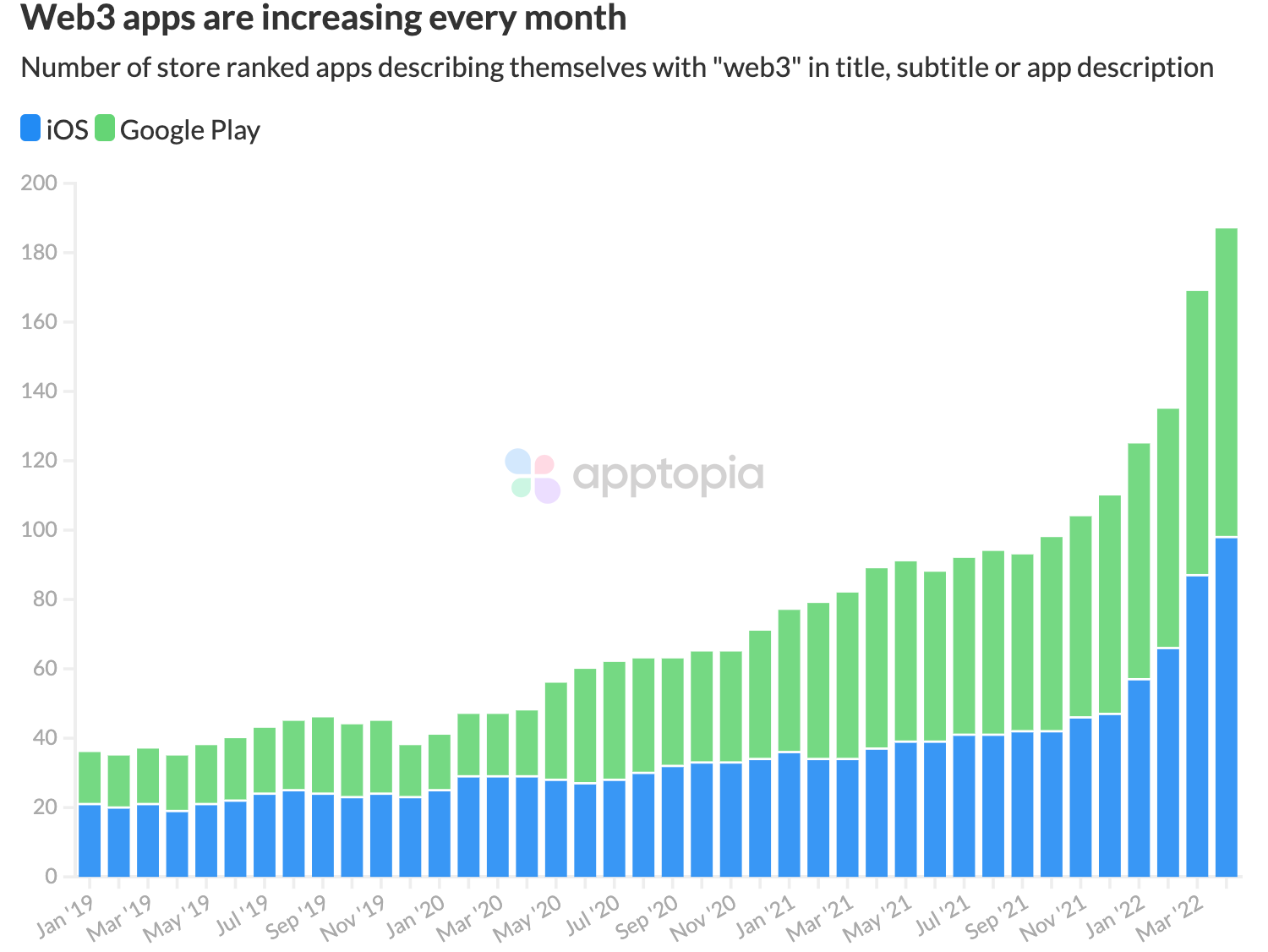
A report from Apptopia has found the number of mobile applications describing themselves as “web3” apps has continued to grow from 2020 through 2022. So far this year, the number of web3 apps available for download is growing nearly 5x faster compared with 2021, and year-to-date, the number of apps available for download is up by 88%.
The firm analyzed data across the App Store and Google play, looking for any apps with “web3” in the title, subtitle or app description. Many of these apps — around 46% — were those in the finance space. This has to do with the large number of mobile wallets, NFT apps and the like now crowding the app stores. Much smaller percentages were found in apps in the social, tools/utilities, business and gaming categories.
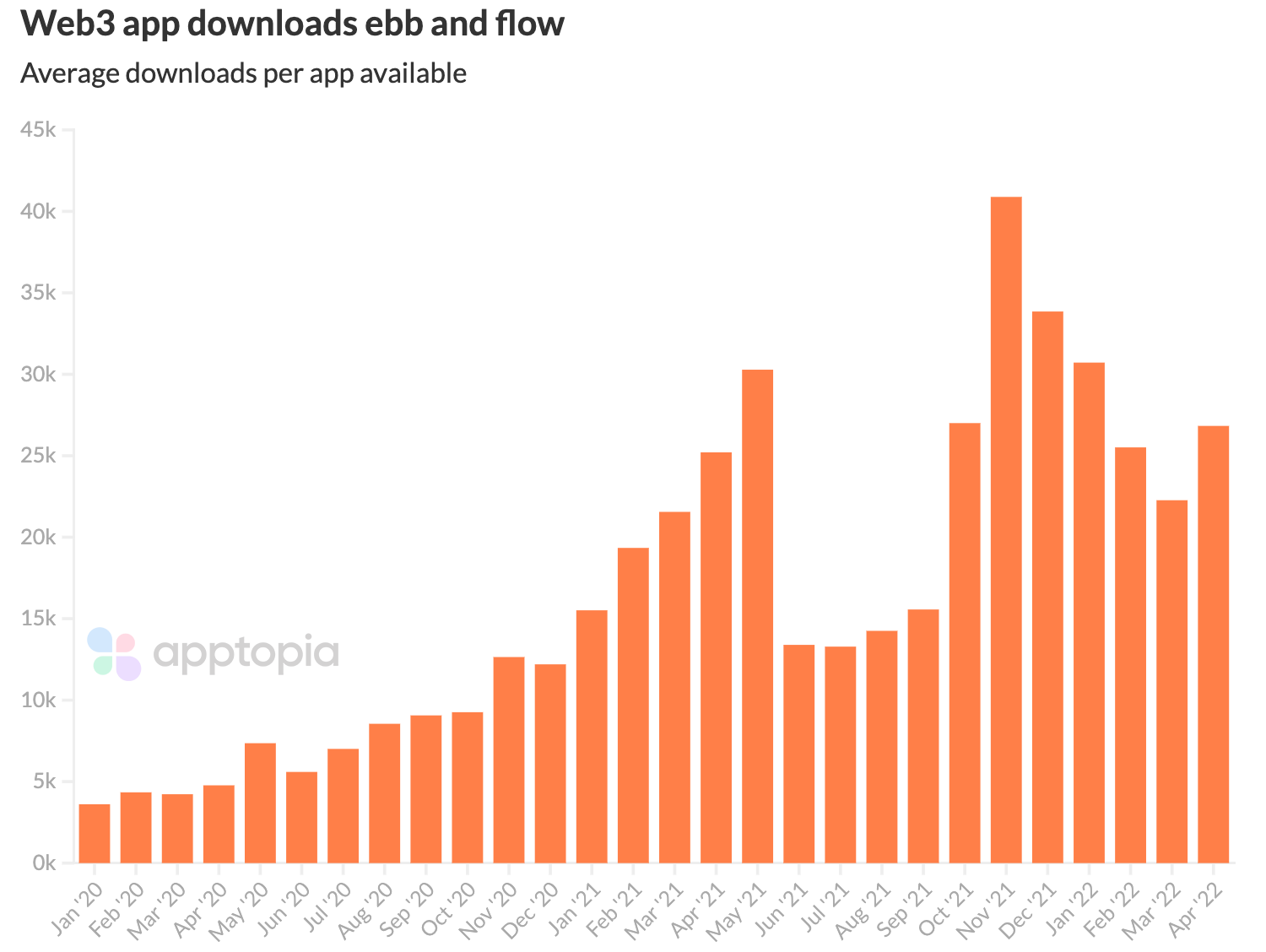
However, despite the growth in the availability of web3 apps, the number of downloads the apps are seeing seems to ebb and flow, Apptopia noted. In addition, it found that NFT marketplace apps OpenSea and Veve were down 90%+ off their highs, and the top 50 crypto apps have seen downloads fall 64% since November. Meanwhile, web3 apps seeing growth currently include the circular economy app Twig and running app STEPN, which lets users collect NFTs by running outdoors.
Never-ending Twitter deal drama
In what’s becoming a regular occurrence, it was another tumultuous week for the deal that would see Elon Musk acquire Twitter.
This week, Musk decided to put up more of his own money for Twitter — just days after it looked like the tech exec was trying to get out of the deal by alleging Twitter lied about the percentage of bots on the platform. In a filing, Musk said his personal financial commitment was now $33.5 billion, up from $27.25 billion. The Telsa and SpaceX exec had previously said he would execute a margin loan of $12.5 billion against his other holdings, like his Tesla shares. But Tesla shares had seen a sharp decline after news of Musk’s acquisition plans for Twitter back in April, potentially prompting this move.
If you’re sick of all the deal shenanigans, you’re not alone. A group of Twitter shareholders has now sued Musk, alleging he manipulated Twitter stock for his own benefit throughout the course of buying the company.
The suit says Musk’s complaint about the percentage of bots on the platform was likely an attempt to drive down the price of the deal. It also cites issues with how he claimed the deal was “on hold,” when there was no such mechanism in place to stop the deal from proceeding; and it points out that Musk delayed filing a disclosure when his stake in the company exceeded 5%, allowing him to buy shares at a discount, in violation of securities law.
While a select group of Twitter investors is behind the lawsuit, it’s open to any shareholders who are looking to receive financial compensation from the Twitter chaos the deal has caused.
Musk’s move to buy Twitter is certainly shaking things up. This week former Twitter CEO Jack Dorsey exited the board of directors. And, at Wednesday’s shareholder meeting, the board voted to oust board member — and Musk ally — Egon Durban, CEO of private equity firm Silver Lake. Durban has backed Musk’s companies, including SolarCity, before it was acquired by Tesla. The FT pointed out that the two biggest shareholder advisers, Institutional Shareholder Services and Glass Lewis, cited concerns with Durban serving on too many other boards. (The FT said he was on seven this year, but a Twitter SEC filing said it was six.)
Also during the shareholder meeting, Twitter CEO Parag Agrawal faced a number of questions about the deal, what it means for free speech on Twitter, content moderation and other issues. But Twitter declined to answer questions about the deal and said work at Twitter was continuing as usual. (Which hardly seems true, given the string of firings and exec departures following Dorsey’s exit and Musk’s takeover attempt!).
Twitter’s troubles also extended beyond the acquisition, as this week Twitter also agreed to pay a $150 million fine as part of its settlement with regulators over user data privacy. The FTC and Department of Justice said that between May 2013 and September 2019, Twitter asked users for personal information — including phone numbers and emails — to secure their accounts, but then used that information to target users with ads. More than 140 million Twitter users were impacted, the FTC said.
Weekly News
Platforms: Apple
Image Credits: Apple
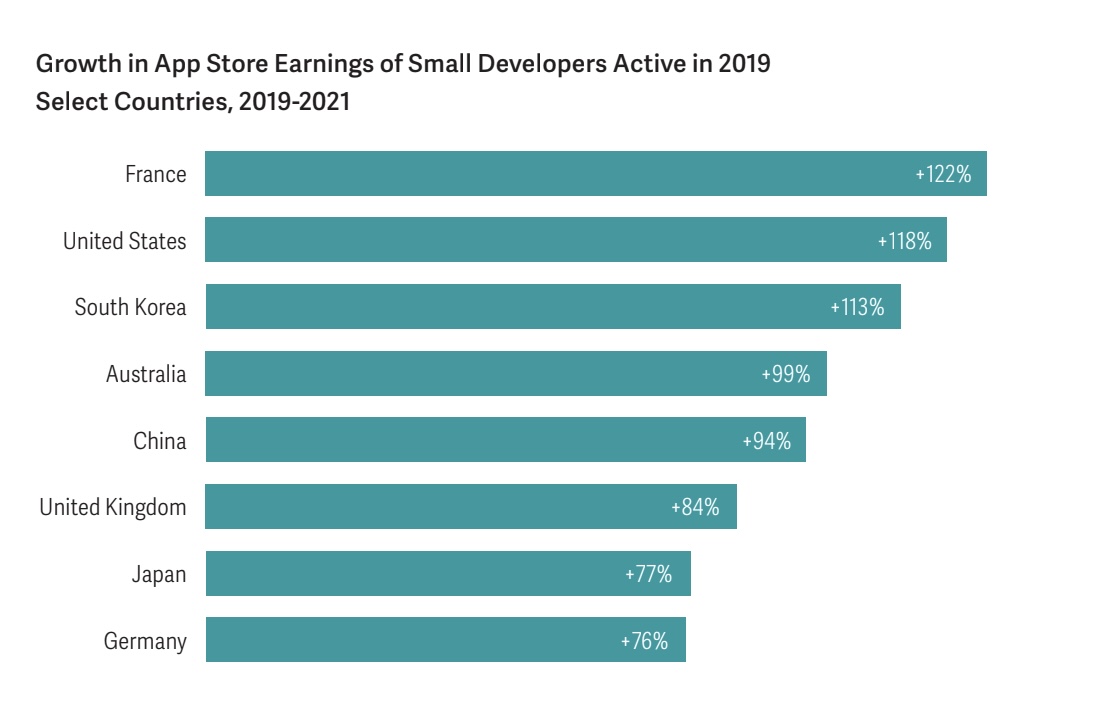
Apple’s latest research suggested the iOS app economy supports 2.2 million U.S. jobs. Apple shared two more new research reports this week, both of which were meant to demonstrate how successful the app economy has been under its reign. The company commissioned two outside firms to produce analysis related to job growth and earnings in the iOS developer community. Apple said revenue for small developers on the App Store in 2019 increased by 113% over the past two years, outpacing the earnings growth of larger developers by more than 2x. In the U.S., smaller developers saw a 118% increase in earnings since 2019. It defined small developers as having under $1 million in billions and fewer than 1 million downloads.
Apple informed developers that starting on June 30, 2022, all App Store apps that offer account creation must also offer an in-app option to allow their users to delete their accounts. The deadline had been pushed a couple of times previously, and takes particular aim at many of Apple’s rivals, like Facebook or Match, which offer cumbersome and obfuscated processes for account deletions.
Apple released iOS 15.5.1 with iPhone-to-iPhone contactless payments.
Platforms: Google
Google’s automated enforcement of its Play Store policies has angered the developer of email app FairEmail, which has over 500,000 downloads. The app was flagged as spyware because it uploads user contacts, although the real issue could be something else and the wording in Google’s response wasn’t clear. Fed up, the developer said he was going to stop working on his apps altogether. After press coverage, however, he was able to talk to Google by phone and the app is being restored.
E-commerce
EBay launched its first collection of NFTs in partnership with web3 platform OneOf. Its new “Genesis” NFT Collection features 3D and animated interpretations of athletes featured on Sports Illustrated covers over the years.
Instacart revamped its ratings. The shopping app’s new customer ratings system aims to address shopper complaints about customers who continually abuse the system unfairly. Instacart says it will now remove ratings from customers who consistently rate their shoppers below five (5) stars. Instacart is also going to forgive ratings for reasons that may be outside of a shopper’s control and will allow shoppers to block rude customers so they won’t be paired with them again. And when customers remove tips without reporting problems, Instacart will pay out at least $10. The shoppers’ app will also now show a “Your Stats” screen with details like their average customer rating, customer feedback and statistics, like how many orders they’ve completed. Shoppers have to keep a 4.7 star rating to get prioritized for batches.
Augmented Reality
Image Credits: Niantic
At its Lightship AR developer conference, Niantic unveiled Campfire, a social app for the “real-world metaverse” that helps Niantic gamers discover new people, places and experiences across the company’s apps.
Niantic also introduced other AR developments at its event, most notably, its new Lightship Visual Positioning System (VPS) — a way for developers to determine the position and orientation of users and anchor AR content. The company has been quietly building out VPS, and there are now more than 30,000 VPS-activated public locations already available — most of which are in San Francisco, London, Tokyo, LA, New York and Seattle. Plus, its WebAR development platform 8th Wall added a new pricing tier for creators.
Niantic also revealed its investment in Pixelynx, makers of a mobile game called Elynxir from musicians deadmau5 and Plastikman, which is like a music-filled take on AR games like Niantic’s own Pokémon GO. It also backed XR wellness app Tripp, a VPS partner.
As part of Snap’s partnership with Live Nation, the Snapchat maker teamed up with Insomniac Events to bring Snap’s technology to Electric Daisy Carnival Las Vegas. The event brings festival-goers four new EDC Snapchat Lenses, including a Night Owl Lens; Daily Lens; AR Compass; and a Friend FindAR Lens (beta). The latter works to help users find their friends if everyone has location-sharing enabled.
Image Credits: Snap
Fintech
PayPal laid off 83 employees from its San Jose headquarters around a week before the company said it was closing its San Francisco office. The company didn’t offer further details, but said it remains committed to the Bay Area and will continue to hire.
Apple’s new “Tap to Pay” contactless payments feature rolled out to Apple Stores nationwide. The feature allows users to make a payment without any extra hardware involved.
Social
Image Credits: TikTok
TikTok ramped up its competition with Twitch, YouTube and others with the launch of TikTok LIVE subscriptions, a new program that will allow creators to generate recurring revenue via payments from their top fans. Similar to the offerings from rival streaming sites, the new service will offer subscribers a range of perks, including subscriber-only chat, custom emotes, badges and more. Based on early reports, the subscriptions cost $5.99/mo and involves a 50/50 rev share, though that could still change.
Snapchat’s Family Center parental controls were spotted under development. The feature will allow parents to see who their teen is friends with on the app as well as who they’ve been messaging with over the past seven days, and more. However, it won’t give parents insight into what teens are saying in messages or posting to their own accounts, or allow them to restrict access to various parts of the Snapchat experience.
Image Credits: Snapchat screenshot via Watchful
Snap’s CEO Evan Spiegel warned employees this week that the company would miss its Q2 revenue and earnings targets as its growth had weakened. The company said it would slow hiring, as well. Snap cited the overall economic environment as contributing to the slowdown, including inflation and the Russia-Ukraine war. It also suggested the iOS privacy change continues to impact the company’s revenues. The stock tanked as a result.
Twitter updated its API (v2) to give third-party app developers the ability to access the same reverse chronological timeline that’s available today in Twitter’s own app.
Instagram gave its app a visual refresh with a brighter logo, typeface (“Instagram Sans,” inspired by its logo and its “squircles”) and full-screen marketing layouts. The new logo’s gradient, meanwhile, is meant to be more vibrant and features a touch of blueish-purple, likely meant to recall the app’s connection to Facebook.
Image Credits: Instagram
A Rest of World case study of India’s Koo, a Twitter alternative, highlights the potential pitfalls with the introduction of a self-verification system (as Elon Musk wants for Twitter). In Koo’s case, the system is technically optional, but leverages Aadhaar — a verification system that’s supposed to be voluntary but had proved to be otherwise. Those without Aadhaar verification had not been able to access services like mobile connections, education, banking and pensions.
YouTube Shorts began rolling out ads globally. The TikTok rival had been experimenting with ads since last year, and now offers both video action campaigns and app campaign ads.
ByteDance rival Kuaishou, maker of China’s second-largest short video platform, reported Q1 revenue up 24% year-over-year to ~$3.2 billion, versus ~$3.1 billion estimated, and a ~$939 million net loss, down 89% year-over-year from ~$8.7 billion. The company now has 346 million DAUs, up 17% from 295 million a year ago.
TikTok extended its Marketing Partner Program to allow marketers to manage their TikTok accounts without leaving their third-party content marketing platforms. The short-form video app is partnering with Sprout Social, Hootsuite, Sprinklr, Emplifi, Dash Hudson, Khoros, Brandwatch and Later for the initial launch.
Messaging
Image Credits: Sensor Tower
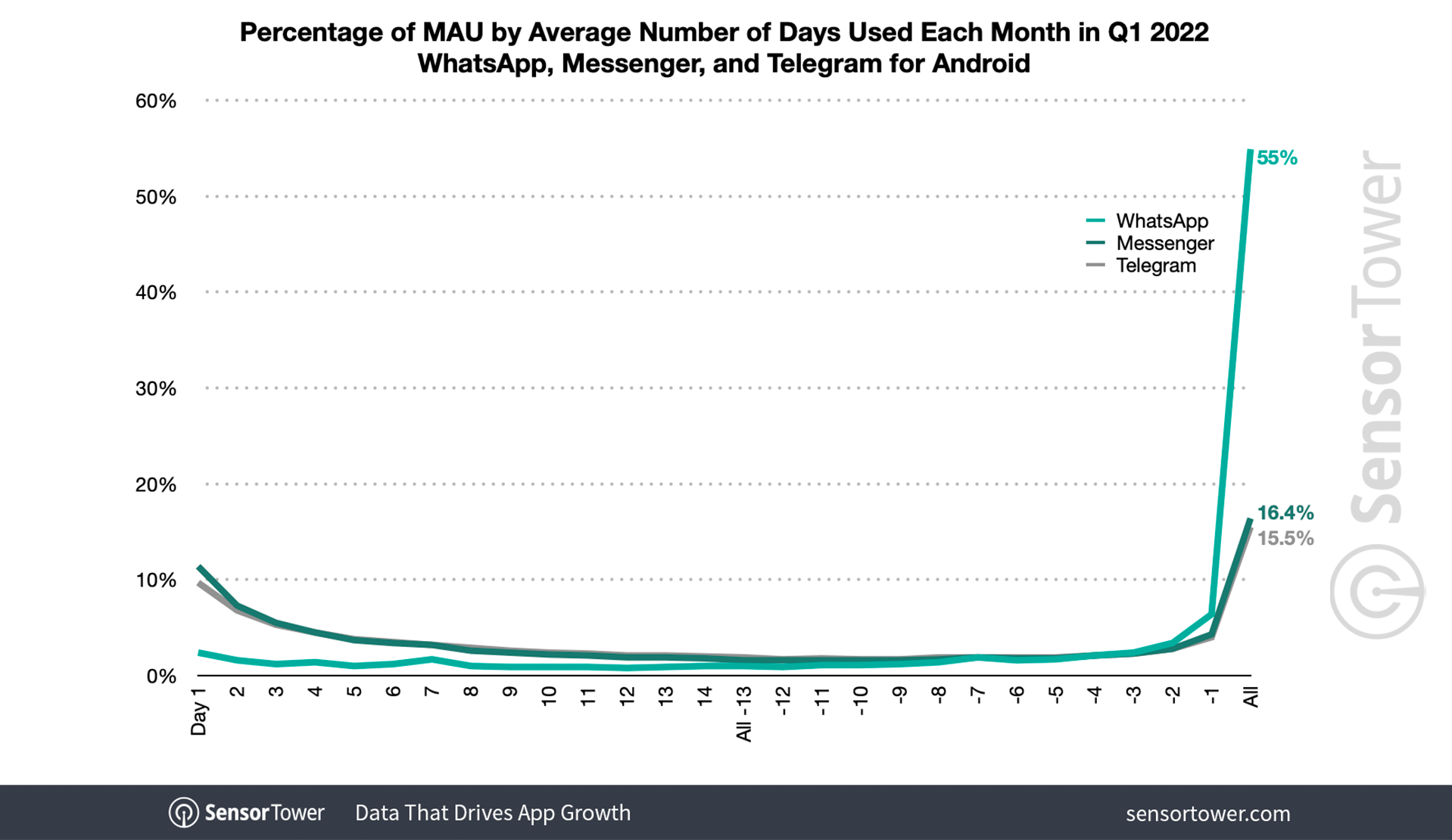
New data indicates more than half (55%) of WhatsApp’s audience is using the app every day, up from 39% a year ago, per Sensor Tower. The firm found that both WhatsApp and Telegram saw a spike in engagement by MAUs in February due to Russia’s invasion of Ukraine. In Q1 2022, Telegram saw 15.5% of its MAUs open the app each day, up from 9% in Q1 2021.
WhatsApp said it will no longer work with iPhones running iOS 10 and iOS 11 starting later this year, as it aims to focus development only on newer versions of Apple’s mobile operating system.
Photos
Google Photos began rolling out its new “Real Tone” filters on Android, iOS and the web this week. The filters are found in the Filters tab in Google Photos’ image editor and were designed by professional image-makers to work across skin tones.
The new Real Tone filters in Google Photos are starting to roll out today on Android, iOS, and web. These filters were designed by professional image makers to work well across skin tones, so you can choose the filter that reflects your style. pic.twitter.com/UwTS4KIodY
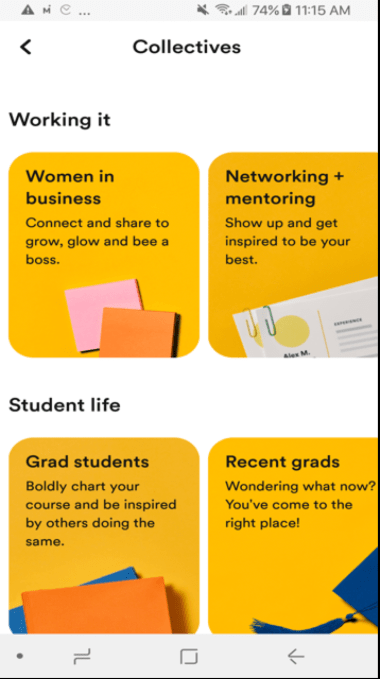
Bumble is preparing to expand further into social networking with a new communities feature inside its flagship dating app. The feature will be a part of its BFF offering and is already in alpha testing, the company said. Many of the communities are female-focused, with social groups that allow women to chat about topics like student life, mentoring, parenting, work and more.
Image Credits: Bumble screenshot via Watchful
Streaming & Entertainment
Spotify is again hosting political ads on podcasts after pausing them in early 2020, as it says it has strengthened its advertiser verification system.
Spotify also said its new “call-to-action” clickable ads were expanding to Australia, Canada and the U.K., after their U.S. launch in January. The ads display during a podcast’s ad break and can later be located on the podcast’s page.
Apple Music became available in Google’s navigation app, Waze, which had already supported rival Spotify, Audible and other streaming services.
Gaming
Image Credits: data.ai
Data.ai (formerly App Annie) released a new games report with IDC, which found that mobile gaming is poised to take over 60% of the market share in 2022 — 3.2x the size of the next largest form factor, console gaming. The mobile gaming market itself will top $136 billion in 2022. Mobile gaming reaches a wide demographic, it found, with 47% of the top 1,000 grossing mobile games skewing toward Gen Z in the U.S., while the Gen X and Baby Boomer generations, combined, was the fastest group for mobile game spending. U.S. mobile gamers also generally prefer to see ads in exchange for free content by a 3:1 margin.
Roblox hired former Zynga CTO Nick Tornow as its new VP of Engineering. Tornow will help to shape the platform for its 50 million daily active users, including in areas like real-time translation, and other areas.
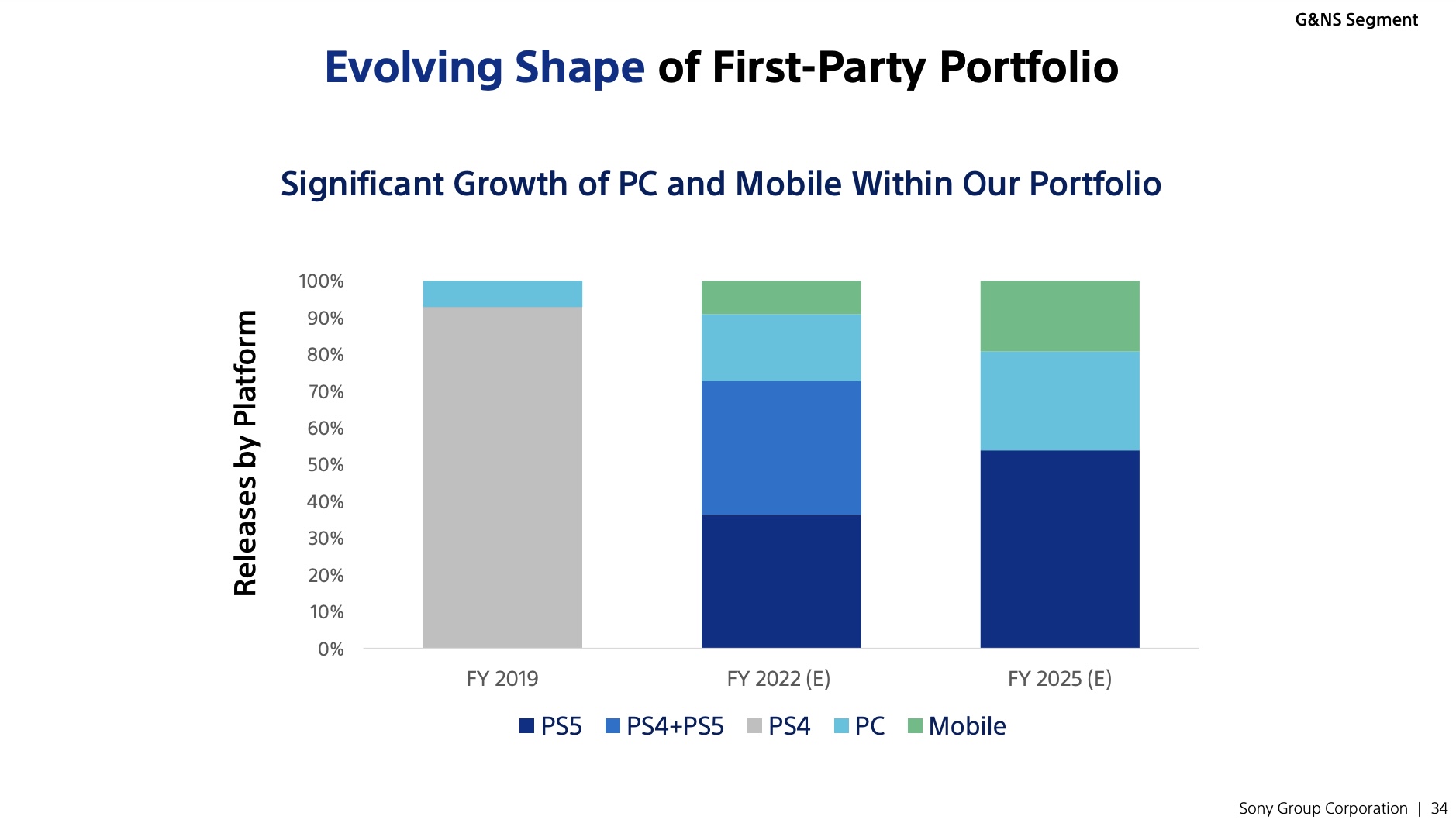
Sony said it will shift more than half (55%) of its development budget to its live game service over the next three users, aided by Sony Interactive Entertainment’s acquisition of Destiny maker Bungie for $3.6 billion. The company will leverage Bungie’s expertise to build out a portfolio of 12 live game service franchises by its 2025 fiscal year, up from one in 2021, it told investors. It also forecast significant growth of PC and mobile games within its portfolio.
Google celebrated 15 years of Street View with a new camera and a time travel feature on Google Maps for iOS and Android that lets you view historical imagery going all the way back to 2007.
Apple rolled out its immersive walking directions feature for Apple Maps in the city of Tokyo. The feature offers step-by-step walking guidance in augmented reality. Users simply raise their iPhone to scan buildings in the area, and Maps then generates a highly accurate position to deliver directions.
Maryland residents are now able to store their driver license or state ID in the Apple Wallet app. The state is now the second in the U.S. to support the new feature, following the launch in Arizona in March.
Government, policy and… antitrust lawsuits
Match Group and Google reached an interim compromise over app payments. Match agreed to withdraw its request for a temporary restraining order and put up to $40 million aside in escrow in lieu of making payments directly to Google while its antitrust lawsuit over app store fees is decided.
Epic Games and Google also reached a similar agreement over Epic’s Bandcamp. The company had filed an injunction asking for the right to allow Bandcamp to continue operating as usual instead of being forced to adopt Google’s own payments system as is now required via a policy change, or risk expulsion from the Google Play Store. Bandcamp agreed to place 10% of its revenue into escrow until Epic Games’ larger antitrust lawsuit with Google is decided.
In a new court filing, Epic Games challenged Apple’s position that third-party app stores would compromise the iPhone’s security. It points to Apple’s macOS as an example of how the process of “sideloading” apps — installing apps outside of Apple’s own App Store, that is — doesn’t have to be the threat Apple describes it to be. Apple’s Mac, explains Epic, doesn’t have the same constraints as found in the iPhone operating system, iOS, and yet Apple touts the operating system used in Mac computers, macOS, as secure.
Apple again criticized the impact of allowing sideloading on iOS devices, following U.S. Sen. Amy Klobuchar’s introduction of an updated version of the American Choice and Innovation Act aimed to address lawmaker and tech industry concerns over the original. Said Apple, the changes weren’t enough and will “undermine the privacy and security protections” its users depend on.
Security & Privacy
Image Credits: Proton
Encrypted email provider ProtonMail, makers of a popular iOS mail app, rebranded as just “Proton” as it works to combine services including Proton VPN, Proton Calendar and Proton Drive under one roof.
DuckDuckGo confirmed a researcher’s findings which indicated its browser allows some Microsoft trackers on third-party sites. The company said this was due to a Microsoft search content agreement, which had been previously undisclosed. The company defended itself on Hacker News, saying that the deal was “just about non-DuckDuckGo and non-Microsoft sites in our browsers, where our search syndication agreement currently prevents us from stopping Microsoft-owned scripts from loading.” It noted DuckDuckGo can still apply its browser’s protections post-load — like third-party cookie blocking and others. The company operates browsing apps for Mac, iOS and Android.
Brave Software, the company behind the cross-platform privacy-focused Brave browser, extended its partnership with Guardian, makers of Guardian Firewall + VPN. The deal will integrate Brave Firewall + VPN, powered by Guardian, into the Brave Android app. The move follows the Firewall + VPN for the Brave iPhone and iPad browser apps.
A study by Human Rights Watch found that 89% of 164 remote learning apps and sites used during the pandemic across 49 countries had shared student data with marketers and data brokers.
Funding and M&A
Take-Twocompletedits $12.7 billion acquisition of mobile games giant Zynga. The deal saw Zynga shareholders receive $3.50 in cash and 0.0406 shares of Take-Two common stock per share of Zynga common stock.
AR mobile game maker Jadu raised $36 million in a Series A round led by Bain Capital Crypto to accelerate its work building out an AR game featuring 3D NFT avatars from Deadfellaz, CyberKongz, FLUFs, VOIDs, ChibiApes, Meebits and other collections. The company has raised $45 million+ to date.
The near-term future of the Metaverse is AR not VR and @JaduAVAs is building it.
Friendly Apps just closed on a $3 million seed round, pre-product, from BoxGroup, Weekend Fund, Shrug Capital, Day One Ventures, Betaworks Ventures, SRB Ventures, 305 Ventures, CoreVentures and other angels. The startup hails from longtime engineer and product designer Michael Sayman, who has been building apps since he was a kid, landing him roles at Facebook, Google, Roblox, and, most recently, Twitter. Having joined Facebook at just 17, he’s often been tasked with developing products aimed at a teenage audience. Now he’s planning to leverage his understanding of what users want from their apps with his own startup.
Circles, an app that offers online group therapy via video chat, raised $16.5 million in a Series A round led by Zeev Ventures. Also participating was Lior Ron, head of Uber Freight, along with existing investors NFX, Flint Capital and Sir Ronald Cohen.
Pokémon GO maker Niantic disclosed its first two investments. The company said it has backed TRIPP, an award-winning leader in XR wellness, and music metaverse startup Pixelynx, from musicians deadmau5 and Plastikman. The latter’s first mobile game is called Elynxir and is using Niantic’s new Lightship AR platform to combine musical experiences and AR. Deal terms weren’t disclosed.
Welcome to Startups Weekly, a fresh human-first take on this week’s startup news and trends. To get this in your inbox, subscribe here.
Sequoia takes things seriously. The storied venture firm is known to react to macro-economic events with grand memos aimed at portfolio companies, and sometimes the entrepreneurship scene at large. Most recently, Sequoia created a 52-slide deck, first reported by The Information, titled Adapting to Endure; the document reads like a follow-up course to its infamously ill-timed “Coronavirus: The Black Swan of 2020” memo of March 2020.
The firm is not always right in its prognostications — which is maybe why it stuck to internal musings instead of a Medium post this time — but it does do a service in providing a snapshot of how one of the most weathered, and successful, firms of all time thinks about a looming downturn.
“Our intention in gathering today is not to be a beacon of gloom,” the deck reads. “But we also believe that winning in the years ahead is going to depend on making hard, decisive choices confronting uncomfortable challenges that may have been masked during the exuberance and distortions of free capital over the past two years.”
Sequoia’s advice largely followed the same script that other venture firms have been using: extend runway, focus on sustainable growth and recognize that an economic recovery may be a ways away. There were, however, some tidbits that stood out, such as a subtweet I’m guessing is for Tiger Global and a precise explanation of how founders should define fluff these days.
For my full take on this topic, read my TechCrunch+ column, “Sequoia is the latest VC firm that wants you to take the downturn seriously.” In the rest of this newsletter, we’ll bring in a founder’s perspective on this moment in tech, a pitch deck teardown and a deal that may have flown under your radar this week. As always, you can support me by forwarding this newsletter to a friend or following me on Twitter or subscribing to my blog.
Let’s have a Heart to Heart
On Equity this week, Heart to Heart CEO Josh Ogundu joined us to talk about his perspective on the market for early-stage founders. Ogundu told us what he’s rethinking, the importance of honesty and what to do before considering a layoff. It’s not too often that we have guests on the show, so when we do, you know it’s going to be a good one.
Here’s why it’s important: So much of the advice, as this newsletter’s intro shows, has come from investors. Yet, founders are the ones living the change and making the hard decisions, so consider this episode an overdue reality check.
Our own Haje Jan Kamps has started a weekly series in which he reviews a startup’s pitch deck in the shape of a witty column. Most recently, he reviewed Lumigo’s Series A pitch deck that helped the startup land a $29 million round.
Here’s why it’s important, in his words: “I’ve been coaching startups for a long time, and the No. 1 challenge we always run into is that there’s no shortage of advice for how to do a good pitch deck (hell, I wrote a book about it), but the thing that’s always been missing is a good library of actual, real pitch decks that were successful in raising money. When I rejoined TechCrunch and started talking to founders about fundraising rounds, I realized this might be my chance. In this week’s teardown, we talk about what worked about the deck and where the company could have made further improvements. This is info that isn’t available anywhere else, and it’s been such a fun project so far!”
Here’s why it’s important via reporter Christine Hall: “Time is of the essence in reducing emissions, with [CEO Julia Collins] noting that there are less than 100 months left to reach the 2030 global goal of cutting at least 40% of greenhouse gas emissions from 1990 levels. Household consumption of things like food, which impacts land, energy and water, account for 60% of global emissions, she added.”
Big shout out to these wonderful colleagues who I have the honor of working with. Follow all of them, and then create another account, and follow them again. I’m only half kidding.
Welcome to the second episode of The TechCrunch Podcast, our weekly news show bringing you all the top stories in tech. This week, we sat down with TC writers Natasha Mascarenhas, Anita Ramaswamy and Devin Coldewey to talk about the continued, troubling trend of layoffs in tech; Adam Neumann’s new crypto carbon credit startup (?!); and the one-upmanship among AI image generation technologies happening between OpenAI and Google.
Listen below, and subscribe in iTunes or Spotify to get new episodes delivered weekly on Saturdays!
Welcome to The TechCrunch Exchange, a weekly startups-and-markets newsletter. It’s inspired by thedaily TechCrunch+ columnwhere it gets its name. Want it in your inbox every Saturday? Sign uphere.
Cannabis, sex tech and psychedelics are often lumped together under the “vice” category — a characterization that prevents many VCs from investing in these spaces. But does that make sense? Let’s explore. — Anna
It’s (not) a sin
Isn’t cannabis actually similar to coffee, wine and spirits? That’s the argument Emily Paxhia made on a Twitter Space hosted by TechCrunch+ earlier this week to discuss our latest U.S. cannabis investor survey.
A managing director at cannabis-focused hedge fund Poseidon Asset Management, Paxhia argued that marijuana-derived products have a lot more to do with wellness than with the “sin” category they often fall under.
“Sin clause” and “vice clause” are terms that venture capitalists use to refer to their inability to invest in certain business categories, from porn and gambling to alcohol and tobacco. When I explored fundraising strategies for sex tech startups earlier this year, I found out that this veto typically comes from the fund’s limited partners, or LPs.
It is understandable why investors wouldn’t want to put their money in certain types of businesses, let alone be known for doing so. But there’s a fine line between moral stances and stigma.
“I don’t identify with the word ‘vice’ at all,” Andrea Barrica told me. Barrica is the founder of O.School, which she describes as a media platform for sexual wellness. “Wellness” is a popular term in both the sex tech and cannabis industries — because it makes them more palatable, sure, but also because it truly reflects the impact that entrepreneurs are hoping to have.
It is worth keeping in mind that cannabis isn’t just about providing a recreational high. In Europe, we heard from investors, it is medical cannabis that has most of the momentum. It is the perspective of health benefits that drives many entrepreneurs, who deserve better than cheap laughs.
Similarly, a deep dive into psychedelics taught me that this is about much more than drugs and fun. With investors sometimes getting into this space after personal journeys with depression or burnout, and founders hoping to make a dent on the global mental health crisis, easy jokes quickly feel out of place.
The vice clause applies only to certain types of investors, which is also problematic. The fund that is handling your pension might pass on cannabis investments, but many family offices aren’t. This means that returns from these potentially lucrative bets will be concentrated in the hands of the already-wealthy.
Some fund managers are also investing as individuals, Paxhia said — and it’s them who will get the upside. Meanwhile, fiduciaries are missing out on the returns and the impact they could have, for arbitrary reasons. After all, what’s legal is not always moral, and vice versa.
The most glaring paradox is that the tobacco, nicotine and alcohol industries are actually keeping close tabs on cannabis and whether consumption might shift. Would the shift be a net negative for society? Perhaps not. As for psychedelics, there’s research ongoing to use nonhallucinogenic derivatives to treat opioid addiction. With overdose deaths involving fentanyl and methamphetamine surging in the U.S., is this vice? I don’t think so. Do you?














 Take-Two
 AR mobile game maker Jadu